Immigration judge rules student activist Mahmoud Khalil can be deported from US
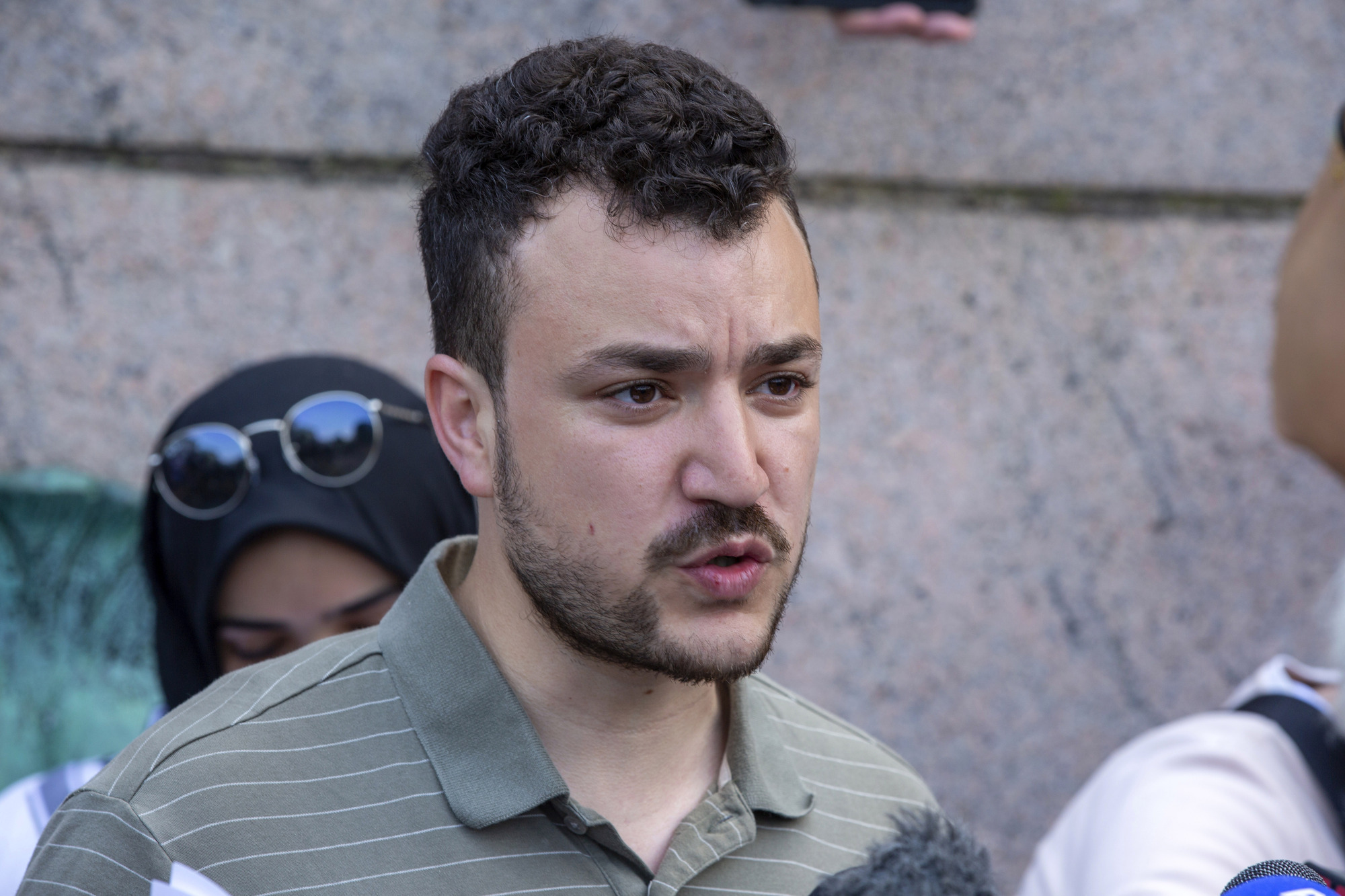
Columbia University graduate student Mahmoud Khalil can be deported as a national security risk, an immigration judge in Louisiana ruled on Friday during a hearing over the legality of removing the activist who participated in pro-Palestinian demonstrations from the US.
Immigration Judge Jamee E Comans said, at the conclusion of a hearing in Jena, that the government’s contention that Mr Khalil’s presence in the United States posed “potentially serious foreign policy consequences” was enough to satisfy requirements for his deportation.
Ms Comans said the government had “established by clear and convincing evidence that he is removable”.
Lawyers for Mr Khalil are expected to appeal and a federal judge in New Jersey has temporarily barred his removal from the country.
Mr Khalil, a legal US resident, was detained by federal immigration agents on March 8 in the lobby of his university-owned apartment, the first arrest under President Donald Trump’s promised crackdown on students who joined campus protests against the war in Gaza.
Within a day, he was flown across the country and taken to an immigration detention centre in Jena, thousands of miles from his attorneys and wife, a US citizen who is due to give birth soon.
Mr Khalil’s lawyers have challenged the legality of his detention, saying the Trump administration is trying to crack down on free speech protected by the US Constitution.
US secretary of state Marco Rubio has cited a rarely used statute to justify Mr Khalil’s deportation, which gives him the power to deport those who pose “potentially serious adverse foreign policy consequences for the United States”.
At Friday’s hearing, Mr Khalil’s lawyer, Marc Van Der Hout, told the judge that the government’s submissions to the court prove the attempt to deport his client “has nothing to do with foreign policy”.
Earlier this week, Ms Comans challenged the government to share proof that Mr Khalil should be expelled from the country for his role in campus protests against Israel and the war in Gaza.
She said if evidence does not support his removal, she would “terminate the case on Friday”.
On Friday, Justice Department lawyers said in papers filed in federal court in Newark, New Jersey, that Ms Comans would not have the authority to immediately free Mr Khalil.
They said an immigration judge could determine if Mr Khalil is subject to deportation and then conduct a bail hearing afterwards if it is found that he is not.
Mr Khalil is not accused of breaking any laws during the protests at Columbia.

The government, however, has said that non-citizens who participate in such demonstrations should be expelled from the country for expressing views that the administration considers to be antisemitic and “pro-Hamas”, referring to the Palestinian militant group that attacked Israel on October 7 2023.
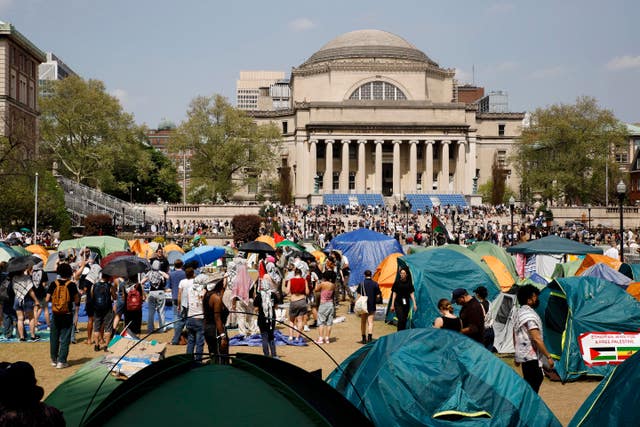
Mr Khalil, a 30-year-old international affairs graduate student, had served as a negotiator and spokesperson for student activists at Columbia University who took over a campus lawn last spring to protest Israel’s military campaign in Gaza.
The university brought police in to dismantle the encampment after a small group of protesters seized an administration building.
Mr Khalil is not accused of participating in the building occupation and was not among the people arrested in connection with the demonstrations.
But images of his maskless face at protests, along with his willingness to share his name with reporters, have made him an object of scorn among those who saw the protesters and their demands as anti-semitic.
The White House accused Mr Khalil of “siding with terrorists”, but has yet to cite any support for the claim.
Federal judges in New York and New Jersey have ordered the government not to deport Mr Khalil while his case plays out in court.
The Trump administration has said it is taking at least 400 million dollars in federal funding away from research programs at Columbia and its medical centre to punish it for not doing enough to fight what it considers to be anti-semitism on campus.
Some Jewish students and faculty complained about being harassed during the demonstrations or ostracised because of their faith or their support of Israel.
Immigration authorities have cracked down on other critics of Israel on college campuses, arresting a Georgetown University scholar who had spoken out on social media about the Israel-Gaza war, cancelling the student visas of some protesters and deporting a Brown University professor who they said had attended the Lebanon funeral of a leader of Hezbollah, another militant group that has fought with Israel.
CONNECT WITH US TODAY



Be the first to know the latest news and updates