Trump and Netanyahu hold White House talks on tariffs, Gaza and Iran
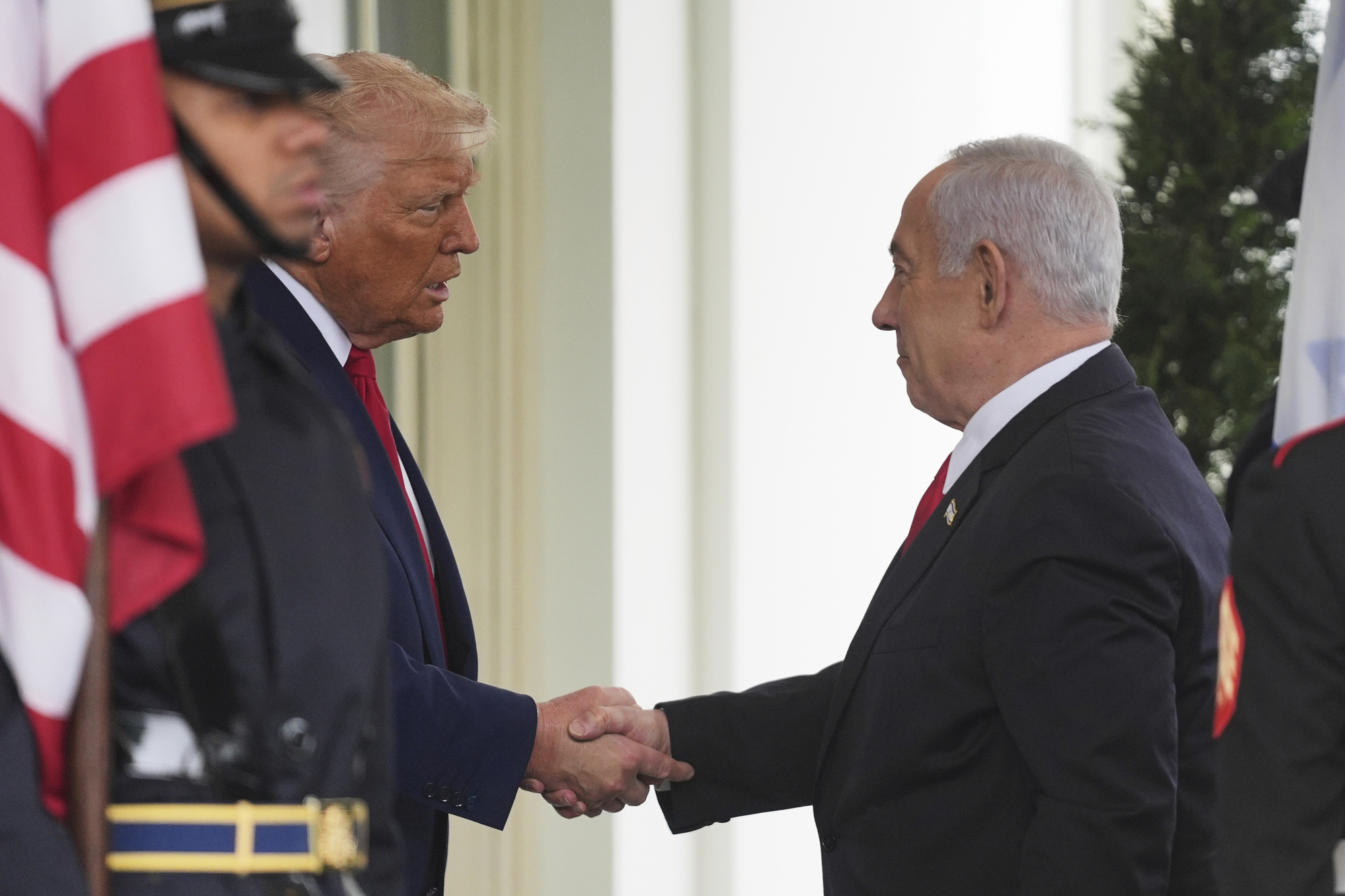
Israeli Prime Minister Benjamin Netanyahu is meeting US President Donald Trump in Washington, becoming the first foreign leader to visit Mr Trump since he unleashed tariffs on countries around the world.
Whether Mr Netanyahu’s visit succeeds in bringing down or eliminating Israel’s tariffs remains to be seen, but how it plays out could set the stage for how other world leaders try to address the new tariffs.
Mr Trump greeted the Israeli prime minister with a firm handshake as he arrived for talks.
Mr Trump ignored shouted questions from reporters about the tumbling global markets and whether he would lift tariffs on Israel.

Shortly before their meeting, the White House announced that Mr Trump and Mr Netanyahu’s plans to hold a joint news conference had been cancelled.
The White House did not offer any immediate explanation for why it was scrapped, but Mr Trump and Mr Netanyahu were expected to make comments to reporters at the start of their scheduled Oval Office meeting.
Mr Netanyahu’s office has put the focus of his hastily organised Washington visit on the tariffs, while stressing that the two leaders will discuss major geopolitical issues including the war in Gaza, tensions with Iran, Israel-Turkey ties and the International Criminal Court, which issued an arrest warrant against the Israeli leader last year.
Mr Trump in February signed an executive order imposing sanctions on the ICC over its investigations of Israel.
Mr Netanyahu soon after arriving in Washington on Sunday evening met senior Trump administration officials, commerce secretary Howard Lutnick and US trade representative Jameson Greer, to discuss the tariffs. And on Monday Mr Netanyahu met Steve Witkoff, Mr Trump’s special envoy to the Middle East, ahead of his sit down with the president.
Mr Trump and Mr Netanyahu are also expected to discuss Israel’s hoped-for annexation of parts of the occupied West Bank, which the Palestinians want as the heart of their future independent state.
Eytan Gilboa, an expert on US-Israel relations, said he expected Mr Trump to use the tariffs as leverage to force concessions from Mr Netanyahu.
In Israel’s case, those concessions might not be economic. Mr Trump may pressure Mr Netanyahu to move toward ending the war in Gaza — at the very least through some interim truce with Hamas that would pause the fighting and free more hostages.
Mr Gilboa said Mr Trump is hoping to return from his first overseas trip — expected next month to Saudi Arabia — with some movement on a deal to normalise relations with Israel, which would likely require significant Israeli concessions on Gaza.
If he does manage to move toward bolstering ties between Israel and Saudi Arabia, that would act as a regional diplomatic counterweight to pressure Iran, against which Mr Trump has threatened new sanctions and suggested military action over its nuclear programme.
In a pre-emptive move last week, Israel announced that it was removing all tariffs on goods from the US, mostly on imported food and agricultural products, according to a statement from Mr Netanyahu’s office.
The statement did not mention Mr Trump’s impending tariffs, which were announced the following day, but said Israel’s step would bolster ties with its largest trading partner, the United States. Israel is not a major trading partner of the US.
But the tactic failed, and with a 17% rate, Israel was just one of dozens of countries that were slapped with tariffs on Mr Trump’s so-called Liberation Day last week.
Although Israel is a tiny market for US products, the United States is a key trade partner of Israel. Much of that trade is for high-tech services, which are not directly affected by the tariffs, but key Israeli industries could be impacted.
The Manufacturers Association of Israel estimates that the tariffs will cost Israel about three billion dollars (£2.35 billion) in exports each year and lead to the loss of 26,000 jobs in industries that include biotechnology, chemicals, plastics and electronics.
The World Bank says Israel’s gross domestic product, a measure of economic output, is more than 500 billion dollars (£391 billion) a year.
“The damage won’t stop at exports,” said Ron Tomer, the group’s president. “It will scare investors, encourage companies to leave Israel and undermine our image as a global centre of innovation.”
He called on the government to work urgently to protect the economy.
CONNECT WITH US TODAY



Be the first to know the latest news and updates







