Mexican president orders retaliatory tariffs on US
Canadian prime minister Justin Trudeau said his country was also “prepared” to quickly respond
Mexican president orders retaliatory tariffs on US

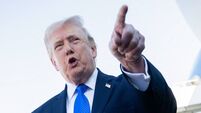
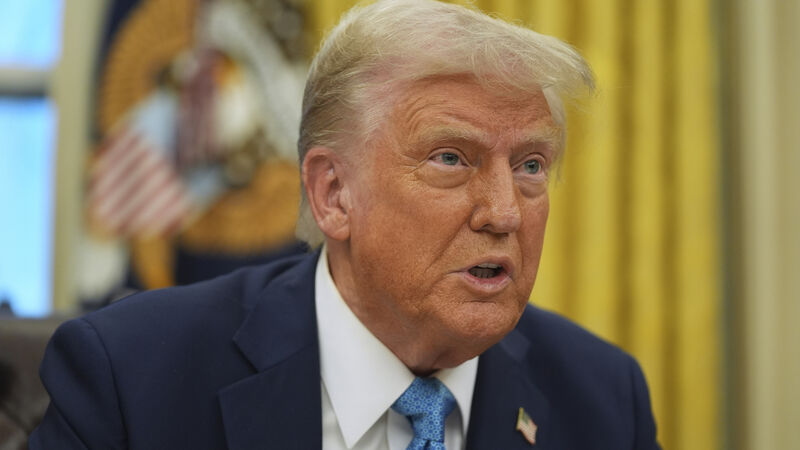
President Donald Trump speaks to reporters as he signs executive orders in the Oval Office. Picture: AP/Evan Vucci

Mexico’s president has ordered retaliatory tariffs on the US after President Donald Trump placed sweeping tariffs on goods from Mexico, Canada and China on Saturday.

Canadian prime minister Justin Trudeau said his country was also “prepared” to quickly respond.

In a post on X, Mexican president Claudia Sheinbaum said she had instructed her economy secretary to implement a response that includes retaliatory tariffs and other measures in defence of her country’s interests.

“We categorically reject the White House’s slander that the Mexican government has alliances with criminal organisations, as well as any intention of meddling in our territory,” Ms Sheinbaum wrote.

Mexico’s president, Claudia Sheinbaum, also announced new tariffs (Marco Ugarte)

“If the United States government and its agencies wanted to address the serious fentanyl consumption in their country, they could fight the sale of drugs on the streets of their major cities, which they don’t do and the laundering of money that this illegal activity generates that has done so much harm to its population.”

Mr Trump’s order includes a mechanism to escalate the rates if the countries retaliate against the US.

The decision throws the global economy and Mr Trump’s own political mandate to combat inflation into possible turmoil, although the Republican president posted on social media that it was necessary “to protect Americans.”

The tariffs risk an economic standoff with America’s two largest trading partners Mexico and Canada, upending a decades-old trade relationship with the possibility of harsh reprisals by those two nations.

The tariffs could cause inflation to significantly worsen, possibly eroding voters’ trust that Mr Trump could deliver his promise to lower the prices of groceries, gas, housing, vehicles and other goods.

Mr Trump declared an economic emergency in order to place duties of 10% on all imports from China and 25% on imports from Mexico and Canada.

Energy imported from Canada, including oil, natural gas and electricity, would be taxed at a 10% rate.

The tariffs would go into effect on Tuesday, setting a showdown in North America that could potentially sabotage economic growth.

A new analysis by the Budget Lab at Yale laid out the possible damage to the US economy, saying the average US household would lose the equivalent of 1170 dollars (£943) in income from the taxes.

Economic growth would slow and inflation would worsen — and the situation could be worse if Canada, Mexico and China retaliate.

Mr Trudeau on Saturday said that Canada is ready to address the tariffs the US government announced.

In a message on his X account, he said was going to talk to Ms Sheinbaum about the US administration decision, and later he would speak to Canadians.

“We did not want this, but Canada is prepared,” he said.

The premier of the Canadian province of British Columbia, David Eby, called on residents to stop buying liquor from US “red” states and remove American alcohol brands from government store shelves as a response to the tariffs.

In a televised message, Mr Eby deemed the Trump administration’s decision as “a declaration of economic war against a trusted ally and friend” and that he will stand up for his citizens and all Canadians in general.

“Effective today, I have directed BC liquor sales to immediately stop buying American liquor from red states,” he said.

“Liquor store employees will be removing the most popular of these brands from government store shelves.”

A senior US administration official, insisting on anonymity to brief reporters, said the lower rate on energy reflected a desire to minimise any disruptive increases in the price of gas or utilities.

That is a sign White House officials understand the gamble they are taking on inflation. Price spikes under former president Joe Biden led to voter frustration that helped to return Mr Trump to the White House.

The order signed by Mr Trump contained no mechanism for granting exceptions, the official said, a possible blow to homebuilders who rely on Canadian lumber as well as farmers, automakers and other industries.

The Trump administration put the tariffs in place to force the three countries to stop the spread and manufacturing of fentanyl, in addition to pressuring Canada and Mexico to limit any illegal immigration into the United States.

The official did not provide specific benchmarks that could be met to lift the new tariffs, saying only that the best measure would be fewer Americans dying from fentanyl addiction.

The order would also allow for tariffs on Canadian imports of less than 800 dollars (£645).

Imports below that sum are currently able to cross into the United States without customs and duties.

More in this section

Cookie Policy Privacy Policy Brand Safety FAQ Help Contact Us Terms and Conditions

© Examiner Echo Group Limited