South Korean parliament to vote on impeachment motion against president
South Korea’s Parliament is set to vote on an opposition-led impeachment motion against President Yoon Suk Yeol on Saturday.
The vote comes two days after Mr Yoon defended his controversial martial law decree and vowed to resist mounting calls for his ouster.
It will be the second time for the National Assembly to hold a vote on an impeachment motion over the short-lived December 3 martial law introduction.
Last Saturday, Mr Yoon survived an impeachment vote after most ruling party lawmakers boycotted a floor vote.

It is not clear if those People Power Party lawmakers would do the same again. Public protests against Mr Yoon have since intensified and his approval rating has plummeted.
The country’s six opposition parties control the 300-member unicameral parliament with a combined 192 seats, but they are eight seats shy of the two-thirds majority needed to pass Mr Yoon’s impeachment motion.
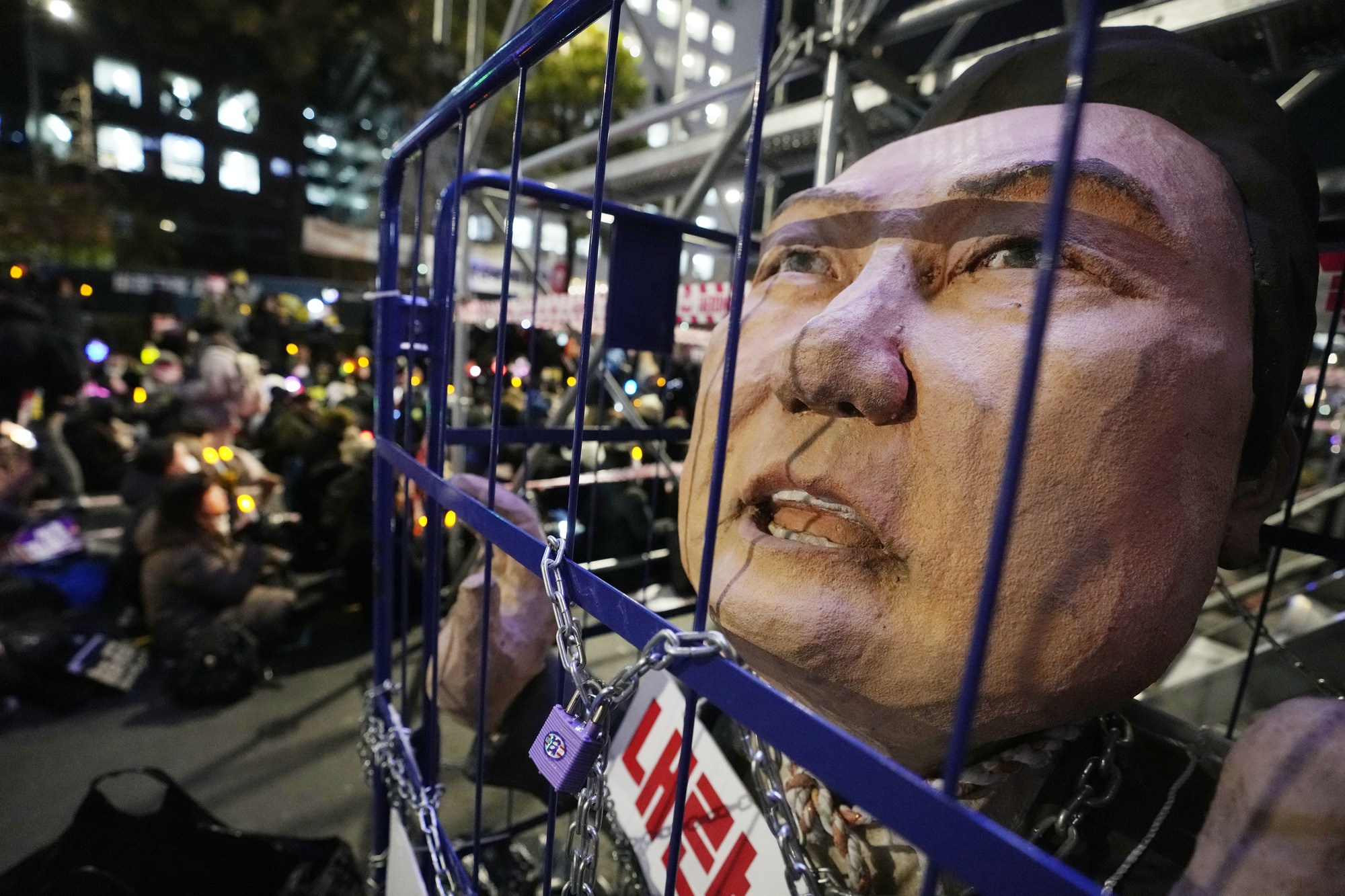
Tens of thousands of people have poured onto the streets of the capital Seoul in the past two weeks, calling for Mr Yoon to be removed from office and arrested.
Smaller groups of Mr Yoon’s conservative supporters — still in the thousands — gathered in Seoul’s Gwanghwamun boulevard, claiming the opposition’s impeachment push was “unconstitutional” and “false propaganda.”
Mr Yoon’s martial law imposition, the first of its kind in more than four decades in South Korea, lasted only six hours but has caused political tumult, halted diplomatic activities and rattled financial markets. The president was forced to lift his decree after parliament unanimously voted to overturn it.
After declaring martial law, Mr Yoon sent hundreds of troops and police officers to the parliament to try to impede its vote on the decree before they withdrew after the parliament rejected it. No major violence occurred.
Opposition parties and many experts accuse Mr Yoon of rebellion, citing a law clause that categorises as rebellion the staging of a riot against established state authorities to undermine the constitution.
They also say that by law a president in South Korea is allowed to declare martial law only during wartime or similar emergencies and has no right to suspend parliament’s operations even under martial law.
Law enforcement authorities are investigating whether Mr Yoon and others involved in the declaration committed rebellion, abuse of power and other crimes. If convicted, the leader of a rebellion plot can face the death penalty or life imprisonment.
On the night of December 3, Mr Yoon also sent soldiers and police officers to the National Election Commission, in what he called a bid to check vulnerabilities in its computer systems that could raise questions about the results of elections.
This has spawned speculation that he acted on unfounded rumours or conspiracy theories that the outcome of April’s parliamentary elections, in which the ruling party suffered a massive defeat, was rigged.
The impeachment motion alleged that Mr Yoon “committed rebellion that hurts peace on the Republic of Korea by staging a series of riots.”
It said Mr Yoon’s mobilisation of military and police forces threatened the National Assembly and the public and that his martial law decree was aimed at disturbing the Constitution.
In a fiery speech on Thursday, Mr Yoon defended his martial law order as an act of governance and denied rebellion charges. He claimed the troops’ deployment to the National Assembly was designed to maintain order, not dissolve or paralyse it.
The conservative president said he aimed to issue a warning to the main liberal opposition Democratic Party, calling it “a monster” and “anti-state forces” that he argued has flexed its legislative muscle to impeach top officials, undermined the government’s budget bill for next year and sympathised with North Korea.

“I will fight to the end to prevent the forces and criminal groups that have been responsible for paralysing the country’s government and disrupting the nation’s constitutional order from threatening the future of the Republic of Korea,” he said.
Democratic Party leader Lee Jae-myung called the speech a “mad declaration of war” against his own people.
If the National Assembly passes Mr Yoon’s impeachment motion, his presidential powers and duties will be suspended until the Constitutional Court determines whether to dismiss him as president or restore his powers. If he is thrown out of office, a national election to choose his successor must be held within 60 days.
Mr Yoon’s defence minister, police chief and the head of Seoul’s metropolitan police agency have been arrested or detained over their roles in the martial law case. Other senior military and government officials also face investigations.
Ex-defense minister Kim Yong Hyun, who resigned on December 5, is considered a central figure in Mr Yoon’s martial law enforcement. The opposition parties alleged he proposed martial law to Mr Yoon and the president said on Thursday he discussed imposing marital law only with Mr Kim before informing other top officials just before declaring it.
Mr Kim attempted to kill himself while in detention before correctional officers stopped him and he was in stable condition, according to the Justice Ministry.
Mr Yoon has the presidential privilege of immunity from criminal prosecution but that does not extend to allegations of rebellion or treason.
He could be investigated, detained, arrested or indicted over his martial law decree, but many observers doubt that authorities will forcefully detain him because of the potential for clashes with his presidential security service.
CONNECT WITH US TODAY



Be the first to know the latest news and updates