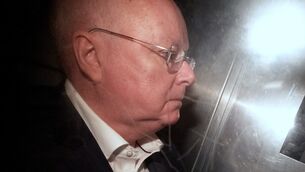
Judge mulls over Trump hush money trial after documents dump delay
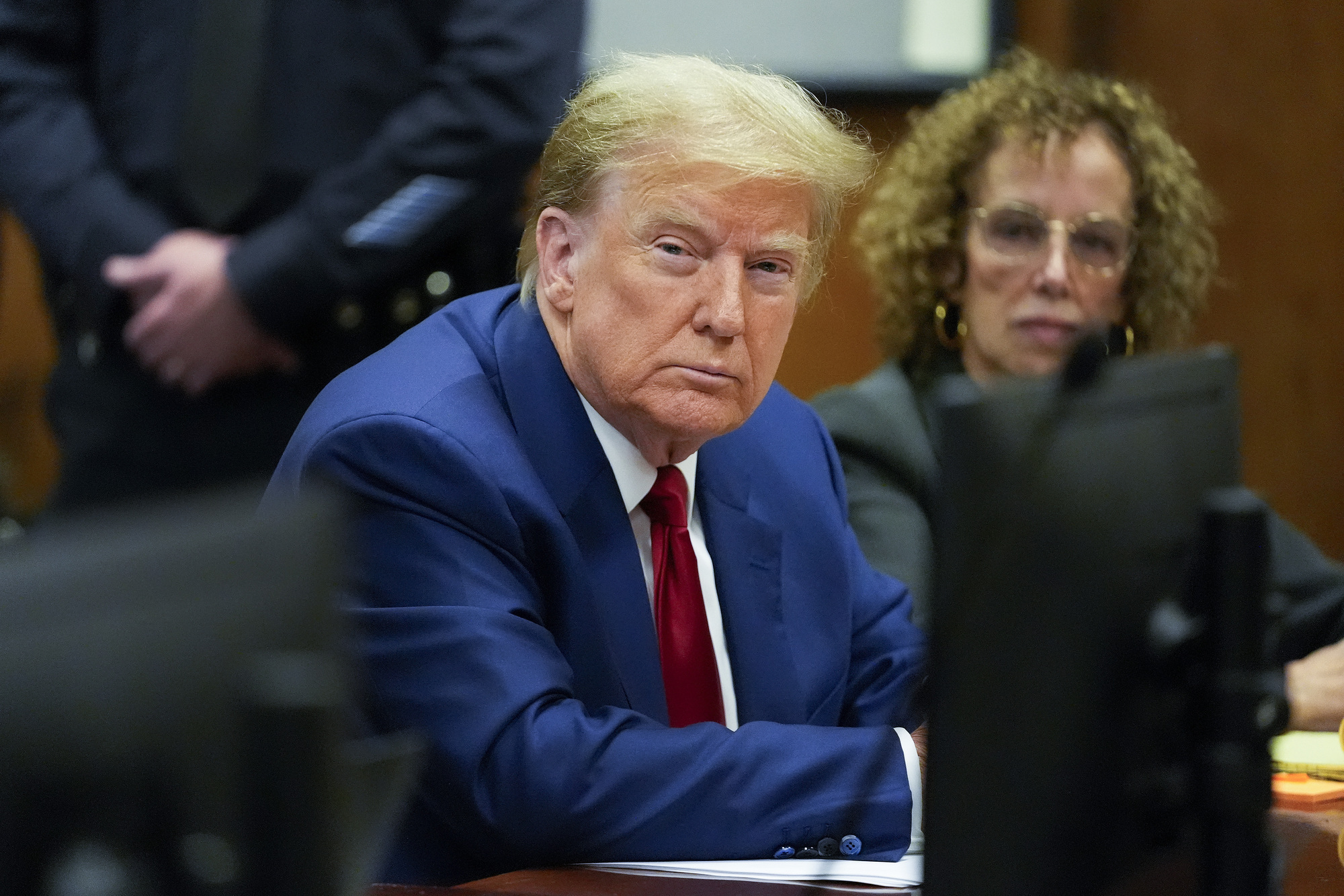
A New York judge presiding over Donald Trump’s hush money case is weighing when, or even whether, the former president will go on trial after a postponement due to a last-minute document dump.
The presumptive Republican presidential nominee arrived in court for a hearing scheduled in place of the long-planned start of jury selection in the first of his four criminal cases to go to trial.
The trial has been put off until at least mid-April because of the recent delivery of tens of thousands of pages of records from a previous federal investigation.
The hearing was being held on a uniquely consequential day for Mr Trump and his legal and political affairs as, besides a likely determination of a trial date, the former president could also find out how New York state aims to collect more than 457 million dollars he owes in his civil business fraud case.
The hush money case, filed last year by prosecutors in Manhattan, has taken on added importance given that it is the only one of the prosecutions against Mr Trump that appears likely for trial in the coming months.
The simmering documents dispute is significant to the extent it results in a meaningful delay to the trial, which centres on years-old allegations that Mr Trump arranged a payment to a porn actor during his 2016 presidential campaign to suppress claims of an extramarital affair.
New York Judge Juan M Merchan summoned both sides to court on Monday to explain what happened with the documents, so he can evaluate whether to fault or penalise anyone and decide on the next steps.
The district attorney’s office says there is little new material in the trove and no reason for further delay, with prosecutor Matthew Colangelo saying in court that the number of relevant, usable, new documents “is quite small” — around 300 records or fewer.
“We very much disagree,” countered defence lawyer Todd Blanche, who said the number totalled in the thousands and continues to grow.
Mr Trump’s lawyers argue that the delayed disclosures warrant dismissing the case or at least pushing it off three months.
“We’re not doing our jobs if we don’t independently review the materials,” Mr Blanche said. “Every document is important.”
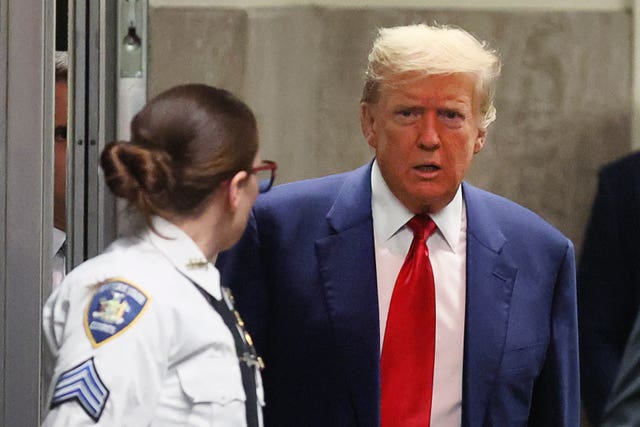
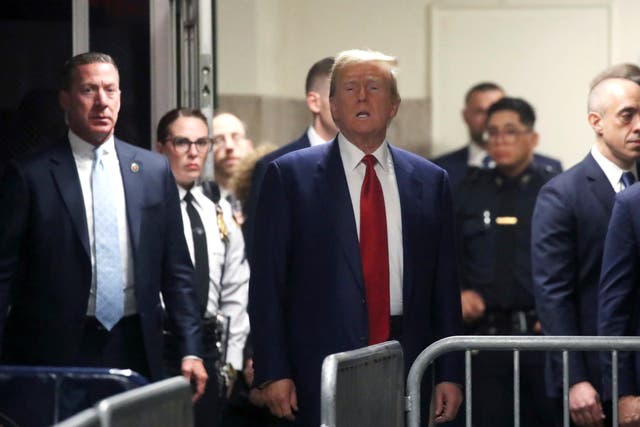
Before Mr Trump appeared in court for the hearing, he told reporters in the hallway: “This is a witch hunt. This is a hoax. Thank you.”
Inside the courtroom, he reached for a packet of papers positioned between him and his lawyers at the defence table and chatted with one of his attorneys as he read through the material.
Mr Trump is charged with falsifying business records. Manhattan prosecutors say he did it as part of an effort to protect his 2016 campaign by burying what Mr Trump says were false stories of extramarital sex.
Mr Trump has pleaded not guilty and says the prosecution is politically driven. The prosecutor overseeing the case, Manhattan District Attorney Alvin Bragg, is a Democrat.
The case centres on allegations that Trump falsely logged 130,000 dollars in payments as legal fees in his company’s books “to disguise his and others’ criminal conduct”, as Mr Bragg’s deputies put it in a court document.
The money went to Mr Trump’s then-personal attorney Michael Cohen, but prosecutors say it was not for actual legal work. Rather, they say, Mr Cohen was just recouping money he had paid porn actor Stormy Daniels on Mr Trump’s behalf, so she would not publicise her claim of a sexual encounter with him years earlier.
Mr Trump’s lawyers say the payments to Mr Cohen were legitimate legal expenses, not cover-up checks.
Mr Cohen pleaded guilty in 2018 to federal charges, including campaign finance violations related to the Daniels pay-off. He said Mr Trump directed him to arrange it, and federal prosecutors indicated they believed him, but they never charged Mr Trump with any crime related to the matter.
Mr Cohen is now a key witness in Manhattan prosecutors’ case against Mr Trump.
Mr Trump’s lawyers have said Mr Bragg’s office, in June, gave them a smidgen of materials from the federal investigation into Mr Cohen.
Then they got over 100,000 pages more after subpoenaing federal prosecutors themselves in January. The defence argues that prosecutors should have pursued all the records but instead stuck their heads in the sand, hoping to keep information from Mr Trump.
The material has not been made public. But Mr Trump’s lawyers said in a court filing that some of it is “exculpatory and favourable to the defence”, adding that there is information that would have aided their own investigation and consequential legal filings earlier in the case.
Mr Bragg’s deputies have insisted they “engaged in good-faith and diligent efforts to obtain relevant information” from the federal probe. They argued in court filings that Trump’s lawyers should have spoken up earlier if they believed those efforts were lacking.
Prosecutors maintain that, in any event, the vast majority of what ultimately came is irrelevant, duplicative or backs up existing evidence about Mr Cohen’s well-known federal conviction.
They acknowledged in a court filing that there was some relevant new material, including 172 pages of notes recording Mr Cohen’s meetings with the office of former special counsel Robert Mueller, who investigated Russia’s 2016 election interference.
Prosecutors argued that their adversaries have enough time to work with the relevant material before a mid-April trial date and are just raising a “red herring”.
Mr Trump’s lawyers also have sought to delay the trial until after the Supreme Court rules on his claims of presidential immunity in his election interference case in Washington. The high court is set to hear arguments on April 25.


CONNECT WITH US TODAY



Be the first to know the latest news and updates