Israel says major combat in northern Gaza is over as it switches focus
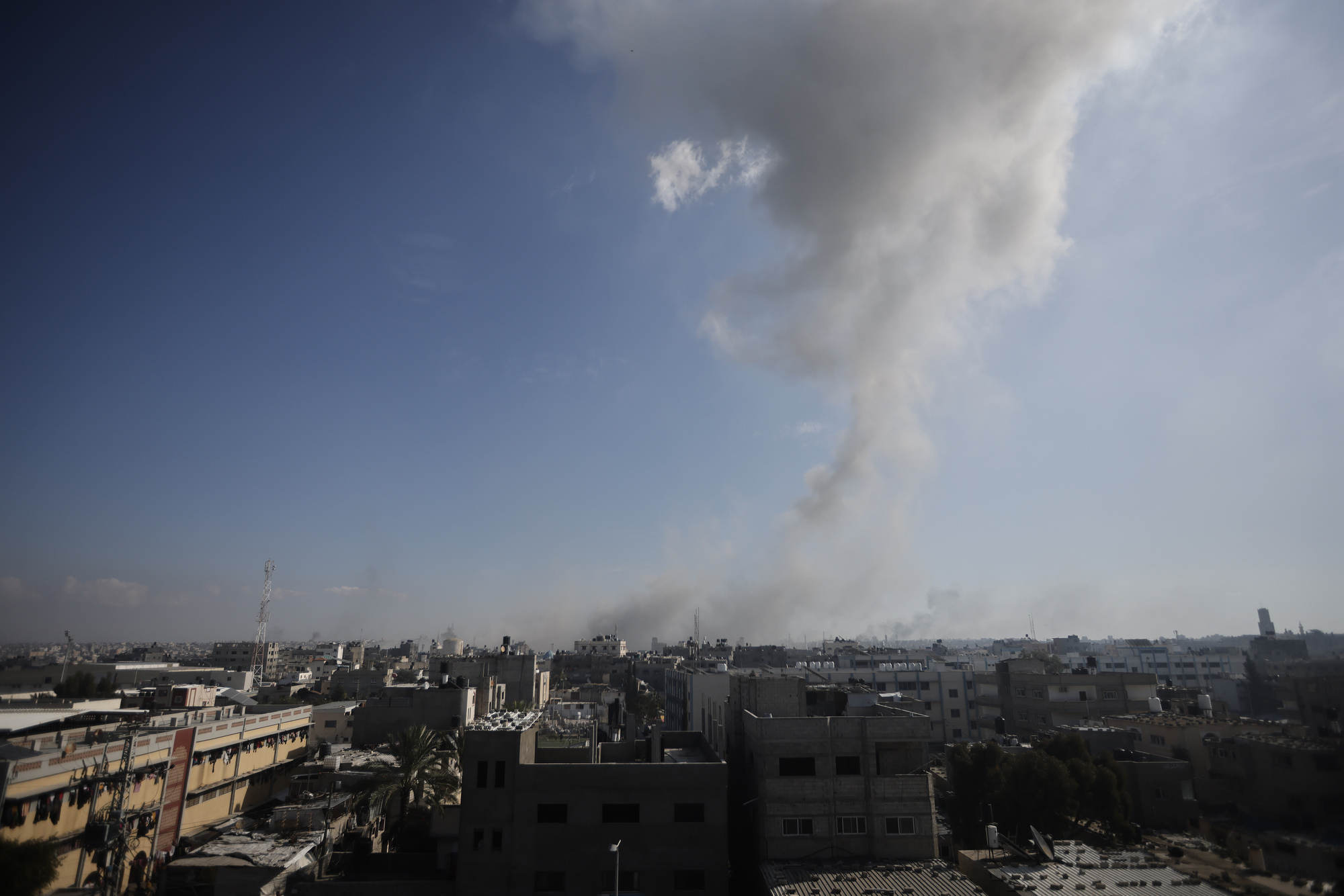
The Israeli military signalled that it has wrapped up major combat in northern Gaza, saying it has completed dismantling Hamasâ military infrastructure there, as the war against the militant group entered its fourth month.
Its spokesman, Rear Admiral Daniel Hagari, said late Saturday that forces would âcontinue to deepen the achievementâ there, strengthen defences along the Israel-Gaza border fence and focus on the central and southern parts of the territory.
The announcement came ahead of a visit to Israel by US Secretary of State Antony Blinken.
Biden administration officials, including Mr Blinken, have repeatedly urged Israel to wind down its blistering air and ground offensive in Gaza and shift to more targeted attacks against Hamas leaders to prevent harm to Palestinian civilians.
In recent weeks, Israel had already been scaling back its military assault in northern Gaza and pressing its offensive in the territoryâs south, where most of Gazaâs 2.3 million Palestinians are being squeezed into smaller areas in a humanitarian disaster while being pounded by Israeli air strikes.
The war was triggered by Hamasâ October 7 attack on southern Israel in which the militants killed about 1,200 people, mostly civilians, and took some 250 people hostage.
Israeli prime minister Benjamin Netanyahu has insisted the war will not end until the objectives of eliminating Hamas, getting Israelâs hostages returned and ensuring that Gaza wonât be a threat to Israel are met.
Israelâs retaliation by air, land and sea has killed more than 22,700 Palestinians and wounded more than 58,000, according to the Health Ministry in Hamas-run Gaza.
The count of the dead does not distinguish between combatants and civilians.
Health officials say about two-thirds of those killed have been women and minors.
Israel blames Hamas for the heavy civilian casualties because the group operates in heavily populated residential areas.
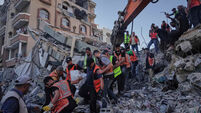
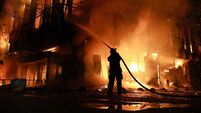
On Sunday, officials at Nasser Hospital in the southern city of Khan Younis received the bodies of 18 people, including 12 children, who were killed in an Israeli strike late Saturday.
More than 50 people were injured in the strike on a home in the Khan Younis refugee camp, which was set up decades ago to house refugees from the 1948 Mideast war over Israelâs creation and morphed into a neighbourhood of the city.
Another airstrike hit a house between Khan Younis and the southern city of Rafah, killing at least seven people whose bodies were taken to the nearby European Hospital.
Israeli forces were also pushing deeper into the central city of Deir al-Balah, where on Saturday residents in several neighbourhoods were warned in flyers dropped over the city that they must evacuate their homes.
The international medical charity Doctors Without Borders, known by the acronym MSF, said it was evacuating its medical staff and their families from Deir al-Balahâs Al Aqsa Martyrsâ Hospital because of the growing danger.
âThe situation became so dangerous that some staff living in the neighbouring areas were not able to leave their houses because of the constant threats of drones and snipers,â said Carolina Lopez, the groupâs emergency coordinator at the hospital.
She said a bullet penetrated a wall of the hospitalâs intensive care unit on Friday, and that âdrone attacks and sniper fire were just a few hundred metres from the hospitalâ over the past couple of days.
The group had about 50 Palestinian and international medical staff in the hospital.
Ms Lopez said the hospital has received between 150 and 200 injured people daily in recent weeks.
âOn some days, we have received more dead than injured,â she said.
âNo one and nowhere is safe in Gaza.â
Rear Admiral Hagari, the military spokesman, said Israeli forces would act differently in the south than they had in northern Gaza, where heavy bombardment and ground combat levelled entire neighbourhoods.
He said the urban refugee camps currently being targeted by the military are packed with gunmen and that âan underground city of sprawling tunnelsâ was discovered underneath Khan Younis.
He said the military is âapplying the lessons we learnedâ, but did not elaborate.
Echoing Israeli political leaders, he said the fighting âwill continue throughout 2024â.
His comments about changing the way the forces are fighting appeared to be a nod to Mr Blinken, who is on his fourth Mideast trip in three months.
In addition to appeals for scaling back high-intensity combat, Mr Blinken has called for more aid to reach Gaza and urged Israelâs leaders to come up with a vision for post-war Gaza.
Two US senators who inspected aid deliveries over the weekend described a cumbersome process that is slowing relief to the Palestinian population in the besieged territory, largely due to Israeli inspections of cargo lorries, with seemingly arbitrary rejections of vital humanitarian equipment.
The system to ensure that aid deliveries within Gaza do not get hit by Israeli forces is âtotally brokenâ, said Senators Chris Van Hollen and Jeff Merkley, both Democrats.
Meanwhile, the Biden administration and Mr Netanyahu remain far apart on who should run the territory after the war, with the Israeli leader repeatedly rejecting the Washington-floated idea of having a reformed Palestinian Authority, an autonomous government in parts of the occupied West Bank, eventually administer Gaza.
In a further complication of Mr Blinkenâs mission, a new escalation of cross-border fighting between Israel and Lebanonâs Hezbollah has put strains on a US push to prevent a regional conflagration.
Saturdayâs fighting was described by Hezbollah as an âinitial responseâ to the targeted killing of a top Hamas leader in a Hezbollah stronghold of the Lebanese capital of Beirut last week.
The strike was presumed to have been carried out by Israel.