Negotiators' brushstrokes often overlooked in the quiet art of the peace deal 
The public imagines diplomacy as a contest of speeches, threats, and grand strategy, but the reality is far more mundane through small gestures that get people to trust each other long before governments do, writes Colin Sheridan
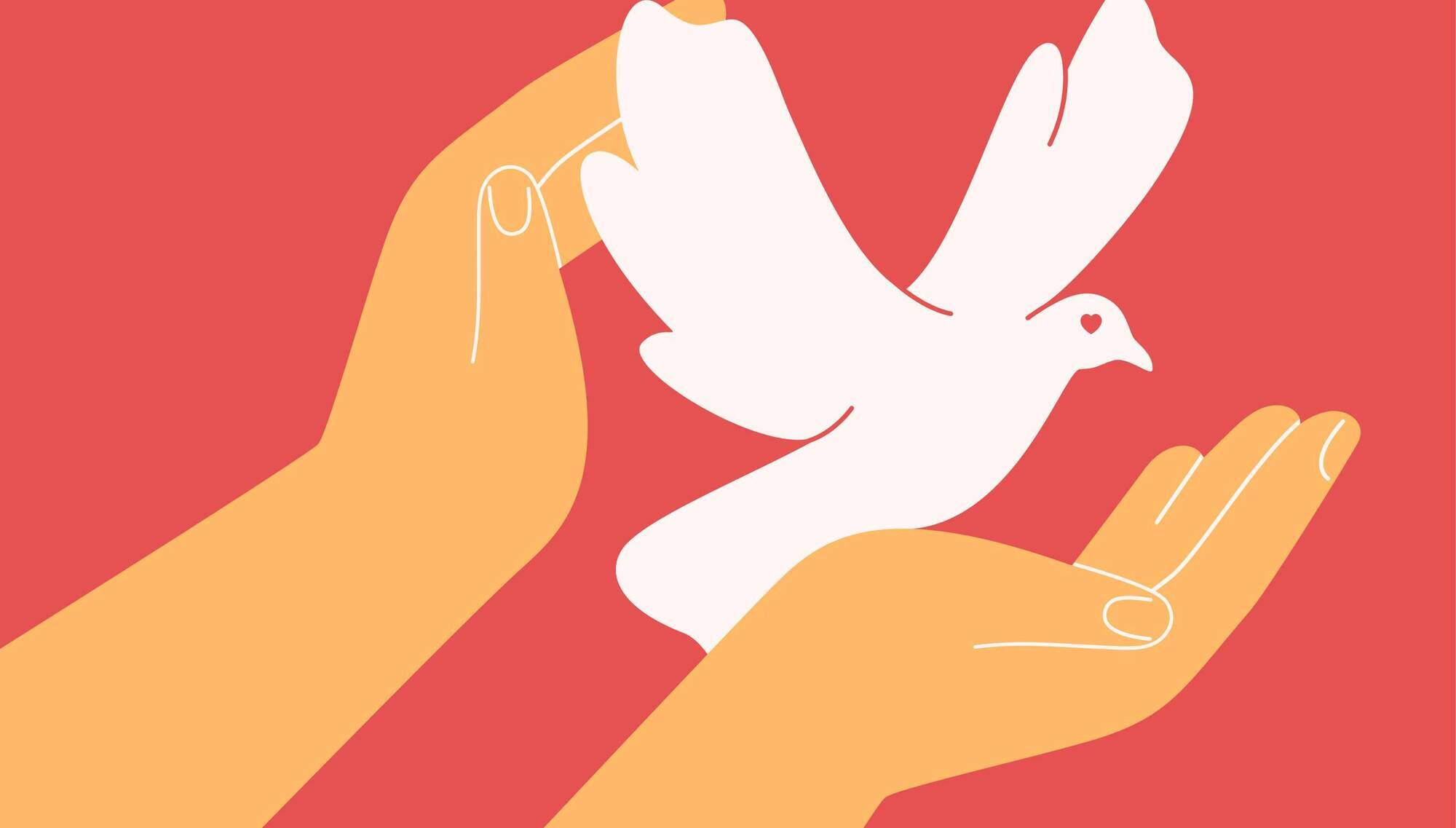
If you want to understand how peace is actually made, you have to look away from the podium. You have to look at the people and actors around the margins. Picture:iStock

If you want to understand how peace is actually made, you have to look away from the podium. You have to look at the people and actors around the margins. Picture:iStock

In July 2015, as negotiators raced to complete what would become the Iran nuclear agreement, two men found themselves discussing something entirely unrelated to uranium enrichment. One was Ernest Moniz, the US energy secretary. The other was Ali Akbar Salehi, the head of Iran’s Atomic Energy Organization.

Both were nuclear physicists. Both had studied at MIT. And when Salehi became a grandfather, Moniz arrived with baby clothes bearing the famous university’s logo. It was a small gesture. Almost absurdly small, given that the two men were attempting to resolve one of the most dangerous geopolitical disputes on Earth. Yet peace negotiations are often built from such moments.

The public imagines diplomacy as a contest of speeches, threats, and grand strategy. The reality is usually far more mundane. Peace is often made by people discovering reasons to trust one another long before their governments do.

As the US and Iran edge once again towards what appears to be a possible — probably untenable — breakthrough, the world’s attention has naturally focused on presidents, supreme leaders, and foreign ministers. We watch the rhetoric from Washington, the responses from Tehran, and the analysis from television studios and think tanks.

But if you want to understand how peace is actually made, you have to look away from the podium. You have to look at the people and actors around the margins.

History has a habit of remembering peace agreements through the names attached to them. Camp David. Oslo. The Good Friday Agreement. We remember the leaders who sign the documents, shake the hands, and pose for the photographs. What we tend to forget or ignore are the people who made those moments possible.

In the autumn of BC40, Rome stood on the brink of another civil war. The assassination of Julius Caesar had plunged the republic into chaos. Rival armies were mobilising, and two of the most powerful men in the Roman world — Mark Antony and Octavian — appeared destined to settle their differences the way Romans often did: Through blood and violence.

Most remember Antony, Caesar’s consigliere, and others remember Octavian, who would later become Augustus, the first Roman emperor. But few can claim knowledge of the intermediaries. The senators carrying messages between rival camps, the envoys travelling between armies, or the negotiators quietly creating the conditions for compromise.

Among those working behind the scenes were figures such as Antony’s mother Julia and the formidable Fulvia, alongside negotiators such as Maecenas and Asinius Pollio. They occupied the political space between enemies, translating intentions, carrying messages, and keeping lines of communication open. Some 2,000 years later, the job description remains remarkably familiar.

Ministers and government officials from around the world attended a statement on early November 24, 2013, in Geneva, after an agreement had been reached with Iran over its nuclear programme. What we tend to forget or ignore are the people who made those moments possible. File Picture: Fabrice Coffrini/AFP/Getty

The most successful diplomats often disappear entirely from the story. That is because peace is fundamentally a problem of trust. Or, more accurately, a problem of the absence of trust.

When two enemies agree to negotiate, they rarely do so because they suddenly like one another.

They do not wake up one morning and discover a shared worldview. More often, they remain deeply suspicious of each other.

The challenge is finding a way to communicate despite that distrust. This is where the invisible architecture of diplomacy emerges.

Countries such as Oman, Qatar, Norway, and Switzerland have become specialists in something that might be described as trust aggregation. Their power does not derive from armies or economic might. Their value lies in their ability to provide neutral ground, discreet channels, and credibility.

When direct communication becomes politically impossible, intermediaries become essential

A president cannot be seen talking to an enemy, and an ayatollah cannot afford to appear weak. Domestic politics makes honesty difficult. So messages are passed through third parties. Intentions are clarified. Misunderstandings are corrected. The intermediary becomes the shock absorber.

The public sees the rhetoric. The intermediaries manage the reality.

Then Iranian foreign minister Mohammad Javad Zarif shakes hands with then US secretary of state John Kerry following the agreement in 2013. File Picture: Fabrice Coffrini/AFP/Getty

One of the most striking findings from decades of peace-process research is that negotiations rarely succeed because somebody discovers a brilliant argument. They succeed because communication survives long enough for compromise to emerge.

Political scientist I William Zartman described this as a “mutually hurting stalemate”.

Peace becomes possible when both sides realise that continuing the conflict has become more costly than ending it. The honest realisation a war cannot be won. At that moment, a window opens.

When it does, somebody has to be waiting. This is why diplomacy is often less about persuasion than persistence. The popular image of diplomacy is a conference table with low lighting. The reality is often a coffee table under flickering fluorescent bulbs.

In memoir after memoir, negotiators describe the same phenomenon. The formal sessions produce position papers, speeches, and carefully rehearsed talking points. The breakthroughs happen elsewhere. In corridors. Over meals and half-smoked cigarettes while waiting for buses back to hotels.

One veteran mediator observed that successful peace negotiations are measured not in agreements but in coffee cups. Every cup represents another conversation. Another hour in which dialogue did not collapse. Another opportunity to understand what the other side fears.

Peace, it turns out, is often made in the spaces between meetings.

Then Egyptian president Anwar Sadat, former US president Jimmy Carter, and then Israeli prime minister Menachem Begin clasp hands on the north lawn of the White House after signing the peace treaty between Egypt and Israel on March 26, 1979. File Picture: AP

The Camp David negotiations of 1978 offer a perfect example. Relations between Egyptian and Israeli negotiators frequently became so strained that formal discussions nearly broke down. Yet conversations continued through aides, intermediaries, and informal encounters outside the negotiating rooms.

The same pattern appeared during the Iran nuclear talks. There were moments of extraordinary tension. At one stage, secretary of state John Kerry and Iranian foreign minister Javad Zarif reportedly found themselves shouting across a negotiating table.

This is another misconception about diplomacy: Peace negotiations are not serene. They are often exhausting, emotional, and deeply frustrating. The people involved carry the weight of history, politics, and public expectation on their shoulders. They are expected to find common ground while representing constituencies that may actively oppose compromise.

The remarkable thing is not that negotiations become heated, but that people keep coming back to the room.

Perhaps the most revealing anecdote from the 2015 joint comprehensive plan of action (JCPOA) negotiations involved neither centrifuges nor sanctions.

It — once again — involved grandchildren. At various points during the talks, lead US negotiator Wendy Sherman and her Iranian counterpart Abbas Araghchi found themselves discussing their families. Both had recently become grandparents. Amid the tension of one of the world’s most consequential diplomatic efforts, they shared photographs of their grandchildren on their phones.

A simple story that reveals something profound: Peace does not happen because people stop disagreeing, but when people discover a reason to keep talking despite the disagreement. Because peace is ultimately a human activity.

In an age of instant communication, AI, and performative politics, there is a temptation to view diplomacy as outdated. Slow. Bureaucratic. Inefficient. Yet, diplomacy remains one of humanity’s most important technologies.

If a deal — however fragile — eventually emerges between Washington and Tehran, the headlines will belong to presidents, foreign ministers, and ayatollahs. They always do.

They will stand behind podiums. They will speak about history and, with elections looming and masses to placate, they will claim credit.

But the real story will have been written elsewhere. In the hotel rooms of Muscat, the embassy corridors of the Gulf. In late-night phone calls and technical discussions between physicists.

And in photographs of grandchildren. Over countless cups of coffee shared by people determined to keep talking when every reason existed to walk away.

More in this section

Lunchtime News

Newsletter

Get a lunch briefing straight to your inbox at noon daily. Also be the first to know with our occasional Breaking News emails.

Cookie Policy Privacy Policy Brand Safety FAQ Help Contact Us Terms and Conditions

© Examiner Echo Group Limited