Israeli protesters block roads amid anger over plans to overhaul judiciary
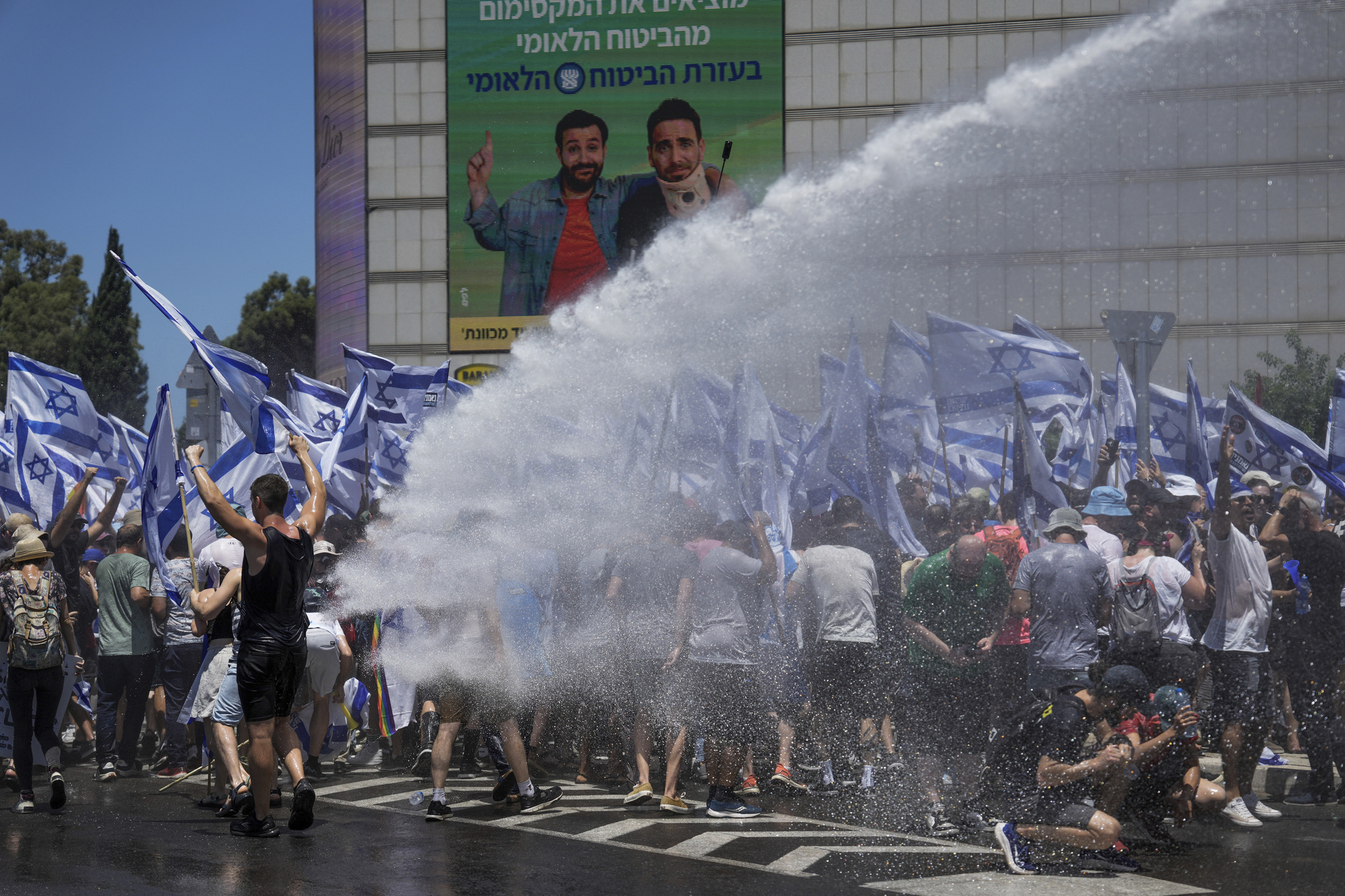
Israeli protesters have blocked roads leading to Jerusalem, Haifa and Tel Aviv during countrywide demonstrations against the government’s planned judicial overhaul that has divided the nation.
The demonstrations came on the morning after Prime Minister Benjamin Netanyahu’s parliamentary coalition gave initial approval to a Bill to limit the Supreme Court’s oversight powers, pressing forward with contentious changes to the judiciary despite widespread opposition.
The legislation is one of several bills proposed by Mr Netanyahu’s ultranationalist and ultra-Orthodox allies. The plan has provoked months of sustained protests by opponents who say it is pushing the country toward authoritarian rule.
Protesters called for nationwide mass demonstrations throughout the day, including at Israel’s main international airport.

An estimated 10,000 people gathered outside the main hall of the airport, blowing horns and waving blue and white Israeli flags.
Police kept the crowd from entering the hall, and travel was not disrupted.
Adi Somech, one of the protesters, said: “Civil war! I think we’re going that way if they’re not going to stop.”
On Tuesday, 300 reservists from the military’s cyber unit signed a letter saying they would not volunteer for service, explaining the government has demonstrated “it is determined to destroy the state of Israel”.
“Sensitive cyber abilities with the potential for being used for evil must not be given to a criminal government that is undermining the foundations of democracy,” the letter said.
Police used a water cannon to clear protesters who blocked a main artery leading to Jerusalem.
Officers arrested several others who had obstructed a highway next to the central city of Modiin. Demonstrators blocked a main highway in Haifa with a large banner reading “Together we will be victorious”, snarling traffic along the beachfront.
Police said 66 people were arrested for public disturbance during the protests nationwide.
Protesters scuffled with police in various locations, but no major violence was reported.
Arnon Bar-David, head of the country’s national labour union, the Histadrut, threatened a possible general strike that could paralyse the country’s economy.
“If the situation reaches an extreme, we will intervene and employ our strength,” Mr Bar-David said, calling on Mr Netanyahu to “stop the chaos”.

The Histadrut called a general strike in March as the government pushed the judicial overhaul legislation through parliament after weeks of protest. The move shut down large swathes of Israel’s economy and helped contribute to Mr Netanyahu deciding to freeze the legislation.
But he decided to revive it last month after talks with the political opposition aimed at finding a compromise collapsed.
Mr Netanyahu’s allies have proposed a series of changes to the Israeli legal system aimed at weakening what they say are the excessive powers of unelected judges. The proposed changes include giving Mr Netanyahu’s allies control over the appointment of judges and giving parliament power to overturn court decisions.
The Netanyahu government, which took office in December, is the most hard-line ultranationalist and ultra-Orthodox in Israel’s 75-year history.
His allies proposed the sweeping changes to the judiciary after the country held its fifth elections in under four years, all of them seen as a referendum on Mr Netanyahu’s fitness to serve as prime minister while on trial for corruption.
Critics of the judicial overhaul say it will upset the country’s fragile system of checks and balances and concentrate power in the hands of Mr Netanyahu and his allies. They also say Mr Netanyahu has a conflict of interest because he is on trial for charges of fraud, breach of trust and accepting bribes, all of which he has denied.
A wide swathe of Israeli society, including reserve military officers, business leaders, LGBT+ people and members of other minority groups have joined the protests.

CONNECT WITH US TODAY



Be the first to know the latest news and updates