Iranian teachers hold protests over suspected poisoning of schoolgirls
Security forces broke up several of the demonstrations using water cannons and tear gas, activists said.
Iranian teachers hold protests over suspected poisoning of schoolgirls

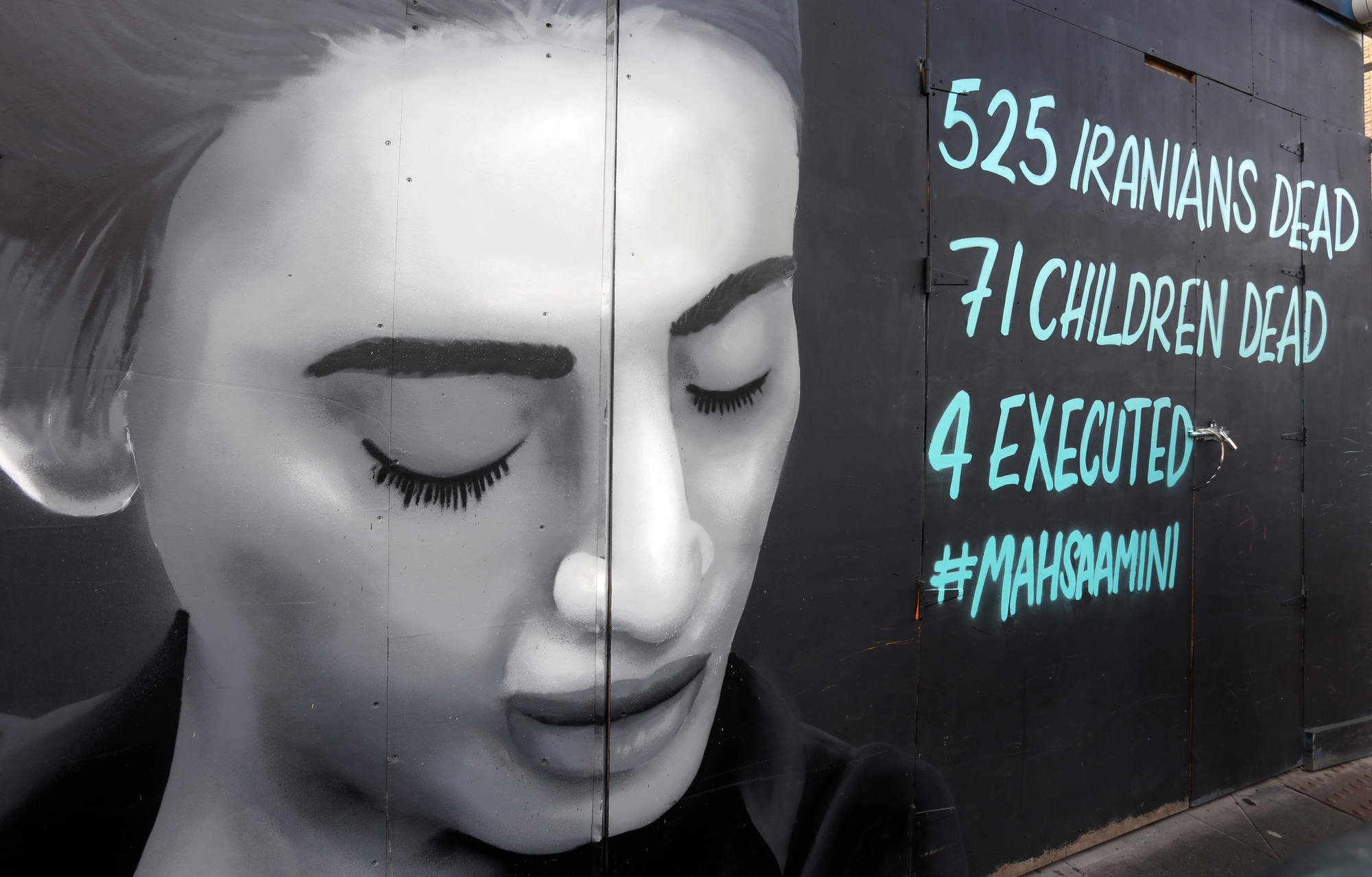
A mural on Dame Street, Dublin, depicting how many people have died since civil unrest and protests against the government of Iran associated with the death in police custody of Mahsa Amini began on 16 September 2022. Photo Leah Farrell/RollingNews.ie

Iranian teachers have held protests in several cities over suspected poisonings targeting hundreds of schoolgirls.

Security forces broke up several of the demonstrations using water cannons and tear gas, activists said.

Meanwhile, prosecutors started filing criminal charges against journalists, activists and others over their comments on the unsolved incidents that began in November and escalated in recent days, with dozens of schools reporting suspected cases.

The alleged poisonings come as Iran has faced months of protests over the September death of Mahsa Amini after her arrest by the country’s morality police, one of the most serious challenges to Iran’s theocracy since the 1979 Islamic Revolution.

These new incidents threaten to again stoke public anger as parents fear for their children’s safety. It remains unclear who may be behind the suspected attacks and what chemicals — if any — have been used.

At least 127 schools have reported suspected poisoning cases, according to figures compiled by the Tehran-based reformist newspaper Etemad, with dozens reported on one recent day alone.

Nearly every school reporting an incident has been a girls’ school.

Women shout slogans during a protest against the death of Iranian Mahsa Amini, in Istanbul, Turkey

Activists and Iranian media reports have said that more than 1,000 students complained of falling ill with at least 400 of them treated in hospital. Iranian authorities have offered no exact figures since the crisis began.

However, Mohammed Hassan Asefari, a prominent Iranian lawmaker who is on a panel investigating the incidents and has close ties to security forces, told the semiofficial ISNA news agency that as many as 5,000 students have complained of becoming ill in 230 schools across 25 of Iran’s 31 provinces.

On Tuesday, online videos and photos showed teachers demonstrating in a number of Iranian cities, including Ahvaz, Isfahan, Karaj, Mashhad, Rasht, Sanandaj, Saqqez and Shiraz.

Others showed anti-riot police on streets, with some police officers surrounding those demonstrating in Isfahan.

Activists identifying themselves as belonging to Iran’s Coordinating Council of Teachers Syndicates said police used pepper spray, water cannons and force to disperse protesters in Mashhad, Rasht and Saqqez.

Iranian state media made no mention of Tuesday’s demonstrations or of security forces dispersing demonstrators.

Teachers have been targeted by security forces and faced arrests for months over protesting in support of their long-standing demands for salary increases amid the collapse of Iran’s currency, the rial.

Protesters and others have raised the possibility that religious extremists may be targeting schoolgirls to stop them from receiving an education.

Violence against women

Attacks on women have happened in the past in Iran, most recently with a wave of acid attacks in 2014 around Isfahan, at the time believed to have been carried out by hard-liners targeting women for how they dressed.

But even in the chaos surrounding the Islamic Revolution, no one targeted schoolgirls for attending classes.

Iran has been calling on the Taliban in neighbouring Afghanistan to let girls and women return to school.

Determining what is going on in Iran has been difficult.

Authorities have detained nearly 100 journalists since the start of the protests in September over the death of Ms Amini, 22. The targeting of journalists has escalated in recent days amid their reports on the suspected poisonings.

Tehran chief prosecutor Ali Salehi said authorities began filing charges against journalists, including editors at the reformist newspapers Hammihan and Shargh, which have led reporting on the suspected poisonings.

A news site, activists and others also face charges over allegedly spreading “unreal claims and totally false” statements about the attacks, Mr Salehi said, according to the Iranian judiciary’s Mizan news agency.

x

More in this section

Cookie Policy Privacy Policy Brand Safety FAQ Help Contact Us Terms and Conditions

© Examiner Echo Group Limited