Climate report warns of regular wildfires and floods in Europe
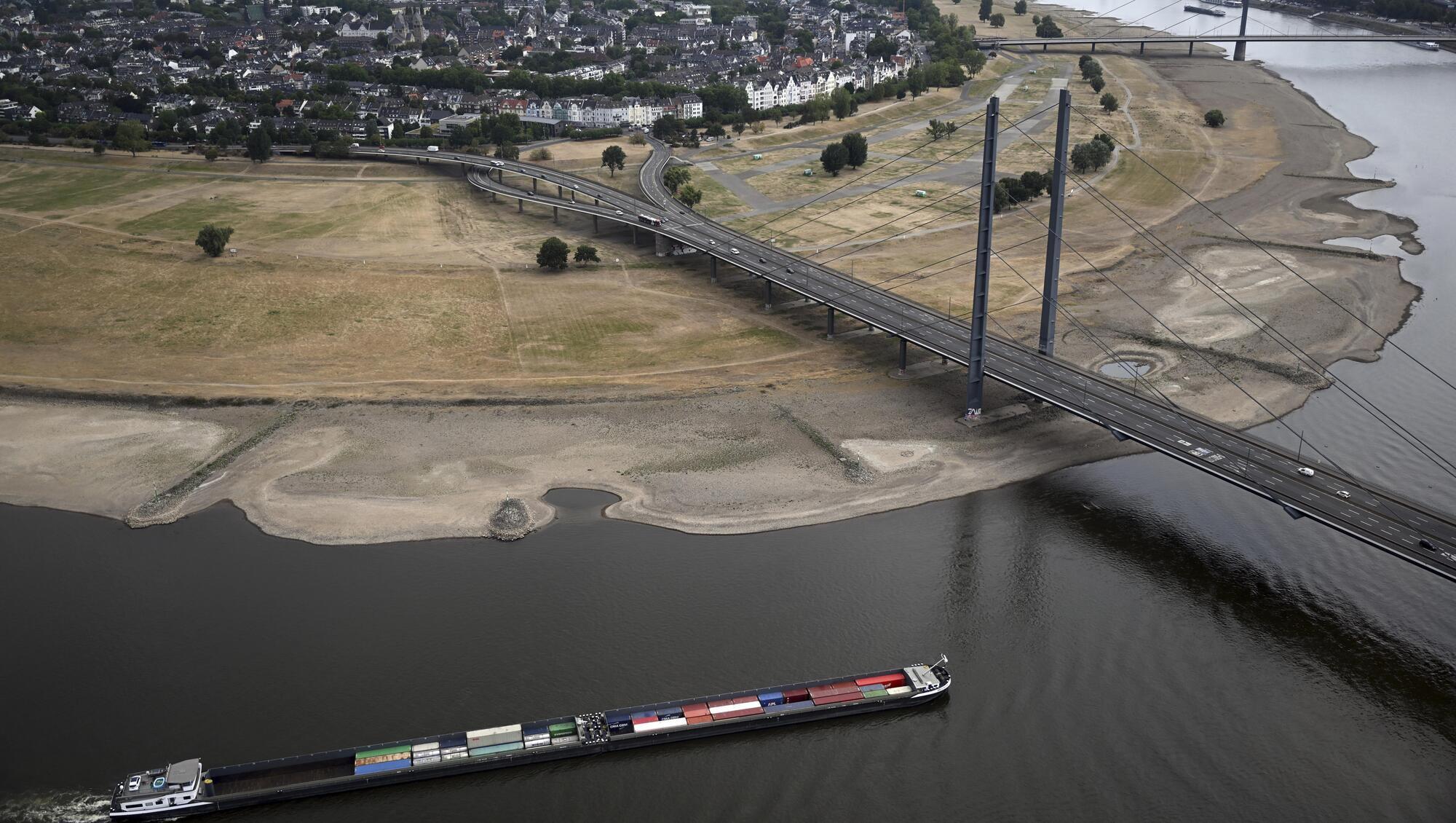
Due to the ongoing drought, the level of the Rhine river in Duesseldorf, Germany, reached a low last August. Picture: Federico Gambarini/dpa via AP)
Europe is warming faster than anywhere else on the planet, with glaciers in the Alps retreating at an alarming rate, hundreds of weather-related fatalities and €50bn worth of damage — mostly caused by storms and flooding.
Those are just some of the findings from a joint report from the World Meteorological Organization (WMO) and EU Copernicus Climate Change Service, which warned that the exceptional heat, wildfires, and floods seen over the past two summers will become regular events in the future.
Meanwhile, Ireland has experienced one of its warmest Octobers on record, according to Met Éireann, with five weather stations reporting their highest-ever temperatures for the month. One station in Cork also recorded its highest-ever level of rainfall in the month.
Four stations had their warmest October since 1995, four stations had their warmest since 2001, and five stations had their warmest ever, the weather service said.
Temperatures over Europe have warmed significantly over the 1991-2021 period, at an average rate of about +0.5C per decade, the WMO and Copernicus stated.
As a result:
- Alpine glaciers lost 30m in ice thickness from 1997 to 2021;
- The Greenland ice sheet is melting and contributing to accelerating sea level rise;
- In summer 2021, Greenland saw a melt event and the first-ever recorded rainfall at its highest point, Summit station.
In its State of the Climate in Europe Report, the WMO and Copernicus calculated that in 2021, high-impact weather and climate events "led to hundreds of fatalities, directly affected more than half a million people, and caused economic damages exceeding $50bn (€50.5bn)".
Nearly 85% were floods or storms.
Countries such as Germany and Belgium were ravaged by flooding in the summer of 2021, bringing large swathes of Western Europe to a standstill as extreme weather patterns became more frequent.
This extreme weather pattern continued in the summer of 2022, with sustained and repeated heatwaves engulfing parts of the continent, leading to thousands displaced from their homes in countries such as France, Spain, and Portugal, with hundreds of thousands of acres of land scarred by wildfires.
Changing weather patterns have seen parts of Spain reach more than 30C in late October, with yet another round of wildfires in the country.
Earlier this week, the WMO pointed to "hard-to-believe" data from southern Spain that has seen temperatures of up to 35C, France experiencing nine days where the temperature was more than 4C above average for October, and more than 25 sites in the UK where the mercury reached 20C on October 27.
Ireland has been seeing milder temperatures than normal for October, but rainfall has been severe, with a number of alerts and flooding events throughout the country, particularly in the south.
Met Éireann said rainfall was above the 1981-2010 long-term average, while Moore Park in Cork was 203% over its wettest October on record over 58 years.
Extreme weather will lead to more death and illness, the WMO and Copernicus report warned.
"European people's health is impacted by climate change in a myriad of ways, including death and illness from increasingly frequent extreme weather events (heatwaves), increases in zoonoses [animal-to-human diseases] and food, water, and vector-borne diseases, and mental health issues," it stated.
"The combination of climate change, urbanisation, and population ageing in the region creates — and will further exacerbate — vulnerability to heat."
However, there is still time to act — a reason for hope, the WMO and Copernicus stated.
"European society is vulnerable to climate variability and change, but Europe is also at the forefront of the international effort to mitigate climate change and to develop innovative solutions to adapt to the new climate Europeans will have to live with,” said Dr Carlo Buontempo, director of the European Centre of Medium-range Weather Forecasts (ECMWF) at Copernicus.
CLIMATE & SUSTAINABILITY HUB