North Korea criticised after fourth round of missile testing in a week
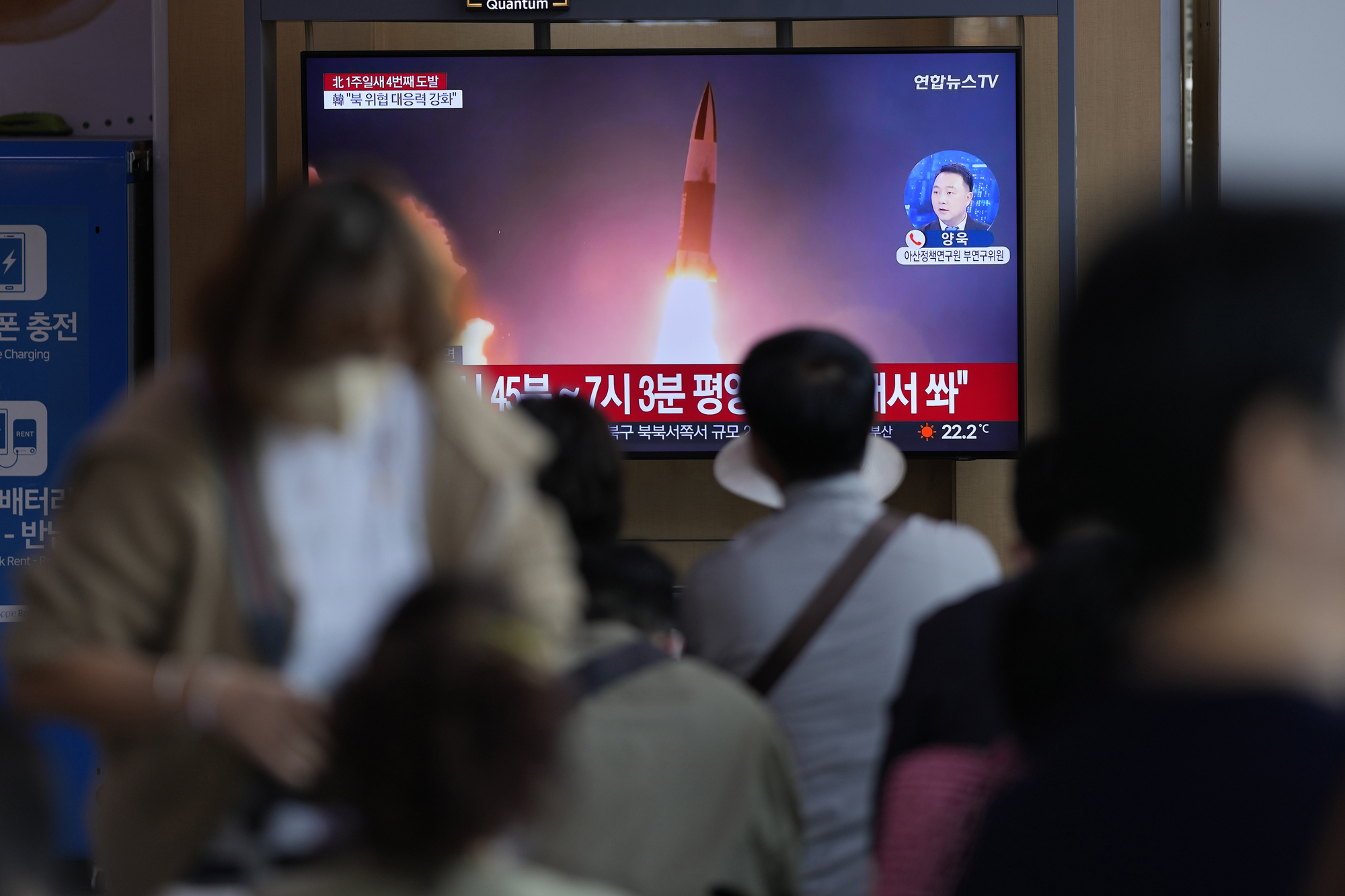
North Korea test-fired two short-range ballistic missiles on Saturday, neighbouring countries said, the fourth round this week of weapons launches that prompted quick, strong condemnation from its rivals.
In an unusually strong rebuke, South Korean President Yoon Suk Yeol said North Koreaâs âobsessionâ with nuclear weapons is deepening the suffering of its own people and warned of an âoverwhelming responseâ from South Korean and US officials should such weapons be used.
Mr Yoon said: âNorth Korea hasnât abandoned its obsession with nukes and missiles despite the persistent international objection in the past 30 years.
âThe development of nuclear weapons will plunge the lives of North Korean people in further pains.
âIf North Korea attempts to use nukes, itâll face a resolute, overwhelming response by the South Korea-US alliance and our military.â
The comments could enrage North Korean leader Kim Jong Un, who in July alleged that Mr Yoonâs government was led by âconfrontation maniacsâ and âgangstersâ.
The Northâs testing spree this week is seen as a response to recent naval drills between South Korea and the United States, and their other training that involved Japan.
North Korea views such military exercises by the allies as an invasion rehearsal and argues they reveal US and South Korean âdouble standardsâ because they brand the Northâs weapons tests as provocation.
On Saturday, South Korea, Japanese and US militaries said they detected the two North Korean missile launches. South Korean officials said the lift-offs occurred from North Koreaâs capital region.
According to South Korean and Japanese estimates, the missiles flew between 220 and 250 miles at a maximum altitude of 20-30 miles before they landed in the waters between the Korean Peninsula and Japan.
Toshiro Ino, Japanâs vice defence minister, said the missiles showed âirregularâ trajectory.
Some observers say the weaponsâ reported low and âirregularâ trajectory suggest they were likely nuclear-capable missiles modelled after Russiaâs Iskander missile.
They say North Korea has developed the Iskander-like weapon to defeat South Korean and US missile defences, and strike key targets in South Korea, including US military bases.
The five other ballistic missiles fired by North Korea on three occasions this week show similar trajectories to the ones detected on Saturday.
âThe repeated ballistic missile firings by North Korea are a grave provocation that undermines peace and security on the Korean Peninsula, and in the international community,â South Koreaâs Joint Chiefs of Staff said in a statement.
Mr Ino called the launches âabsolutely impermissible,â adding that four rounds of missile testing by North Korea in a week is âunprecedentedâ.
The US Indo-Pacific Command said the launches highlight âthe destabilising impactâ of North Koreaâs unlawful weapons of mass destruction and ballistic missile programmes.
On Friday, South Korea, the US and Japan held their first trilateral anti-submarine drills in five years off the Korean Peninsulaâs east coast.
Earlier this week, South Korean and US warships conducted bilateral exercises in the area for four days. Both military drills this week involved the nuclear-powered aircraft carrier USS Ronald Reagan.
The North Korean missile tests this week also bookended US Vice President Kamala Harrisâ visit on Thursday to South Korea.