Explainer: What does David Frost’s resignation mean for Boris Johnson’s future as British PM?
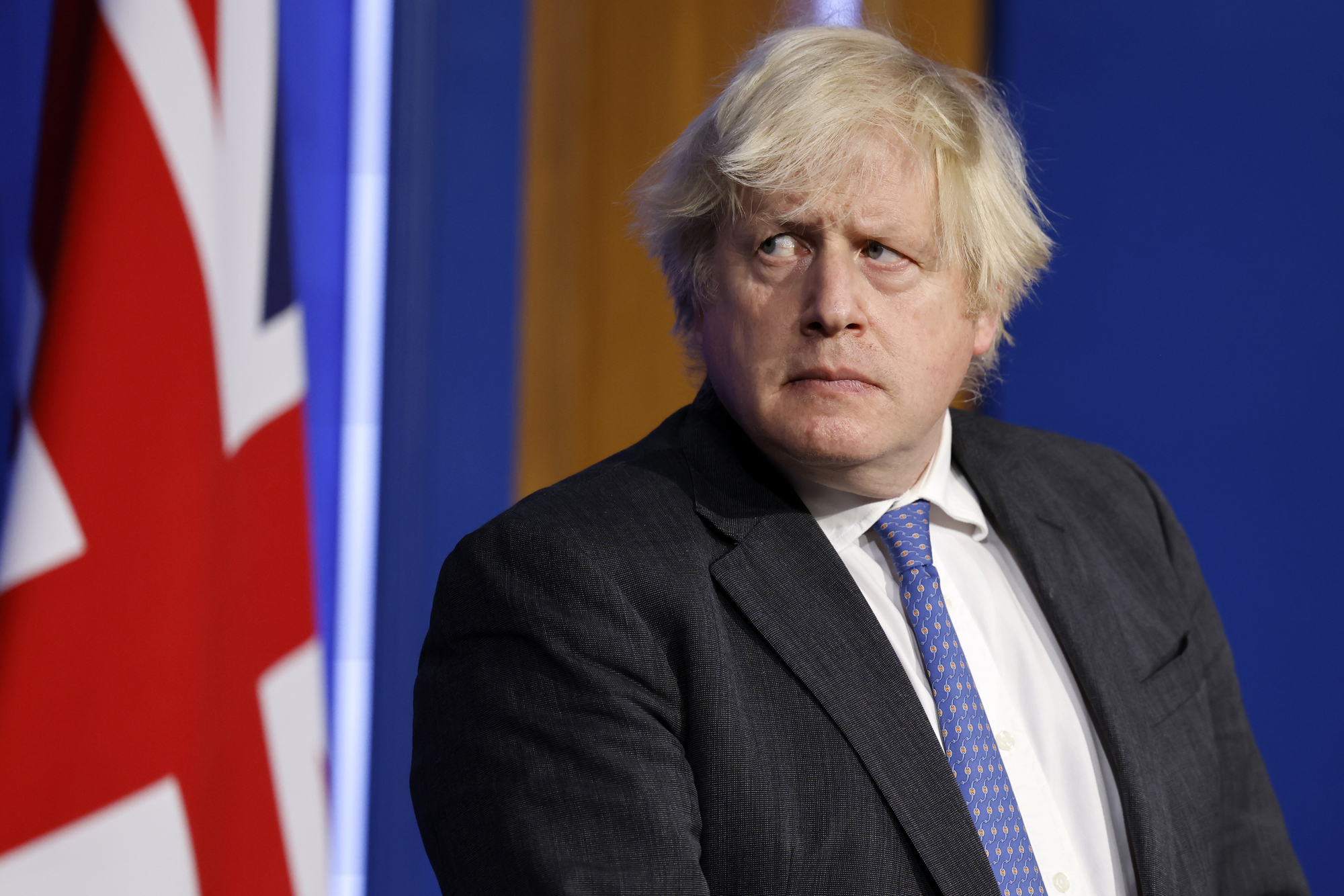
Prime Minister Boris Johnson (Tolga Akmen/PA)
The departure of David Frost from Boris Johnson’s Cabinet has been described as a “watershed moment” for the PM as his backbenchers spoke openly about needing a new direction for his party and Government.
Mr Frost’s resignation could hardly have come at a worse time for Mr Johnson, who has faced potentially the most damaging week in his premiership.
Mr Johnson’s long-term ally had originally agreed to stay on until January, with The reporting that Mr Johnson had told his top EU negotiator that the Government could not cope with a high-profile departure when he first handed his resignation in earlier this month.

But in an exchange of letters on Saturday night, Mr Frost said that because the news had been made public, he would now stand down with immediate effect.
Brexiteer Tory MP Andrew Bridgen told Times Radio that “quite honestly it’s a devastating blow for the Government and for the Prime Minister”.
He added: “He’s (Mr Frost) complained that he’s not happy about the direction of policy of the Government and clearly that’s shared by a number of backbenchers, hence the revolt we had this week, and it also it echoes what was heard on the doorsteps of many former Conservative voters in North Shropshire this week as well.”
He said: “The answer, for Boris Johnson, is to change or go.
“We are going to have to change policy and get back to Conservative policies, (for) which we were voted in, with a huge majority on the mandate.
“And the Prime Minister needs to think very carefully whether he can change, whether he wants to change, and I think quite honestly Conservative MPs will be considering the same matters as well over this Christmas holiday.”

Mr Bridgen said: “I think the resignation of Lord Frost, for many, will be a watershed moment quite honestly.”
And he added: “It feels to me as if the old Boris Johnson that we knew and loved some years ago has been hijacked.”
He warned: “We are notoriously ruthless in the Conservative Party. If our leader is seen as a liability, not a political asset, then they generally have to go because the only alternative really to a Conservative government is a Labour government.”
David Frost himself warned in his letter to the PM that he had “concerns about the current direction of travel” of the Government.
And that he was worried about the prospect of “coercive measures” to control coronavirus.
Meanwhile, 2019 intake Tory MPs Danny Kruger and Miriam Cates wrote in the that their party must change.
They wrote: “What’s gone wrong is that we find ourselves mired in allegations of sleaze and rule-breaking, while the country finds itself in a swamp of rules and regulations that are harming the social and economic fabric of our nation. Our supporters are embarrassed by the former, fatigued by the latter, and angered by both.”
And they said: “We need a new way forward as a party.”
Mr Johnson will face a vote of no confidence if more than 15% of his MPs – which comes to 54 of the parliamentarians – submit letters to the chairman of the 1922 Committee, Graham Brady.
Asked on Friday if he would resign if it was in the interest of the Conservative Party, Mr Johnson said: “What we’re focusing on is getting the job done. What we’re focusing on is trying to make sure that we not only have the fastest vaccine rollout in Europe, the fastest booster rollout, as we’ve already done, but that we’re able – because of the Get Boosted Now campaign – to avert some of the more damaging consequences of Omicron.
“That is what the Government is engaged in doing now. That is what I am focused on. And, do you know what, I think that is what people would want me to be focused on right now.”
Fury on the backbenches began in October when the UK Government launched an ill-fated bid to save from suspension former Tory MP Owen Paterson, after he was found to have breached lobbying rules.

MPs were whipped to support Mr Paterson before the Government U-turned within 24 hours.
There was already disgruntlement on the backbenches over broken manifesto promises on the pensions triple lock, rail upgrades in the North, and a rise in national insurance to pay for social care reforms.
This was deepened by Mr Johnson later conceding homes may need to be sold to fund social care costs.
The British Government was then embroiled in a number of sleaze scandals, including allegations parties were held across Whitehall during coronavirus restrictions last year.
CONNECT WITH US TODAY



Be the first to know the latest news and updates