WATCH: SpaceX returns four astronauts to Earth in rare night splashdown
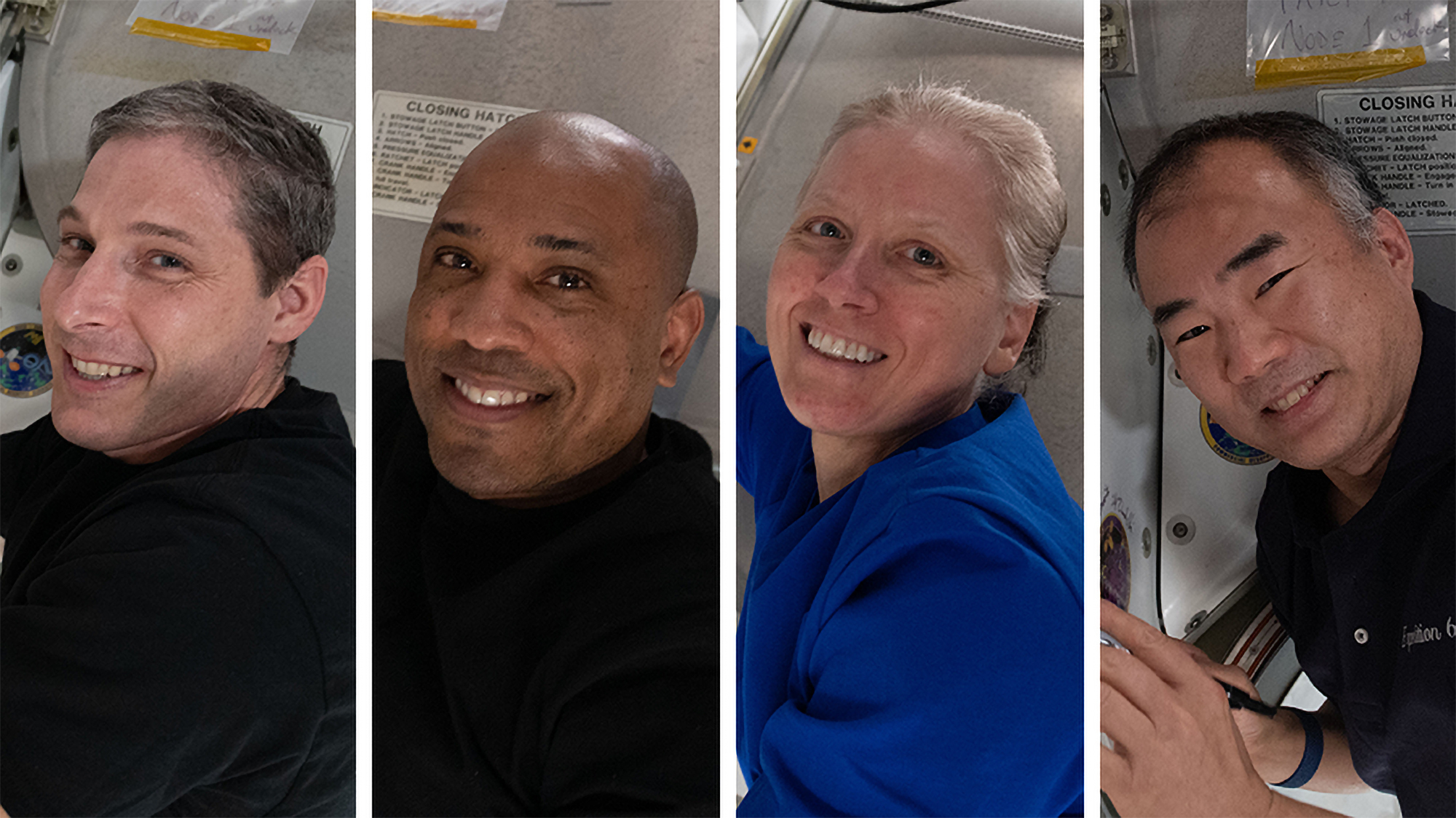
From left, Expedition 64 Flight Engineers and SpaceX Crew-1 members Michael Hopkins, Victor Glover, Shannon Walker and Soichi Noguchi (Nasa via AP)
SpaceX has returned four astronauts from the International Space Station, marking the first US crew splashdown in darkness since the Apollo 8 Moon mission.
The Dragon capsule parachuted into the Gulf of Mexico off the coast of Panama City, Florida, ending the second astronaut flight for Elon Musk’s company.

It was an express trip home, lasting just six-and-a-half hours.
“On behalf of Crew-1 and our families, we just want to say thank you...It’s amazing what can be accomplished when people come together. Y’all are changing the world. Congratulations. It’s great to be back.” – NASA Astronaut Mike Hopkins (@Astro_illini) pic.twitter.com/6Bxpwp79ly
— NASA (@NASA) May 2, 2021
The astronauts, three American and one Japanese, flew back in the same capsule — named Resilience — in which they launched from Nasa’s Kennedy Space Centre in November.
Their 167-day mission is the longest for astronauts launching from the US. The previous record of 84 days was set by Nasa’s final Skylab station crew in 1974.
Saturday night’s undocking left seven people at the space station, four of whom arrived a week ago via SpaceX.
“Earthbound!” Nasa astronaut Victor Glover tweeted after departing the station. “One step closer to family and home!”
The hatch of @SpaceX’s Dragon Resilience spacecraft is open!
— NASA (@NASA) May 2, 2021
🌎💙 Shortly, @NASA_Astronauts @AstroVicGlover, @Astro_illini and Shannon Walker along with @Astro_Soichi of @JAXA_en will take their first breaths of fresh air back on planet Earth. pic.twitter.com/TUKWQdTLsX
Glover — along with Nasa’s Mike Hopkins and Shannon Walker and Japan’s Soichi Noguchi — should have returned to Earth last Wednesday, but high offshore winds forced SpaceX to miss two daytime landing attempts. Managers switched to a rare splashdown in darkness, to take advantage of calm weather.
SpaceX had practised for a night-time return, just in case, and even recovered its most recent station cargo capsule from the Gulf of Mexico in darkness. Infrared cameras tracked the capsule as it re-entered the atmosphere; it resembled a bright star streaking through the night sky.
All four main parachutes could be seen deploying just before splashdown, which was also visible in the infrared.
Apollo 8 — Nasa’s first flight to the Moon with astronauts — ended with a pre-dawn splashdown in the Pacific near Hawaii on December 27 1968. Eight years later, a Soviet capsule with two cosmonauts ended up in a dark, partially frozen lake in Kazakhstan, blown off course in a blizzard.
That was it for night-time crew splashdowns — until Sunday.
Despite the early hour, the Coast Guard was out in full force to enforce an 11-mile restricted zone around the bobbing Dragon capsule. For SpaceX’s first crew return in August, pleasure boaters swarmed the capsule, presenting a safety risk.
Once on board the SpaceX recovery ship, the astronauts planned to hop on a helicopter for the short flight to shore, then catch a plane straight to Houston for a reunion with their families.
Their capsule, Resilience, will head back to Cape Canaveral for refurbishment for SpaceX’s first private crew mission in September. The space station docking mechanism will be removed, and a brand new domed window put in its place.
A tech billionaire has purchased the entire three-day flight, which will orbit 75 miles above the space station. He will fly with a pair of contest winners and a physician assistant from St Jude Children’s Research Hospital, his designated charity for the mission.
SpaceX’s next astronaut launch for Nasa will follow in October.
Nasa turned to private companies to service the space station, after the shuttle fleet retired in 2011. SpaceX began supply runs in 2012 and, last May, launched its first crew, ending Nasa’s reliance on Russia for astronaut transport.
Boeing is not expected to launch astronauts until early next year.