What a Senate majority means for the Democrats
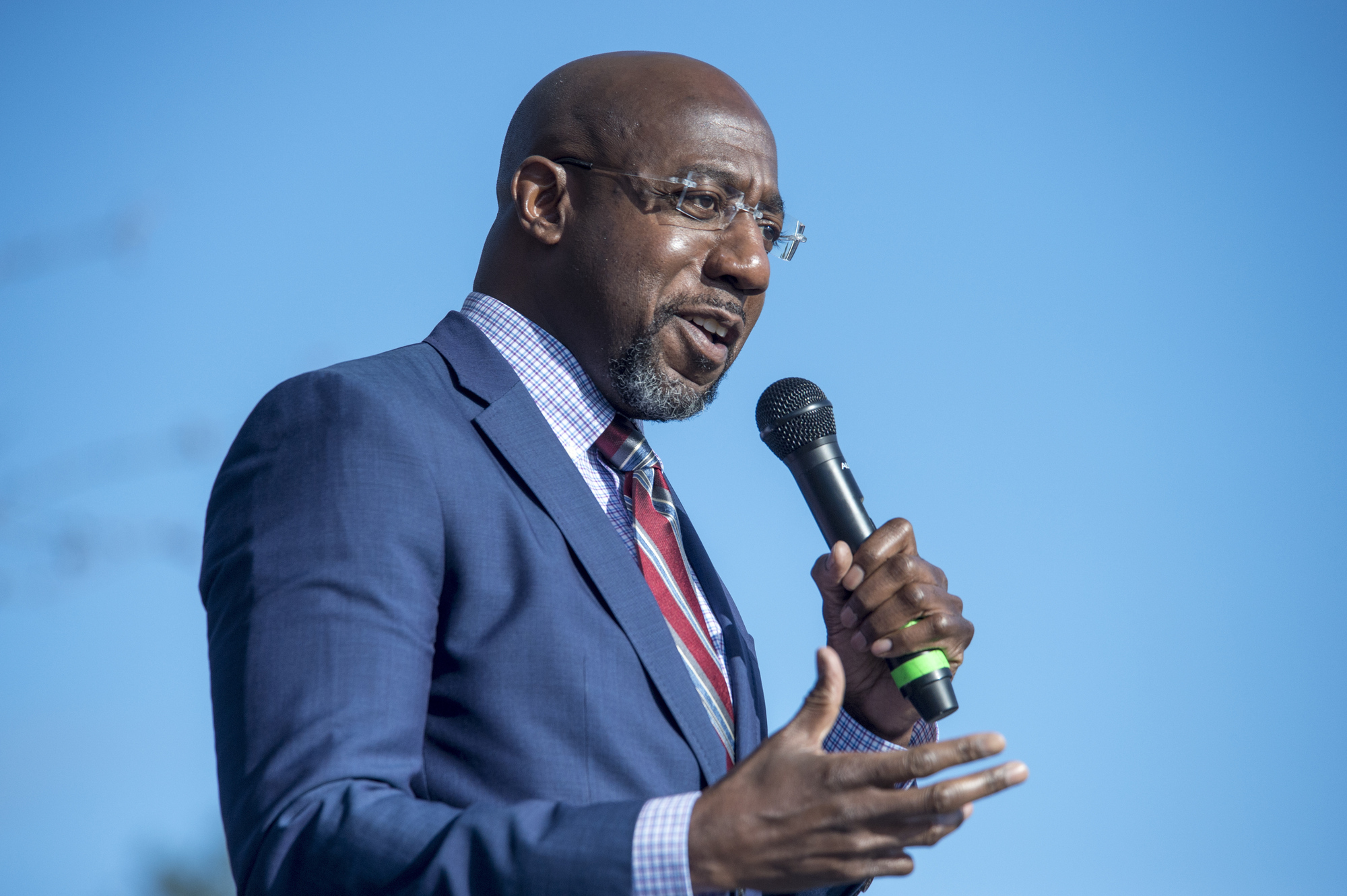
Georgia Democratic senate candidate Raphael Warnock speaks during a campaign rally. Democrats Jon Ossoff and Warnock look to have won crucial Senate seats in Georgia. Picture: Michael Holahan/The Augusta Chronicle via AP
The losing Republicans have not conceded yet, but the count is clear – while both Georgia Senate runoff elections were close, Democrats Raphael Warnock and Jon Ossoff will have won once all the votes are counted. That means a 50-50 Senate with Vice President-elect Kamala Harris breaking ties and Democratic Senator Chuck Schumer as majority leader.
Both Republicans were favoured after President-elect Joe Biden beat Donald Trump in November. After all, the last two times this happened – in 1992 and 2008 – Democratic candidates lost badly in Georgia Senate runoffs after a Democrat won the presidency.
What changed? My sense – and of course we’re still in the guesswork phase – is mainly two things. The first is Trump. It’s a cliche to say that he gets away with things that others don’t, but it’s still not true. Trump’s appalling behaviour after November 3 had real consequences.
And that’s before we get to the other ways he made life impossible for Georgia Republicans: his war on the state’s Republican governor and secretary of state, his impossible-to-follow flip-flops on the relief and stimulus bill, and his insistence on keeping all the attention on himself no matter what.
Joy comes in the morning. Thank you, Georgia. pic.twitter.com/Dw8wPWAMeI
— Reverend Raphael Warnock (@ReverendWarnock) January 6, 2021
The shorthand for the other factor is Stacey Abrams, the former Georgia gubernatorial candidate. But as strong as her record is for organising, she’s only a stand-in for years of grassroots efforts by many people, especially back women, across Georgia.
Turnout was strong throughout the state on Tuesday, but it was especially strong for Democrats and among black voters. Some of that was Trump, and some of it was demographic change, but a large part of it was individual citizens getting organised.
President @realDonaldTrump: STOP THE STEAL! pic.twitter.com/fOsTmvCD1J
— Team Trump (Text TRUMP to 88022) (@TeamTrump) January 6, 2021
We can also step back and reassess the 2020 election cycle, which is now complete. It looks a lot better for Democrats than it did at first. Republicans still picked up 11 or 12 net seats in the House, enough to narrow the Democratic majority considerably.
But Democrats won the White House solidly, and have now picked up three net Senate seats and the (slimmest possible) majority. That’s probably still a bit shy of what they had hoped for on election day in November, but certainly a result they would’ve gladly accepted a year ago. Republicans did well in state legislative races, but Democrats did quite well in local politics in 2020.
The most important immediate effect is that Biden will be able to fill his cabinet and his administration without major obstacles and the Senate will consider and confirm most of the judges he nominates. We won’t know to what extent Republicans would’ve blocked judicial and executive-branch nominations had Mitch McConnell remained the majority leader, but all the evidence suggests they wouldn’t have held back. Now, Biden’s nominees will only be subject to the kind of foot-dragging that Democrats used against Trump’s picks, not full-out blockades.
Legislation will be a more complicated story. As long as the filibuster survives – and that seems more likely than not – many Democratic priorities will need 60 votes in the Senate. We’ll be hearing a lot about reconciliation, the budget procedure that allows (some) things to pass with a simple majority.
Today Congress will fulfill its duty, as outlined in the Constitution, and certify the electoral count, thereby officially cementing the voters' selection of the president-elect and vice president-elect. The people have spoken, and today I will fulfill my oath to the Constitution pic.twitter.com/5rPSJc1024
— Senator Joe Manchin (@Sen_JoeManchin) January 6, 2021
But even when 50 votes (plus the vice-president) are enough, moderate Democrats, beginning with West Virginia’s, Joe Manchin, will have the key swing votes, along with any moderate Republicans (such as Alaska’s Lisa Murkowski) who might be willing to cut deals in some policy areas.
There’s plenty of time to assess all of that in more detail. For now, Democrats can celebrate – and Republicans may want to think about what went wrong and what they might do differently in the future.
Meanwhile, although Senator Kelly Loeffler’s defeat means there will be one fewer woman in the 117th Senate, Warnock will be only the 11th back senator in the history of the republic, while Ossoff, at 33, will add some badly needed age diversity. And with David Perdue’s defeat, we’ll have one fewer dynastic senator as well. So if nothing else, these runoffs were good for Senate diversity, and that’s something everyone can celebrate.


CONNECT WITH US TODAY



Be the first to know the latest news and updates