Pope calls Burma refugees by Rohingya name; apologises for ’indifference of the world’
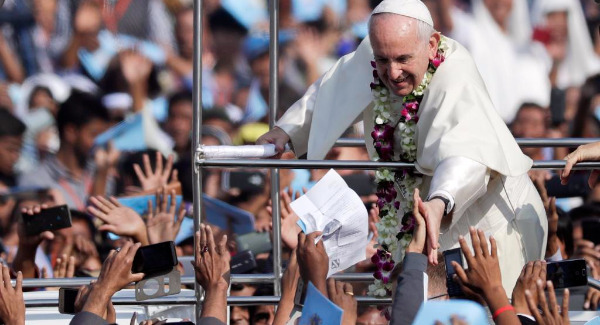
Pope Francis has asked for forgiveness from Rohingya Muslim refugees for the hurt they have endured and pronounced the word "Rohingya" that he avoided saying days earlier in Burma.

Pope calls Burma refugees by Rohingya name; apologises for ’indifference of the world’

Pope Francis has asked for forgiveness from Rohingya Muslim refugees for the hurt they have endured and pronounced the word "Rohingya" that he avoided saying days earlier in Burma.

In a moving encounter in Bangladesh, Francis greeted and blessed a group of Rohingya refugees, grasping their hands and listening to their stories in a show of public solidarity.

He apologised for the "indifference of the world" to their plight and then pronounced their ethnic group’s name.

He said: "The presence of God today is also called ’Rohingya’."

The 16 Rohingya - 12 men, two women and two young girls - travelled to Dhaka from Cox’s Bazar, the district bordering Burma where refugee camps are overflowing with more than 620,000 Rohingya who have fled what the UN says is a campaign of ethnic cleansing by Burmese troops.

The Burmese campaign has included the burning of villages and fleeing Rohingya have described arson, rape and shootings by soldiers and Buddhist mobs that left them no option but to make the dangerous and sometimes deadly journey through jungles and by sea to Bangladesh.

Bangladeshi Catholics cheer for Pope Francis as they participate in a mass, in Dhaka, Bangladesh Pic: AP Photo/Aijaz Rahi

The Burmese government has denied any such campaign is underway. The army says "clearance operations" are targeting militants who attacked security positions in August.

Burma’s government and most of the Buddhist majority do not recognise the term "Rohingya", saying the members of the Muslim minority are "Bengalis" who migrated illegally from Bangladesh.

Burma does not acknowledge them as a local ethnic group and will not give them citizenship, even though they have lived in the country for generations.

One by one, the refugees approached the Pope at the end of a gathering of Muslim, Buddhist, Hindu and Christian leaders in the tented garden of the Dhaka archbishop’s residence.

Francis blessed one little girl, placing his hand on her head, and grasped the shoulder of a young man. The women who approached him pushed aside their headscarves so they could speak, offering their hands out for him to hold.

"Maybe we can’t do much for you, but your tragedy has a place in our hearts," Francis said. "For those who have hurt you, and above all the indifference of the world, I ask your forgiveness."

He called for continued advocacy "so that their rights are recognised".

Francis had refrained from publicly raising the crisis or using the word Rohingya while in Burma out of diplomatic deference to his hosts.

Human rights organisations and Rohingya had voiced disappointment at his public silence in Burma, given he had previously denounced the persecution of "our Rohingya brothers and sisters".

The Vatican defended it as diplomatically necessary and stressed that his silence in public did not negate what he had said in the past, or what he was saying in private.

Francis’ encounter with the refugees was the highlight of his day that began with a Mass to ordain 16 new priests.

Bangladesh’s tiny Catholic community represents a fraction of 1% of the majority Muslim population of 160 million.

Despite its small size, the Catholic Church runs a network of schools, orphanages and clinics and has enjoyed relative freedom in its work, although Christian missionaries say they have received letters threatening dire consequences if they continue to spread Christianity.

In his homily ordaining the new priests, Francis thanked those who came out for the Mass, noting that some people had travelled two days to attend.

"Thank you for your generosity," Francis said. "This indicates the love that you have for the church."

AP

More in this section

Cookie Policy Privacy Policy Brand Safety FAQ Help Contact Us Terms and Conditions

© Examiner Echo Group Limited