Trophy hunters 'behind death of male lions' at home of Cecil the lion
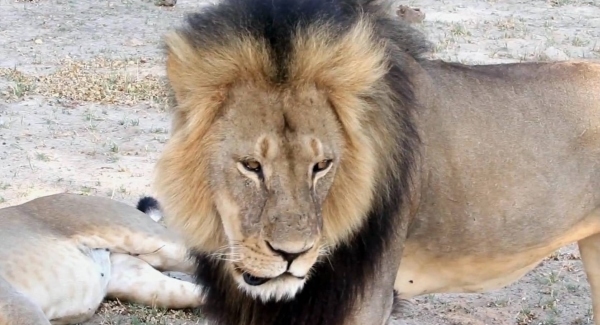
Trophy hunters have been chiefly responsible for the death of male lions on the African national park where Cecil made his home, say researchers.
Cecil, a 13-year old male lion, was a major attraction at Hwange National Park in Zimbabwe before being killed by American big-game hunter Walter Palmer.
His death last year sparked outrage among conservationists and animal lovers, especially since Palmer had a permit and could not be prosecuted for any crime.
A new study has now shed further light on the impact of trophy hunting on Hwange's lion population.
Researchers writing in the Journal of Applied Ecology studied the deaths of 206 lions in Hwange between 1999 and 2012. They found that 88% of male and 67% of female deaths were directly attributable to human activity.

Male deaths were dominated by trophy hunting, while female lions were killed in a number of ways including accidental snaring by bush meat hunters, and targeting by livestock herders.
Analysis showed that lions tended to avoid risky areas such as farmland with a history of retaliatory killing. Older, experienced lions were more likely to give these danger zones a wide berth than younger and less savvy individuals.
A second paper published in the journal Biological Conservation also used Hwange data to focus on the effects of intensive trophy hunting of male lions.
It showed that when hunting quotas were vastly reduced in the mid-2000s, the park's lion population increased by 62% while the number of adult males doubled.
Professor David Macdonald, director of Oxford University's Wildlife Conservation Research Unit (WildCRU), who co-authored both studies, said: "Among the threats facing conservation is the global decline of many large apex predators. Public concern about the fate of many of these iconic species was strikingly emphasised by the outcry over the killing, by an American trophy hunter, of Cecil the lion - an animal studied closely by WildCRU.
"These two important new pieces of research, based on long-term understanding of population dynamics, add very significantly to our understanding of the threats faced by lions and other large predators in a world that is increasingly dominated by the human enterprise."