Syriza party wins election in Greece
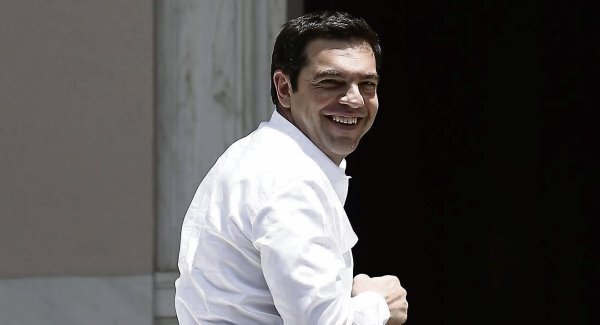
A jubilant Alexis Tsipras vowed to continue fighting for his country’s pride after his left-wing Syriza party comfortably won Greece’s third national vote this year.
The result was a resounding success for his high-risk gamble when he resigned as prime minister last month and triggered an early election.
That was barely seven months into his four-year term, and he wanted to face down an internal Syriza rebellion over his policy U-turn to accept painful austerity measures in return for Greece’s third international bailout.
With more than 80% of the vote counted, Syriza stood at 35.5% of the vote and 145 seats in the 300-member parliament.
The party was followed by the conservative New Democracy with 28.3% and 75 seats and the Nazi-inspired Golden Dawn in third place with 7% and 18 seats.
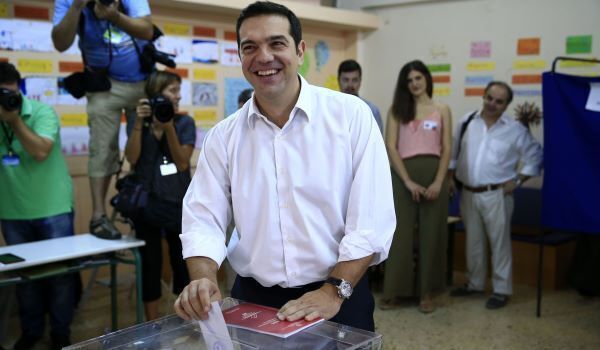
Abstention was particularly high, at nearly 45% in an election-weary country with a traditionally high voter turnout.
It was the third time this year Greeks have voted, after the January election that brought Mr Tsipras to power on an anti-bailout platform.
He also called a July referendum urging Greeks to reject creditor reform proposals, which they resoundingly did – shortly before Mr Tsipras then accepted similar proposals as part of the new bailout.
Six seats shy of an absolute majority, Mr Tsipras said he would form a government with his previous coalition partner, the right-wing Independent Greeks of Panos Kammenos.
They joined him on stage to rapturous applause from dancing, cheering Syriza supporters in central Athens. The Independent Greeks were in seventh place with 3.6% of the vote and 10 parliamentary seats.
“I thank you from the bottom of my heart for this great victory, a clear victory, a victory of the people,” Mr Tsipras said.
“I feel vindicated because the Greek people gave us a clear mandate to continue our struggle, inside and outside the country to lift our country’s pride.”
The 41-year-old vowed to govern for a full four-year term – something few Greek governments have managed, particularly since the country became dependent on international bailouts five years ago.
The country has seen six governments and four parliamentary elections since 2009.
After years of recession and tough reforms, a quarter of the country is still out of work and its national debt is worth a stunning 175% of annual output.
The continued hardship meant Greeks showed little enthusiasm during the brief election campaign.
But Tsipras supporters appeared forgiving this morning.
“He is young. We had been voting for the others for 40 years,” said Athens resident Eva Vasilopoulou, who attended the victory rally.
“We are giving (him) a second chance. He is pure, and smart, and I hope he will govern for many years.”
Syriza abandoned its anti-bailout platform and billed its re-election as a blow to crony politics from more established parties, refusing to consider joining the conservatives in a grand coalition.
The new government will have a small majority of just five seats – and little time to waste.
Creditors are expected to review progress of reforms as part of the bailout next month, while the government will also have to draft the 2016 state budget.
A total of eight parties won parliamentary seats, including the once-dominant Socialist Pasok, centrist Potami and the Greek Communist Party.
There was also success for the Centrist Union – a fringe party led by Vassilis Leventis, a political pundit famous for his on screen outbursts of anger during appearances on his long-running late-night TV show.
“I’ve fought for 25 years to get into parliament,” he said.
“I stayed on my feet knowing that the political system would eventually fall apart. I had a hunch that, one day, I’d be vindicated.”

CONNECT WITH US TODAY



Be the first to know the latest news and updates










