Quads born to 65-year-old German woman still in intensive care
Quadruplets born prematurely to a 65-year-old German woman are still in intensive care, doctors say, but have been gaining a little weight and are being given their mother’s milk through feeding tubes.
GermanyQuadrupletsMay2015AP_large.jpg]
Mother Annegret Raunigk, from Berlin, left intensive care 48 hours after the delivery and is doing well. She gave birth by caesarean section to a girl and three boys during her 26th week of pregnancy at Berlin’s Charite Hospital on May 19.
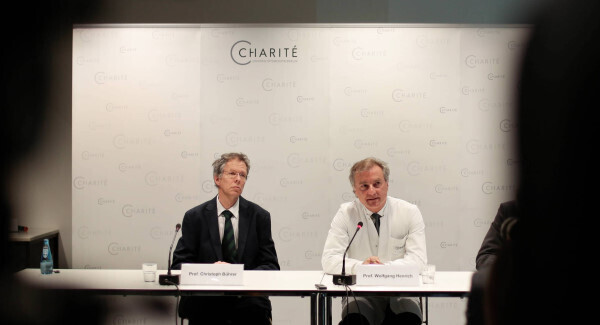
The director of obstetrics at Charite, Wolfgang Henrich, said Ms Raunigk is believed to be the oldest mother to have ever delivered quadruplets.
School teacher Ms Raunigk already has 13 children aged 44 to 9 from five other fathers.
Because egg donation is illegal in Germany, she travelled to Ukraine to have donated, fertilised eggs transferred.
She says she decided to become pregnant again because her nine-year-old daughter wanted a younger sibling.
Four teams of specialised nurses and doctors were involved in delivering the babies.
They were delivered at 11am on May 19 in a room heated to protect them from hypothermia and were immediately wrapped in thermal blankets.
The baby girl Neeta and her three brothers – Dries, Bence and Fjonn – weighed between 1lb 7oz and 2lb 2oz each at birth. Their exact weight today is not known because they are too fragile to be put on a scale.
Neeta is the smallest but is fitter than her three brothers, said Christoph Buehrer, Charite’s director of neonatology. She underwent successful surgery this week to close two small holes in her intestines.
All four babies will remain in intensive care for several weeks and are supported by machines helping them breathe.
“Breathing is their most critical vital function,” said Mr Buehrer, adding that it is not clear yet whether the children will have any long-term health issues because of the premature delivery.
Ten extra nurses have been added to every shift at the hospital’s neonatology ward to help care for the babies.
Of the controversy surrounding the births, Ms Raunigk said: "I think one needs to decide for oneself, and not listen too much to the opinions of others."

CONNECT WITH US TODAY



Be the first to know the latest news and updates