Iraq government sworn in amid strife
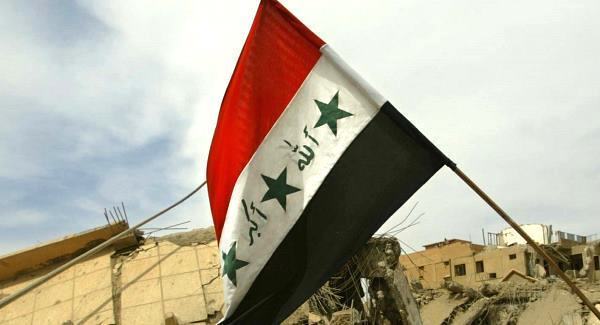
Iraq’s parliament has officially named Haider Abadi the country’s new prime minister and approved most of his proposed cabinet.
The move came amid calls by the Arab League for its members to combat the Sunni militant group violently advancing across Iraq and Syria.
Lawmakers approved all of the candidates proposed for Iraq’s new government, with the exception of a few posts, namely the defence and interior ministers. Mr Abadi requested an additional week to name them.
Outgoing prime minister Nouri Maliki, former prime minister Ayad Allawi and former speaker of parliament Osama Nujeifi were given the largely ceremonial posts of co-vice president.
Kurdish politician and former foreign minister Hoshyar Zebari was named as one of three deputy prime ministers. Former premier Ibrahim al-Jafaari was named foreign minister.
The US and other countries have been pushing for a more representative government that will ease anger among Sunnis, who felt marginalised by Mr Maliki’s administration, helping fuel the dramatic sweep by the Islamic State (IS) extremist group over much of northern and western Iraq since June.
Speaking before parliament, Mr Abadi vowed to “back the military operations in all the areas of confrontation against the armed gangs and the forces of terrorism and ensuring their continuation till victory is achieved”.
The proposed resolution by the Arab League does not explicitly back an expanded American military operation targeting the group.
It leaves room, however, for it to work with whatever approach US president Barack Obama lays out during his planned speech on the eve of the 13th anniversary of the September 11, 2001, terror attacks.
That could give Mr Obama enough leeway to gather support from Arab countries already divided over the Syrian civil war.
“There will be no signing on a white paper,” said Mustafa Alani, the director of the security and defence department at the Gulf Research Centre in Geneva, Switzerland. Arabs are looking for “equal efforts in changing the situation in Syria. Without it, it is a lost war.”
The White House said Mr Obama called Mr Abadi to congratulate him and the Iraqi people on approval of a new government.
“The president and the prime minister agreed on the importance of having the new government quickly take concrete steps to address the aspirations and legitimate grievances of the Iraqi people,” the White House said.
Mr Obama is due to brief congressional leaders ahead of his televised address. Both US secretary of state John Kerry and defence secretary Chuck Hagel are expected to visit the Middle East this week to gather support for whatever action Mr Obama unveils.
The Arab League’s resolution, issued as a separate statement from a comprehensive one dealing with Arab affairs, reflected a new sense of urgency among the 22-member states to challenge the militant group.
The Arab League’s chief has called the group an existential threat to Arab countries that should be dealt with firmly.
The resolution called for immediate measures to combat the group on the political, defense, security and legal levels. It also said the group’s finances and recruitment grounds should be dried up, without elaborating on any of the points.
The resolution also backed the United Nations resolution issued last month that imposed sanctions on a number of the group’s fighters and called on countries to adopt measures to combat terrorism. The council resolution was adopted under Chapter 7 of the UN Charter, meaning it can be militarily enforced.
Saudi Arabia and other countries in the region have been critical of the US reluctance to enter the Syrian civil war – in which Iran, a major non-Arab rival in the region, has been a main backer of the government of president Bashar Assad.
Saudi Arabia would vehemently oppose any international action against extremists that strengthens Assad’s hand or clears the path for his forces to regain territory.
The US relying too heavily on Iranian assistance also could torpedo Saudi support for any proposal.
Some Iranian Shiites have traveled to Iraq to protect shrines in the country, though the Islamic Republic’s government repeatedly has denied deploying troops there.
Saudi Arabia likely would be willing to openly support a US-backed coalition, but may not want to provide ground or air support since this could anger powerful ultraconservatives who despise Assad but view the IS group’s Iraqi advance as a Sunni rebellion against Shiite oppression.
The Saudi government said after its weekly cabinet meeting that it supports the “firm” Arab League position.
Iraq is in the midst of an unprecedented crisis since the IS offensive, which included beheadings, mass killings and the targeting of minorities.
Yesterday, an Islamic State suicide bomber drove an explosives-laden Humvee, apparently seized from the Iraqi military, into the gathering of a major Sunni tribe, the Jabour, and security forces in the town of Duluiyah, some 45 miles (80km) north of Baghdad, a police officer said.
The explosion killed 16 people and wounded at least 55, according to the officer and a health official.
After the bombing, militants crossed a small river on Duluiyah’s outskirts and attacked the town, setting off fierce clashes.
IS claimed responsibility, saying two Saudi suicide bombers had targeted a police building and the gathering of Sunni militiamen.
The authenticity of the online statement could not be independently verified, but it was posted on a Twitter account frequently used by the militant group. Iraqi officials said it knew of only one suicide attacker.
Duluiyah briefly fell to the Sunni-dominated Islamic State group for few days in July but the Jabour tribesmen, who have aligned themselves with the Iraqi forces in the battle against the extremists, took it back.
Also yesterday, Iraqi security forces retook the Anbar provincial town of Barwana, across the Euphrates River from the town of Haditha, about 140 miles (220km) north-west of Baghdad.
The US military said it carried out five air strikes on Sunday and yesterday using drones and attack fighters to help defend the Haditha dam, as well as Irbil, the Kurdish capital. It has conducted a total of 148 air strikes in Iraq since August 8.
CONNECT WITH US TODAY



Be the first to know the latest news and updates