Nigerian army 'had four hours notice of Boko Haram abductions, but did nothing'
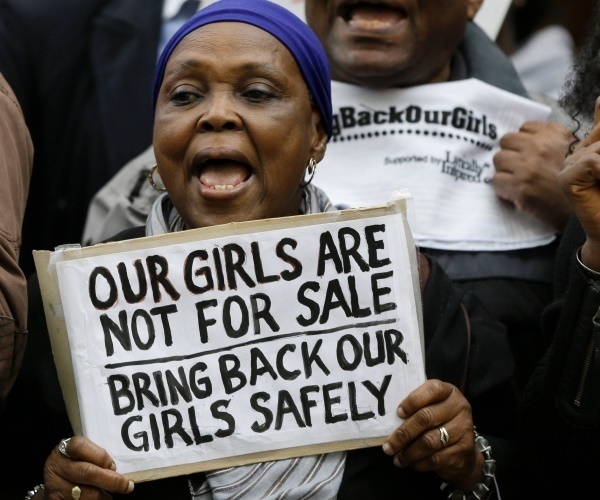
It is understood the search for 276 schoolgirls kidnapped in Nigeria is closing in on a forest near the eastern border.
British and American officials are using special eavesdropping equipment to look for the youngsters.
They were taken by Islamist group Boko Haram nearly four weeks ago.
Father of two of the missing girls Enoch Mark said: "It's very painful. (One of my daughters) wants to be a doctor. I was eager to see my daughter with such a future hope."
The international effort to rescue the schoolgirls has been joined by British security experts, who will add their expertise to efforts by Nigerian and American forces trying to rescue the missing students.
The weakness of the Nigerian armed forces was highlighted in an Amnesty report which said the military did not respond to warnings that Boko Haram rebels were about to attack Chibok, the town where the young women were abducted from their school.
Nigerian security forces had four hours of notice about the April 15 attack by the rebels but did not react because of their fear of engaging the extremists, said Amnesty International, in a report citing multiple interviews with credible sources.
âThis abduction could have been prevented,â Amnesty spokeswoman Susanna Flood said of the Nigerian militaryâs inaction.
The critical report reinforced earlier reporting by AP in which a Chibok official said he had alerted the military of the impending attack but no reinforcements arrived, allowing the insurgents to abduct the schoolgirls.
The American team has been joined by six additional military officers and more are expected soon, said Pentagon spokesman Navy Rear Admiral John Kirby. The US officers will do a âgap analysisâ, an assessment to identify what the Nigerian military needs that the US could provide in the search for the girls, he said.
Hostage negotiations is another area where the American team will assist, said US State Department spokeswoman Jen Psaki.
China, France and Spain have also promised help.
Demonstrations in support of the missing Nigerian girls have been held around the world and a social media campaign â hashtag #BringBackOurGirls â continued to grow.
In New York, the UN Security Council hinted at sanctions against Boko Haram. In a strongly worded statement, the council condemned a May 5 attack that killed and injured hundreds and demanded the immediate release of the kidnapped girls.
CounciI members also expressed their intention âto consider appropriate measures against Boko Haramâ, which in diplomatic language means possible sanctions.
The mass kidnapping of the schoolgirls has focused the worldâs attention on Boko Haram and on the response of President Goodluck Jonathanâs government.
âI believe that the kidnap of these girls will be the beginning of the end of terror in Nigeria,â said Jonathan at an economic forum on Thursday.
Mr Jonathanâs government is accused of being slow to mount operations to rescue the girls, charges the government vehemently denies. The military said in a strong statement that it opposed what it said were the attempts of some civic groups to âdrag the military into politicsâ.
Boko Haram has staged many attacks in north-eastern Nigeria over the years, a campaign of bombings and massacres that has intensified in recent times despite a strong military presence there. Since May 2013 there has been a state of emergency in three north-eastern Nigerian states wracked by Boko Haram violence.
Boko Haram has killed more than 1,500 people this year. The militants, who want to impose Islamic Shariah law on Nigeria, abducted more than 300 girls from a boarding school in the north-eastern town of Chibok. Fifty-three escaped but 276 remain captive. In a video seen by The Associated Press, Boko Haramâs leader threatened to sell the girls into slavery.
The government of Borno state, where Chibok is located, on Thursday identified the girls who escaped, potentially subjecting the girls to stigma in this conservative society.
The government said in a statement yesterday that the girls it identified by name include those who fled the day they were kidnapped and those who escaped from Boko Haram camps days later. It did not explain the decision to name the girls.
Chibok residents staged a street protest to press Bornoâs government to do more to find the missing girls.
Militants from Boko Haram are also believed to have carried out the bombing of a strategic bridge linking the town of Gamboru to the Borno state capital, Maiduguri, the headquarters of the Nigerian military offensive, a local government official has confirmed.
Gamboru was attacked on Monday by Boko Haram, leaving many dead. Estimates of the death toll from that attack ranged from 100 to as many as 300. Local security officials said that Boko Haram militants bombed the bridge as they retreated following the attack on Gamboruâs main market, where at least 50 bodies have since been discovered from the debris of burned shops.
Communications with the remote town are difficult and it was not immediately possible to reconcile conflicting accounts of when the bridge was bombed. One account said on Monday while another said on Thursday.
Local traders in Gamboru said that their businesses were suffering, with trailers and heavy trucks now stranded on either side of the damaged bridge.












