Judge: Manning leak 'dangerous'
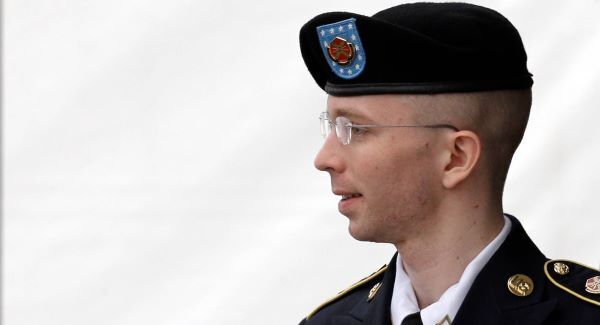
The enormous leak of classified information engineered by Bradley Manning was “heedless” and “imminently dangerous to others”, a military judge has said.
US Army Colonel Denise Lind released her legal rationale, or “special findings”, explaining why she found the private guilty of 20 counts, including six violations of the federal Espionage Act.
The sentencing phase of Manning’s court-martial at Fort Meade in Maryland is nearing its end, with lawyers to make closing arguments on Monday and Ms Lind saying she will announce the sentence as soon as Tuesday.
Manning faces up to 90 years in prison for sending more than 700,000 military and diplomatic documents, plus some battlefield video, to the anti-secrecy group WikiLeaks while working as an intelligence analyst in Iraq in 2010. WikiLeaks published most of the material on its website.
Ms Lind wrote in the 10-page document that Manning’s actions were wanton and reckless. “Pfc Manning’s conduct was of a heedless nature that made it actually and imminently dangerous to others,” she wrote.
The rules for special findings require a written rationale only for guilty verdicts so there was no explanation for the decision to acquit on the most serious charge, aiding the enemy. To have won a conviction, prosecutors would have had to prove that Manning knew the information he leaked would be seen by al-Qaida members.
On the espionage convictions, for transmitting defence information, Ms Lind found that the leaked material was both potentially damaging to the United States and “closely held”, meaning it had been classified by the appropriate authorities and remained so at the time it was leaked. The defence had argued that much of the data either contained no damaging information or was already public.
The lone computer fraud count on which Manning was convicted hinged on whether he knowingly exceeded his authorised access on a classified government network when he used his workplace computer to save the State Department cables to a CD so he could use his personal computer to transmit them to WikiLeaks.
The defence had argued that Manning was authorised to view the cables as part of his job, and that there was no prohibition on downloading or saving them. Prosecutors said he had no authority to access such a wide range of cables since his job was narrowly focused on the threat from Shia Muslims in Iraq.
Ms Lind drew a fine line in her legal reasoning. She said the phrase “exceeds authorised access” means Manning used the computer with authorisation but used that access to obtain information he was not entitled to obtain.
The court-martial was in session for only about 30 minutes yesterday. Prosecutors presented four bits of evidence retrieved from Manning’s personal computer, mostly communications with his friend, Danny Clark, a Cambridge, Massachusetts, computer expert.
A military psychiatrist who examined Manning after his arrest testified on Wednesday that Mr Clark was unavailable when Manning leaked the material under great psychological stress, largely due to his gender-identity uncertainty.
Manning “felt in hindsight that if he’d been able to talk with Danny Clark, that might have prevented these acts because he felt like, ’If Danny had told me not to do that, I definitely wouldn’t have done that”’, the Navy Captain David Moulton said.
Manning has apologised for the harm he caused by leaking the information but did not apologise for exposing what he considered wrongdoing by the US military and duplicitous diplomacy by the State Department.
Speaking to his supporters after yesterday’s session, defence attorney David Coombs acknowledged that Wednesday had been tough for Manning because it was “family day.” There was testimony from his sister and an aunt on his difficult childhood with an alcoholic mother and the eventual split of the family after his parents divorced.
The soldier spent about an hour and a half with his family after Wednesday’s session and was in good spirits yesterday, he said.