Ecuador ponders Snowden asylum bid
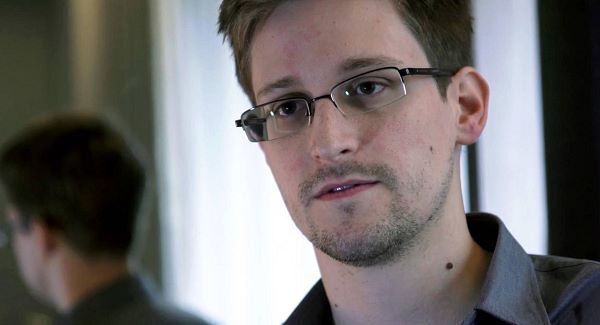
Ecuador’s government is considering an asylum request from Edward Snowden, the former National Security Agency contractor wanted for revealing secrets.

Ecuador ponders Snowden asylum bid

Ecuador’s government is considering an asylum request from Edward Snowden, the former National Security Agency contractor wanted for revealing secrets.

“We are analysing it with a lot of responsibility,” foreign minister Ricardo Patino told reporters through a translator at a hotel in Hanoi, Vietnam.

He said the decision “has to do with freedom of expression and with the security of citizens around the world”.

Mr Patino spoke briefly to reporters on his way to a meeting with Vietnam’s foreign minister. He did not say how long it would take Ecuador to decide.

Snowden yesterday arrived in Moscow on a flight from Hong Kong, and was booked on a flight to Cuba later today, according to Russian news agencies.

The former CIA technician’s flight from US espionage charges left the US with limited options as Snowden’s itinerary took him on a tour of what many see as anti-American capitals. Ecuador in particular has rejected the United States’ previous efforts at co-operation, and has been helping WikiLeaks founder Julian Assange avoid prosecution by allowing him to stay at its embassy in London.

Snowden helped the Guardian and the Washington Post disclose US surveillance programmes that collect vast amounts of phone records and online data in the name of foreign intelligence, but often sweeping up information on American citizens. Officials have the ability to collect phone and internet information broadly but need a warrant to examine specific cases where they believe terrorism is involved.

Snowden had been in hiding for several weeks in Hong Kong, a former British colony with a high degree of autonomy from mainland China. The US formally sought Snowden’s extradition from Hong Kong but was rebuffed. Hong Kong officials said the US request did not fully comply with their laws.

The Justice Department rejected that claim, saying its request met all of the requirements of the extradition treaty between the US and Hong Kong.

During conversations last week, including a phone call on Wednesday between attorney general Eric Holder and Hong Kong secretary for justice Rimsky Yuen, Hong Kong officials never raised any issues regarding sufficiency of the US request, a justice spokesman said.

A State Department official said the United States was in touch through diplomatic and law enforcement channels with countries that Snowden could travel through or to, reminding them that Snowden is wanted on criminal charges and reiterating Washington’s position that Snowden should only be permitted to travel back to the US.

The Justice Department said it would “pursue relevant law enforcement co-operation with other countries where Mr Snowden may be attempting to travel”.

The White House would only say that president Barack Obama had been briefed on the developments by his national security advisers.

Russia’s state ITAR-Tass news agency and Interfax cited an unnamed Aeroflot airline official as saying Snowden was on the plane that landed on Sunday afternoon in Moscow.

Upon his arrival, Snowden did not leave Sheremetyevo Airport. One explanation could be that he was not allowed; a US official said Snowden’s passport had been revoked, and special permission from Russian authorities would have been needed.

The Russian media report said Snowden intended to fly to Cuba later today and then on to Caracas, Venezuela.

US lawmakers scoffed. “The freedom trail is not exactly China-Russia-Cuba-Venezuela, so I hope we’ll chase him to the ends of the earth, bring him to justice and let the Russians know there’ll be consequences if they harbour this guy,” said Republican senator Lindsey Graham.

With each suspected flight, efforts to secure Snowden’s return to the US appeared more complicated if not impossible. The US does not have an extradition treaty with Russia, but does with Cuba, Venezuela and Ecuador. Even with an extradition agreement though, any country could give Snowden a political exemption.

The likelihood that any of these countries would stop Snowden from travelling on to Ecuador seemed unlikely. While diplomatic tensions have thawed in recent years, Cuba and the US are hardly allies after half a century of distrust.

Venezuela could also prove difficult. Former president Hugo Chavez was a sworn enemy of the US and his successor, Nicolas Maduro, earlier this year called Mr Obama “grand chief of devils”. The two countries do not exchange ambassadors.

US pressure on Caracas also might be problematic given its energy exports. The US Energy Information Agency reports Venezuela sent the US 900,000 barrels of crude oil each day last year, making it the fourth-largest foreign source of US oil.

Assange’s lawyer Michael Ratner said Snowden does not have many options.

“You have to have a country that’s going to stand up to the United States,” Mr Ratner said. “You’re not talking about a huge range of countries here.”

That is perhaps why Snowden first stopped in Russia, a nation with complicated relations with Washington.

Asked if he was concerned about potentially damaging Ecuador's relationship with the US, Mr Patino said: ``There are some governments that act more upon their own interests, but we do not. We act upon our principles. We take care of human rights of the people.''

WikiLeaks said Snowden was bound for Ecuador “via a safe route for the purposes of asylum, and is being escorted by diplomats and legal advisers from WikiLeaks”.

x

More in this section

Cookie Policy Privacy Policy Brand Safety FAQ Help Contact Us Terms and Conditions

© Examiner Echo Group Limited