US, Russia discuss Syria peace plan
US and Russian diplomats met yesterday to try to accelerate frustratingly slow peace efforts in Syria, where the signs point only to a worsening conflict.
Ending an eight-day trip to the Middle East and Africa, Secretary of State John Kerry flew into the French capital Paris to see Russian Foreign Minister Sergey Lavrov and exchange updates on their respective diplomatic efforts.
The United States and its Arab allies are attempting to secure the participation of Syria’s fractured opposition at an international peace conference in Geneva, planned for next month. Russia is pledging to deliver Syrian President Bashar Assad’s regime to the talks.
But despite claims of progress by both powers, there is little evidence to suggest either side in Syria is ready to halt more than two years of violence that has killed more than 70,000 people.
President Barack Obama has demanded that Assad leave power, while Russia has stood by its closest ally in the Arab world.
Mr Kerry said the US and Russia are each committed to starting a political transition that “would allow the people of Syria to decide the future of Syria”.
He told reporters after the meeting: “We are committed to this. We both want to make this conference happen, if possible, together with many other countries that will join up.
“It is our hope that we will come out of here with greater clarity about some of the issues that need to be worked on in the days ahead.”
Mr Lavrov suggested that much work remains if any peace conference is going to make headway, calling it a “very tall order”.
He also signalled continued disagreement between Washington and Moscow on the participants at the conference, saying it should include more interested parties than previous diplomatic gatherings.
That was an apparent reference to Iran, which the US and the Syrian opposition do not want to see involved in any negotiation.
The one-on-one Paris meeting between Mr Kerry and Mr Lavrov happened as Senator John McCain slipped into Syria yesterday to meet rebels, and at an increasingly dangerous time for the country.
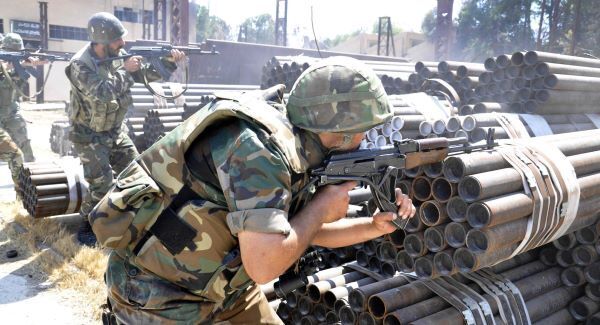
For the past week, regime troops and allies from Lebanon’s Hezbollah – and even some Iranian fighters – have waged an offensive in Qusair, gaining ground against the rebels behind intense bombardments of the strategic western Syria town.
Hezbollah’s enhanced role poses concern for the Obama administration, with the group’s leader, Hassan Nasrallah, vowing over the weekend that his militants would back Assad to victory.
Beyond providing powerful reinforcements to Assad’s regime, Hezbollah’s involvement increases the risk of spillover into Lebanon, a country as ethnically divided and fragile as Syria.
Two rockets struck a Hezbollah stronghold in southern Beirut on Sunday, raising fears that the country could be plunged back into civil war.
And any conflict with Hezbollah threatens to drag in Israel, which has proven with airstrikes that it will not tolerate large-scale and advanced weapons transfers to its northern border.
Lebanon’s state-run news agency reported one missile fired from that area toward the Jewish state on Sunday night.
For Mr Kerry and other would-be peacemakers, the developments reaffirm the need for a serious peace process to begin.
The Americans have stressed that any talks be carried out in good faith and lead to the full transfer of power to an interim government. Logic, they say, compels that this government not include Assad or other members of his regime culpable in widespread abuses.
Getting to the talks has not been easy. Mr Kerry is waiting for Syria’s Sunni-led opposition coalition to resolve internal divisions, from adding new representatives to determining how Islamist or how secular to define their movement.
Opposition leaders met among themselves yesterday in Istanbul for a fifth day. And while they have grappled for unity, they have not given a firm yes to the peace strategy outlined by Mr Kerry and Mr Lavrov earlier this month.
Mr McCain’s spokeswoman Rachel Dean confirmed that the Arizona Republican met rebels in Syria. He has been a leading advocate of arming the rebels and other aggressive military steps against the Assad regime.
Russia has achieved, rhetorically at least, greater success. The Syrian government said on Sunday that it agreed “in principle” to send delegates to Geneva, strengthening Moscow’s hand ahead of any direct US-Russian diplomatic negotiations.