Cyprus making 'superhuman efforts' to open banks
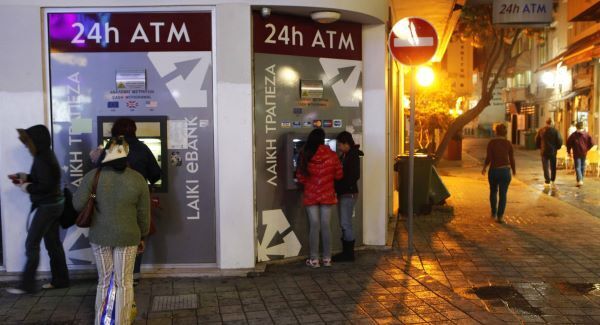
Cypriot businesses are under increasing strain to keep running after financial authorities stretched the country’s bank closure into a second week in a bid to stop depositors rushing to drain their accounts.
Cyprus’s central bank governor, Panicos Demetriades, said “superhuman efforts are being made” to open banks tomorrow.
“Temporary” restrictions will be imposed on financial transactions once the banks do, he said, but would not specify what they would be or for how long they would be in place.
“We have to restore the public’s trust in banks,” he added.
Finance minister Michalis Sarris said the restrictions would help stem any mass deposit withdrawal that is “bound to happen” and that they would be removed in a “relatively short period of time.
“I think every day (banks) are not open creates more uncertainty and more difficulties for people, so we would like to do our utmost to make sure that this new goal that we have set will work,” he said.
All but two of the country’s largest lenders had been due to reopen yesterday after being shut since March 16 to stop savers from withdrawing all their money from the banks while politicians worked out how to raise the funds necessary for Cyprus to qualify for an international bailout.
But the central bank made a surprise reversal just before midnight, announcing all banks would remain closed until tomorrow while it and the lenders work on capital controls to limit the amount of money that can be withdrawn.
“We have to all understand that we live in very critical times, officials of the government and the central bank are working day and night,” Mr Demetriades said.
Under the deal for a 10 billion euro (£8.5 billion) rescue clinched in Brussels on Monday, Cyprus agreed to slash its oversized banking sector and inflict hefty losses on large depositors in troubled banks. Mr Sarris said authorities hoped to limit job losses to a “small number”.
“We are looking to a much smaller banking system over time and more concentrated on its core business which is Cyprus and the international business units in Cyprus,” he said.
The bulk of the bailout funds will be raised by forcing losses on accounts of more than 100,000 euros (£85,000) in the country’s second-largest lender, Laiki, with the remainder coming from tax increases and privatisations.
The bank will be dissolved immediately into a so-called bad bank containing its uninsured deposits and toxic assets, with the guaranteed deposits being transferred to the nation’s biggest lender, Bank of Cyprus.
Deposits at Bank of Cyprus above 100,000 euros will be frozen until it becomes clear whether or to what extent they will also be forced to take losses. Those funds will eventually be converted into bank shares.
“It is a painful development, no doubt about that...it doesn’t matter how rich you are, how many millions you have, you don’t like your deposits, which you assume were safe, to be converted into shares,” said Mr Sarris, adding that authorities are confident that those shares will eventually gain in value.
Mr Sarris said Cyprus’ economy would shift from one centred on financial services.
“Cypriots have a robust entrepreneurial spirit, they will look for other markets ... We’re building on our relationship with China, a stronger relationship with the Middle East, our shipping sector is doing well, our tourism sector is doing well, I think we will find opportunities to compensate for this serious setback,” he said.
Nonetheless, businesses have already been feeling the brunt of the cash crunch, unable to pay salaries and suppliers. Cypriots have slashed spending during the uncertainty.
Fitch credit rating agency warned that it may downgrade Cyprus further into “junk” status amid concerns that the shock from the banking sector’s “systemic failure” heightens the risk to public finances.
CONNECT WITH US TODAY



Be the first to know the latest news and updates