Pistorius supporters shout 'Yes!' as he gets bail; Paralympian 'not a flight risk'
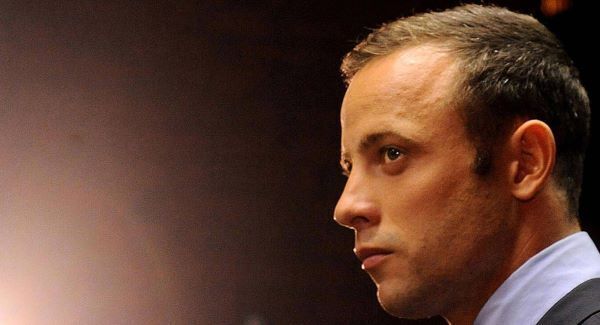
Magistrate Desmond Nair has granted bail to paralympic athlete Oscar Pistorius at a court in Pretoria today.
He said: "The accused has made a case to be released on bail...I cannot find that it has been established that the accused is a flight risk."
Mr Nair said he was not yet convinced that the case has been fully made by the prosecution team that the death of Pistorius' girlfriend Reeva Steenkamp was a case of pre-meditated murder.
The magistrate said only circumstantial evidence had been presented to the bail hearing.
Supporters could be heard saying “Yes!”, and members of the athlete’s family wept and appeared to pray after Chief Magistrate Nair announced his decision following a 90-minute speech to the court in Pretoria.
“Blade Runner” Pistorius, 26, is accused of murdering 29-year-old model Reeva Steenkamp at his home last week but claims he shot her through a bathroom door thinking she was an intruder.
Realising his mistake, he broke the door down with a cricket bat and carried her downstairs, he claims.
During the lengthy hearing, Pistorius was obviously emotional, sobbing as Mr Nair summed up the evidence the court has heard, including the Paralympian's own account of what happened when he opened fire.
Granting bail to the athlete at Pretoria Magistrates’ Court today after a four-day hearing, Mr Nair, who previously described his task as “unenviable”, said there was no suggestion that Pistorius was a flight risk, he did not appear to have a propensity to violence, and there was no evidence that he would interfere with witnesses.
He said Pistorius had “reached out” in his affidavit describing what had happened, and – pausing before he delivered his final decision to the packed courtroom – said: “I come to the conclusion that the accused has made a case to be released on bail.”
Pistorius himself was reported as bursting into tears after the decision was announced.
Bail was fixed at 1 million rand (€84,963) including 100,000 rand (€8,496) in cash.
Pistorius must surrender any firearms and his passport and cannot enter any international departure hall.
He is also banned from using any prohibited substance or alcohol.
The case was adjourned until June 4.
In his affidavit, Pistorius described waking up in the early hours of Valentine’s Day and going on to his balcony to bring in a fan and close the sliding doors.
He said he heard a noise in the bathroom and was overcome by a sense of “terror”, thinking someone had broken in.
He fired shots at the toilet door, shouting to Ms Steenkamp to call the police and, when she did not reply, realised she was in the bathroom.
The prosecution said Ms Steenkamp locked herself in the bathroom either to escape an argument or to escape the gun.
During the hearing, the prosecution claimed there was a risk of the athlete fleeing if the court released him on bail, and prosecutor Gerrie Nel said he had the “money, means and motive” to do so.
He said Pistorius’s version of events was “improbable”, compared with the state’s case which was based on “objective facts”.
But the Paralympian’s defence claimed he is so famous he will not be able to flee, and any effort to escape justice would be difficult as his prosthetic legs cannot go unnoticed through airport security, need maintenance and adjustment on a monthly basis, while his own legs need regular medical treatment.
Pistorius’s coach, Ampie Louw, who described the athlete as “heartbroken” over the death of his girlfriend, said earlier that, if he was given bail, he could resume training next week.
Mr Nair also referred to evidence given by Warrant Officer Hilton Botha, who was replaced as lead investigator in the case yesterday after he was charged with multiple counts of attempted murder in a different case.
In the case, which was previously dropped, Botha and two other police officers are said to have fired shots at a minibus carrying seven people in October 2011. He is due to appear in court himself in May.
During his ruling on Pistorius’s bail application today, Mr Nair said Botha had made “several errors and concessions” during cross- examination.
He said the officer had not asked for all the mobile phones, may have contaminated the crime scene, “blundered” on the description of substances found at the property, and did not spend as long as he ought to have if he wanted to establish that the athlete had a propensity to violence.
“It can never be said that Warrant Officer Hilton Botha is the state case,” he said. “The state case will be put together by experts.”












