Obama and Romney resume campaign
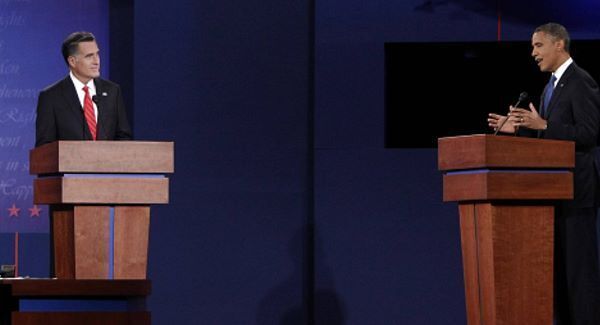
President Barack Obama returned to full-force campaigning today, ending a three-day pause to manage the federal response to the historic storm that battered the East Coast.

Obama and Romney resume campaign

President Barack Obama returned to full-force campaigning today, ending a three-day pause to manage the federal response to the historic storm that battered the East Coast.

He holds slim leads in many of the key US battleground states five days before the November 6 election.

Polling, however, also shows Mr Obama locked in a tie nationwide with Republican challenger Mitt Romney, who tempered his criticism of the president this week to avoid the appearance of seeking political advantage in the midst of a natural disaster.

Both candidates faced a day of trying to strike the right tone in an intensely stressful race. Mr Romney aimed at patriotism and the heartland in his first speech of the day, mentioning Boy Scouts, football, “America the Beautiful” and the flag.

Mr Romney also returned to criticism of Mr Obama on economic issues, the most important in this election. The last of the closely watched monthly unemployment reports comes out tomorrow. Last month’s report said unemployment had dipped below the psychological barrier of 8 %.

At his first stop of the day in Wisconsin, Mr Obama returned to the aftermath of the storm, saying he saw yet again “that there are no Democrats or Republicans in a storm. There are just Americans.”

He implicitly reminded his audience of Mr Romney’s habit of making dramatic changes on issues.

“You know what I believe. You know where I stand. You know that I’ll make tough political decisions even when they are not popular,” Mr Obama said. “After all we’ve been through together, we can’t give up now.”

Obama spokeswoman Jennifer Psaki said the president remains focused on the storm recovery, but must resume campaigning because of the “reality” of Tuesday’s election and the need to continue making the case for Americans to give him four more years in the White House.

Mr Obama’s lead in a majority of the nine so-called battleground states could determine the outcome. Those states are neither reliably Republican nor Democratic, giving them outsized importance in the US system for choosing the president.

The winner is not the candidate with the most popular votes nationwide but the one who manages to accumulate at least 270 electoral votes in state-by-state contests. Those votes are determined by a combination of a state’s population and representation in Congress.

Despite a Romney surge nationwide after the three presidential debates, polling shows Mr Obama holding on to leads in enough of the all-important swing states - most notably Ohio – to win at least the necessary 270 electors. No Republican candidate for the White House has ever won the election without capturing Ohio.

Both candidates are battling to win over the thin slice of the electorate that remains undecided while ensuring that their supporters go to the polls.

Superstorm Sandy was bound to hurt turnout in hard-hit New Jersey and New York, but both are heavily Democratic, and it was unlikely to have a significant effect on results. Election officials were promising every effort to have polls open or direct voters to alternative locations where necessary.

This week’s storm, and the federal government response to the devastation, could serve to cause voters to make up their minds.

The contest between Mr Obama and Mr Romney, at heart, has been an argument over the role of the federal government in the lives of Americans.

Mr Obama believes Washington can have a positive effect. Mr Romney believes the government should become much smaller and, therefore, collect much less in taxes.

Mr Obama has been given high marks, even from some of his harshest Republican critics, for his handling of this week’s storm crisis and the dispatch of massive federal aid to victims.

Mr Romney has been forced to answer questions about his earlier campaign statements that the key federal emergency relief organisation, the Federal Emergency Management Agency or FEMA, should turn its role over to the states.

As his campaign resumes, Mr Obama will try to make up for lost time with a heavy travel itinerary in the coming days, including rallies today not only in Wisconsin but also Nevada and Colorado.

His deputy campaign manager Stephanie Cutter said the president was visiting all the battleground states in the coming days – but notably absent was North Carolina, suggesting his campaign agrees with Romney aides that it is a likely Republican victory.

The partisan sniping continued this week from the candidates’ surrogates and their running mates. Much of it focused on Mr Romney’s new television and radio ads in critical Ohio that suggest carmakers General Motors and Chrysler are adding jobs in China at the expense of workers in the Midwestern swing state.

Vice President Joe Biden said the spots were “one of the most flagrantly dishonest ads I can ever remember.”

Even carmakers protested at the ads.

Mr Obama’s campaign planned to keep pressing its criticism of the ads as it seeks to block Mr Romney’s prospects for a breakthrough in Ohio and other Midwestern states where the car industry is deeply important to the economy.

The Republican ticket hasn’t backed away from the ad. Running mate Paul Ryan said in a statement that “American taxpayers are on track to lose $25bn as a result of President Obama’s handling of the auto bailout, and GM and Chrysler are expanding their production overseas.”

In fact, Chrysler is adding 1,100 jobs to its plant in Toledo, Ohio. It’s also adding production facilities in China as demand for cars there grows. Because of trade rules, it’s easier for companies to build cars for the Chinese market in China. It’s also more efficient. Japanese carmakers, for example, have plants in the US to meet American demand.

Mr Romney was campaigning today in Virginia, while Mr Ryan was appearing at events in Nevada and Colorado.

Mr Biden had two events scheduled in Iowa. Mr Obama was starting his day in Wisconsin, making up an event that was cancelled earlier in the week because of the storm. He had a rally planned later in Las Vegas, as well as Boulder, Colorado, a heavily Democratic area.

More than 19 million people have already voted in the presidential, either by mail or in person.

No votes will be counted until November 6, but some key states are releasing the party affiliation of those who have voted.

Democrats have an edge in votes cast in battleground states Florida, Iowa, Nevada, North Carolina and Ohio. Republicans have an advantage in Colorado.

x

More in this section

Cookie Policy Privacy Policy Brand Safety FAQ Help Contact Us Terms and Conditions

© Examiner Echo Group Limited