Romney supporter praises Obama's response to storm crisis
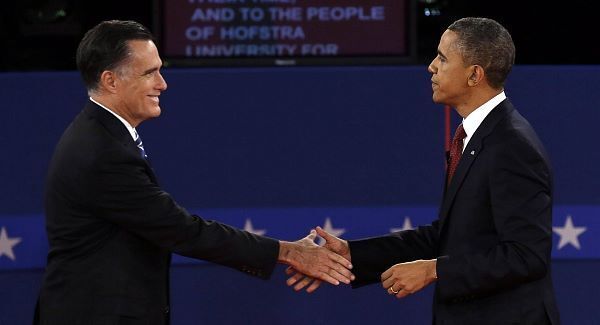
It may appear as if Barack Obama is off the campaign trail, but he is not.
Suddenly, his best friend is New Jersey governor Chris Christie, a prominent Romney supporter, with whom Mr Obama will tour damage from superstorm Sandy.
By commanding the response to a ferocious October storm a week before the election, Mr Obama is employing a political advantage in the race to be president - the fact that he is the president.
Clearly, Mr Obama’s imperative to act transcends the election. Superstorm Sandy’s devastation is real. At a time of death and danger, any president is expected to lead for the people of every state, battleground or otherwise.
Yet in a political sense – and politics are absolutely part of this – Mr Obama has a remarkable last-minute chance to campaign for his job just by doing his job.
Republican nominee Mitt Romney can load canned food onto donation trucks as he did in Ohio; Mr Obama can order aid and assets to the entire north-eastern corridor.
“The president has been all over this, and he deserves great credit,” Mr Christie, a Republican, gushed in a TV interview. By contrast, when Mr Christie was asked whether Mr Romney was coming to help, he said, “I have no idea, nor am I the least bit concerned or interested.”
The decision on when Mr Obama will shift back from a heavy governing role to traditional campaigning is being driven by the White House, not the re-election campaign, aides say. Members of the tight inner circle of both operations appear content with the position Mr Obama commands so far this week.
“The president is focused on exactly what the American people elected him to do, which is manage the country in the event of crisis,” a campaign spokeswoman said.
It is the kind of statement that leaves Mr Romney little counter, because there is no good political move in undermining American unity.
On the flipside, even with a priority on safety and recovery for storm victims, the Mr Obama camp’s underplaying of all things political seems a mighty stretch.
Mr Romney, without government authority but with a real shot at unseating the president, has been mindful of his tone, too.
“We are looking for all the help we can get for all the families that need,” Mr Romney said in an Ohio gym. He stood in front of a neatly lined table of toothpaste, nappies and blankets. His donate-for-storm-relief event, though, welcomed supporters with a campaign video declaring how he would make America strong again.
More than one Obama adviser suggested Mr Romney was blurring precisely the line that the president would never dare cross.
“Soon enough we’ll need to get back to work on the most important campaign of our lifetime,” campaign manager Jim Messina said. It looked like so many of the fundraising appeals he has sent out for Mr Obama’s re-election bid. In this one, he was lobbying people to donate to the American Red Cross.
Labelled by Mr Romney as the big government guy, Mr Obama is the one slashing red tape and telling governors to call him directly if they hit a single bureaucratic snag.
The presidential race is tied or close to it in all the states that matter, so Mr Obama is taking on risks, too, by halting days of official campaign events as Mr Romney resumes them.
Every rally Mr Obama scraps means one less chance to implore people to vote early, as many states allow, or to vote at all. The storm is consuming attention for much of the East Coast, particularly in New York and New Jersey, but has far less resonance in the key states where the weather is fine.
And, of course, Mr Obama can blow it.
Each major storm still lives in the harrowing legacy of Hurricane Katrina, which is why Mr Obama has offered declarations like “There are no unmet needs.”
Advisers to Mr Obama said that in a data-driven campaign, the storm emerged as an unpredictable factor – and, therefore, so is how voters will respond to Mr Obama’s moves.
The politics of Mr Obama’s storm response are not overt. The point is to go the other direction and just be presidential.
So gone, for three days and counting, are the rallies in which Mr Obama expressly asks people to re-elect him. Instead, voters see images of Mr Obama in charge in the Situation Room, or addressing the country from the White House briefing room, or assuring the hurting while visiting the American Red Cross that “America is with you.”
To the independent and undecided voters sick of the mess in Washington, Mr Obama appears bipartisan and positively unconcerned about his own political fate.
CONNECT WITH US TODAY



Be the first to know the latest news and updates