Syria blasts kill 27 and injure 140

At least 27 people were killed and 140 others injured when twin suicide car bombs struck intelligence and security buildings in the Syrian capital today, according to state media.

Syria blasts kill 27 and injure 140

At least 27 people were killed and 140 others injured when twin suicide car bombs struck intelligence and security buildings in the Syrian capital today, according to state media.

State TV aired gruesome images of the scene, with mangled and charred bodies, bloodstained streets and twisted steel.

“All our windows and doors are blown out,” said Majed Seibiyah, 29, who lives in the area of one of the blasts.

“I was sleeping when I heard a sound like an earthquake. I didn’t grasp what was happening until I heard screaming in the street.”

A third blast was reported at a refugee camp housing thousands of Palestinians in Damascus, but the two bombers were the only casualties, the Syrian Arab News Agency (Sana) said.

The explosions were the latest in a string of mysterious, large-scale attacks targeting the Syrian regime’s military and security installations.

Dozens of people have been killed by blasts and suicide bombings since December, even as the regime wages a bloody crackdown against the year-old uprising against President Bashar Assad.

The government has blamed the explosions on the “terrorists” that it claims are behind the revolt. The opposition has denied the allegations, saying they believe forces loyal to the government are behind the bombings to tarnish the uprising.

But top US intelligence officials have also pointed to al Qaida in Iraq as the likely culprit behind the previous bombings, raising the possibility that its fighters are infiltrating across the border to take advantage of the turmoil.

Al Qaida’s leader called for Mr Assad to step down in February.

A suspected al Qaida presence creates new obstacles for the US, its Western allies and Arab states trying to figure out a way to help push Mr Assad from power, and may also rally Syrian religious minorities, fearful of Sunni radicalism, to get behind the regime.

Bassma Kodmani, a member of the opposition Syrian National Council, said she doubted the armed groups trying to bring Mr Assad down by force, such as the rebel Free Syrian Army, have the capacity to carry out such attacks on security institutions in the capital.

“I don’t think any of the opposition forces or the Free Syrian Army has the capacity to do such an operation to target these buildings because they are fortresses,” she said.

“They are very well guarded. There is no way anyone can penetrate them without having strong support and complicity from inside the security apparatus.”

The Free Syrian Army has appealed for the international community to send weapons to help it fight the regime, but no countries are heeding the call. Saudi Arabia and Qatar have been discussing military aid, but the US and others have not advocated arming the rebels, in part out of fear it would create an even more bloody and prolonged battle.

An Interior Ministry statement tied today’s explosions to “the escalation seen recently by regional and international sides, which was consecrated with their open calls for sending weapons to Syria”.

The statement said Syria “will act decisively against anyone who dares strike the security, stability and unity of the country”.

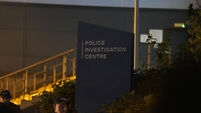
The twin suicide car bombings hit the air force intelligence department building and the criminal security department, several miles apart in Damascus, at approximately the same time, around 7am local time, the Interior Ministry said. Much of the facade of the intelligence building appeared to have been ripped away.

Shooting broke out soon after the blasts and sent residents and others who had gathered in the area fleeing, an Associated Press reporter at the scene said.

The last major suicide bombing in Syria happened on February 10, when twin blasts struck security compounds in the government stronghold of Aleppo in northern Syria, killing 28 people.

Damascus, another Assad stronghold, has seen three suicide previous bombings since December, hitting intelligence and security buildings.

The Syrian government denies there is a popular will behind the uprising, saying foreign extremists and gangs are trying to destroy the country. But President Assad’s opponents deny that and say an increasingly active rebel force has been pushed into taking up arms because the government used tanks, snipers and machine guns to crush peaceful protests.

The UN estimates that more that 8,000 people have been killed since the uprising against Mr Assad began last March.

In recent weeks, Syrian forces have waged a series of heavy offensives against the main strongholds of the opposition – Homs in central Syria, Idlib in the north and Daraa in the south.

The bloodshed fuels the country’s sectarian tensions. The military’s top leadership is stacked heavily with members of the minority Alawite sect, to which Mr Assad and the ruling elite belong.

Sunnis are the majority in the country of 22 million and make up the backbone of the opposition.

Diplomatic efforts to solve the crisis have so far brought no result. But UN envoy Kofi Annan told the Security Council in a briefing yesterday that he would return to Damascus even though his recent talks with Mr Assad saw no progress in attempts to cobble together peace negotiations between the two sides.

After the confidential briefing via video-link, Mr Annan told reporters in Geneva that he urged the council “to speak with one voice as we try to resolve the crisis in Syria”. Russia and China have blocked UN action against Mr Assad’s regime.

“The first objective is for all of us to end the violence and human rights abuses and the killings and get unimpeded access for humanitarian access to the needy, and of course the all-important issue of political process that will lead to a democratic Syria,” Mr Annan said.

Both Mr Assad and much of the opposition spurned Mr Annan’s appeal for talks.

x

More in this section

Cookie Policy Privacy Policy Brand Safety FAQ Help Contact Us Terms and Conditions

© Examiner Echo Group Limited