Republican Party: Trump has people 'fired up'
The Republican Party’s search for a challenger in the 2012 presidential race seems stranger by the day.
Republican celebrities like Sarah Palin are not getting much reaction. Mainstream candidates like Mitt Romney and Tim Pawlenty are not getting much support.
But people once considered highly unlikely to compete seriously for the party’s nomination are creating big stirs in early voting states, a reflection of an unformed and uncertain Republican presidential field.
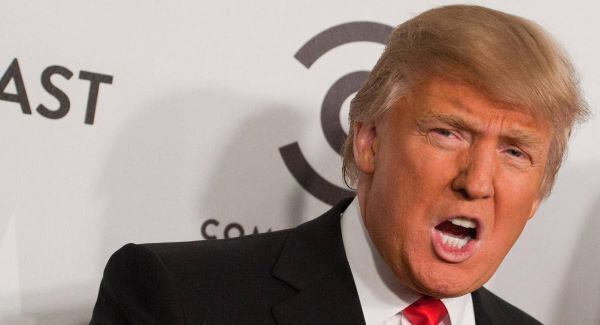
Republican activists in Iowa, New Hampshire and South Carolina appear deeply intrigued by, and open to, a run by Donald Trump, the publicity-loving business tycoon and host of America’s version of “The Apprentice,” even as he perpetuates falsehoods about Barack Obama’s citizenship and questions the legitimacy of his presidency.
“I hear more and more people talking about Donald Trump,” said Glenn McCall, Republican Party chairman in South Carolina’s York County. “He’s got people fired up.”
These Republican officials and activists stopped short of saying they see Trump as the eventual nominee. But they said their party is hungry for forceful, colourful figures to attack Mr Obama and other Democrats on health care, spending and other issues.
In Iowa at least, there’s also widespread talk about two social conservatives: Representative Michele Bachmann of Minnesota, who would be the first president elected directly from the House since James Garfield, and former Pennsylvania Senator Rick Santorum, who lost his 2006 re-election bid by a landslide.
Even Herman Cain, the little-known, wealthy former pizza chain executive, gets mentioned by Republican voters who will have the first crack at winnowing the Republican field.
While these people certainly have talents, the party’s establishment does not see them as the likeliest contenders to defeat Mr Obama. Karl Rove, architect of George W. Bush’s two presidential wins, calls Mr Trump “a joke candidate.”
Republicans traditionally pick party veterans who wait their turn and earn their nominations after years spent as governors, senators or vice presidents. But this field lacks a front-runner like Bob Dole in 1996 or George W. Bush in 2000. There’s a political vacuum in the Republican Party, insiders say, and it is being filled by an unusually large and diverse number of White House hopefuls.
“It’s probably the most wide open field in 50 years,” said Stephen Scheffler, a Republican National Committee member and head of the Iowa Faith and Freedom Coalition. “I’m not sure anyone has caught fire yet.”
South Carolina Republican Party chairwoman Karen Floyd said: "It's any candidate's ball game right now.'' Kim Lehman, another Republican National Committee member from Iowa, said voters have not locked in on any one person. ``Everyone is taking their time and seeing who's who, and what's what,'' she said.
Mrs Palin’s apparent fade and Mr Trump’s rise are arguably the most surprising events in recent weeks, as more establishment-oriented contenders, including former governors Romney of Massachusetts and Pawlenty of Minnesota, took formal steps toward full-fledged candidacies.
This early in the race, polls measure name recognition more than anything else. That may help explain strong showings by Mr Trump and Mr Huckabee.
Mr Huckabee won the 2008 Iowa caucus and hosts a TV show, but has done little to signal he will run again. Mr Trump, meanwhile, is turning heads in early voting states.
“He is causing conversations,” said Trudy Caviness, the Republican chairwoman in Iowa’s Wapello County.
Mr McCall said Mr Trump “is saying on the national stage what other people won’t talk about.”
That includes holding forth on trade, China and oil dependency. But his biggest buzz stems from his embrace of the claim that Mr Obama was not born in the United States, and therefore is constitutionally barred from being president.
Documents, including Mr Obama’s birth certificate, show he was born in Hawaii in 1961.
Several Republican activists said they do not care much about Mr Obama’s birthplace, but they are tired of waiting for the more establishment-backed challengers to challenge the president often and fiercely. For some, Mr Trump fills that void.
For his part, Mr Trump declined today to back away from the questions he has raised about the citizenship, saying in an interview broadcast on NBC television that it’s a legitimate subject.
He also said he opposes increasing the nation’s debt limit, even though experts have said that could cause the government to default on its debts. “
Democratic strategists and Obama supporters watch these developments with bewilderment, and a vague sense that they will not last. They say they cannot predict who will be the nominee, but more traditional candidates seem more plausible than Mr Trump.
CONNECT WITH US TODAY



Be the first to know the latest news and updates