Oil spill 'now worst in US history'
US president Barack Obama will return to the Gulf of Mexico coast today, insisting he is in charge of efforts to shut down what is now estimated as the worst oil spill in US history.
But Mr Obama admitted the government did not have the technology or expertise and must rely on oil giant BP.
Meanwhile BP resumed its mud pumping operation today after pausing its attempt to plug the oil leak, saying it wanted to monitor the effects of the “top kill” procedure.
The company announced last night that it had suspended shooting heavy drilling mud into the blown-out well 5,000 feet underwater so it could assess how the effort was working and bring in more materials.
BP said it could be late today or the weekend before the company knew if it had cut off the oil that has been flowing for five weeks.
Mr Obama seized ownership of what he called a “tremendous catastrophe” yesterday after weeks of allowing cabinet members to take the public lead as the crippled BP well spewed millions of gallons of crude oil into the Gulf from nearly a mile below the surface.
As the world waited, he announced major new restrictions on drilling projects.
“I take responsibility. It is my job to make sure that everything is done to shut this down,” Mr Obama declared at a White House news conference dominated by the spill.
Even at the lowest estimate – 18 million gallons – the Gulf spill has far surpassed the size of the previous largest US oil spill, the 1989 Exxon Valdez disaster, in which a tanker ran aground in Alaska, spilling nearly 11 million gallons .
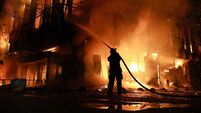
The oil has been spewing since the drilling rig Deepwater Horizon exploded on April 20, killing 11 workers.
The president was under mounting criticism – even from members of his own Democratic Party – for seeming aloof to what could be the biggest environmental tragedy in US history. The president seems now to have wagered on deeper involvement proving less politically damaging.
Asked about inevitable comparisons between his administration’s handling of the disaster with his predecessor’s response to Hurricane Katrina in 2005, which flooded New Orleans and other areas, Mr Obama said: “I’ll leave it to you guys to make those comparisons. ... What I’m thinking about is how do you solve the problem?”
Comparisons to former president George Bush’s paltry response to the devastating storm have come mainly from opposition Republicans who are trying to made political gains in November congressional elections.
“I’m confident people are going to look back and say this administration was on top of what was an unprecedented crisis,” he said. “We’ve got to get it right.”
The president, who campaigned on a promise to change the way Washington does business, blasted a “scandalously close relationship” he said has persisted between Big Oil and government regulators.
Conceding that “people are going to be frustrated” until the well was capped, Mr Obama said he would use the full force of the government to extract damages from BP.
“We will demand they pay every dime they owe for the damage they’ve done and the painful losses they’ve caused,” he said.
He spoke shortly after the head of the troubled agency that oversees offshore drilling resigned under pressure. The departure of Minerals Management Service Director Elizabeth Birnbaum was announced just before Mr Obama’s news conference began.
While making clear he was leading the response, Obama acknowledged some things could have been better handled.
He said his administration did not act with “sufficient urgency” before the spill to clean up the Minerals Management Service, accused of corruption and poor regulation of drilling rigs and wells.
While he defended calling for an expansion of offshore drilling before the spill, he said he “was wrong” to believe that oil companies were prepared to respond to worst-case spills.
Mr Obama also said the administration took too long to make its own measurements of the size of the spill, and did not push BP hard enough early on to release underwater footage
BP insisted the top kill was progressing as planned, though the company acknowledged drilling mud was escaping from the broken pipe along with the leaking crude.
“The fact that we had a bunch of mud going up the riser isn’t ideal but it’s not necessarily indicative of a problem,” said spokesman Tom Mueller.
The top kill is the latest in a string of attempts to stop the oil that has been spewing since the Deepwater Horizon exploded.
If the procedure works, BP will inject cement into the well to seal it permanently. If not, the company has a number of back-up plans. Either way, crews will continue to drill two relief wells, considered the only sure way to stop the leak.
A top kill has never been attempted before so deep underwater. BP chief operating officer Doug Suttles said the company was also considering shooting small, dense rubber balls or assorted junk such as golf balls and rubber scraps to plug a crippled five-storey piece of equipment known as a blowout preventer to keep the mud from escaping.
CONNECT WITH US TODAY



Be the first to know the latest news and updates