Iran slows internet access ahead of planned protests
Iranian authorities have slowed internet connections to a crawl or choked them off completely before expected student protests tomorrow to deny the opposition a vital means of communication.
In another familiar tactic before such rallies, authorities have ordered journalists working for foreign media organisations not to leave their offices to cover the demonstrations.
Iran’s beleaguered opposition has sought to maintain momentum with periodic demonstrations coinciding with state-sanctioned events.
Monday’s rallies will take place on a day that normally marks a 1953 killing of three students at an anti-US protest. Since the 1990s, the day has served as an occasion for pro-reform protests.
Students are at the centre of the opposition to Iran’s clerical regime and its brutal crackdown on demonstrators protesting against what they believed was a fraudulent presidential election in June.
The opposition, which relies on the web and cell phone service to organise rallies and get its message out, has vowed to hold rallies, the first anti-government show of force in a month.
It is not clear if the demonstrations will take place on university campuses or in the streets.
The call went out on dozens of websites run by supporters of opposition leaders Mir Hossein Mousavi and Mahdi Karroubi, both of whom ran in the June 12 election. Most of those sites have been repeatedly blocked by the government, forcing activists to set up new ones.
Internet connections in the capital, Tehran, have been slow or completely down since Saturday. Blocking internet access and mobile phone service has been one of the routine methods employed by the authorities to undermine the opposition in recent months.
The government has not publicly acknowledged it is behind the outages, but Iran’s internet service providers say the problem is not on their end and is not a technical glitch. A day or two after the demonstrations, mobile phone and internet service is restored.
Former President Akbar Hashemi Rafsanjani, who has been a powerful voice of dissent from within the ranks of the Islamic leadership, accused Iran’s hard-line rulers in comments reported today of silencing any constructive criticism.
“The situation in the country is such that constructive criticism is not tolerated,” Mr Rafsanjani was quoted by several news agencies as saying.
Throughout Iran’s post-election crisis, Mr Rafsanjani has appeared to side with critics alleging that the vote was rigged.
Signs have mounted in recent days of a potentially explosive confrontation on Monday, especially if student protesters dare to take their demonstrations off campuses.
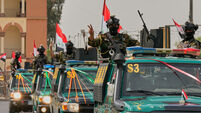
Iran’s police chief, General Ismail Ahmadi Moghaddam, warned that security forces will crush any protests.
“If any unauthorised gatherings take place outside the universities, police will confront them,” Gen Moghaddam was quoted as saying by the semi-official Fars news agency.
Monday’s protests, if they go ahead, would be the first major show of force by the opposition since November 4, when Iranian security forces beat anti-government protesters with batons on the sidelines of state-sanctioned rallies to mark the 30th anniversary of the US Embassy takeover.
The opposition has sought to display unity and resolve after relentless crackdowns on their protests and a mass trial of more than 100 activists and prominent pro-reform figures accused of fomenting the post-election unrest and seeking to topple the government.
Authorities have also focused on Iran’s students, besieging campuses nationwide with a wave of arrests and student expulsions. The pro-government Basij militia has also recruited informers on campuses to blow the whistle on any opposition troublemakers, according to students.
The opposition says at least 72 people died in the bloody crackdown on protesters after the election and that many of those detained were abused in custody. The government puts the number of dead at 30.
Seeking to confine journalists working for international media to their offices on Monday, Iran’s Culture Ministry suspended accreditation allowing them to report from the streets.
A text message to journalists from the ministry’s foreign media department said, “All permits issued for foreign media to cover news in the streets of Tehran will not be valid from December 7 to December 9.”
The ministry also warned the few remaining pro-reform newspapers not to publish “divisive” material, the official IRNA news agency reported.
“Following publication of headlines ... contrary to unity by some newspapers, they were given written notification,” IRNA said. The agency identified the newspapers as Etemad, Hayat-e-Now, Aftab-e-Yazd and Asrar.


CONNECT WITH US TODAY



Be the first to know the latest news and updates