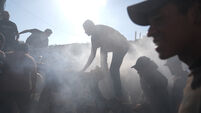
Red Cross warns on hidden dangers of rescue camps
Refugee camps for local populations can cause unrest and even armed rebellion, the Red Cross warned in a report today.
In many cases displaced people are better housed in towns and villages, the organisation said.
Creating camps that can dwarf surrounding towns should be a last resort, as the health services, food and housing provided by aid agencies may draw people who would otherwise stay in their homes.
“The lure of social services way beyond anything they ever experienced may encourage the flight,” the International Committee of the Red Cross said in its report.
The analysis is unusual for the ICRC, which provides shelter and services to 3.8 million displaced people around the world.
“Having sought for years to establish minimum standards to improve the quality of assistance in calamity and conflict, humanitarians now wonder about the maximum,” the Geneva-based agency said.
An estimated 26 million people worldwide are considered “internally displaced” after leaving their homes for camps or the apartments and houses of friends and family in the same country. They are not considered refugees by aid groups because they haven’t fled abroad. Congo, Iraq, Pakistan and Sudan have particularly high numbers of internally displaced people.
“There are situations where there is no alternative to camps,” ICRC President Jakob Kellenberger said. But, “if you are in camps for too long, it will be much more difficult afterward to be reintegrated again in your natural environment.”
That is a major problem for aid groups, who see camps as a temporary solution to a refugee or displacement crisis. Yet, in countries such as Philippines, Sri Lanka and the Palestinian territories, many people have languished in camps for years.
The ICRC noted that in Sudan’s Darfur region, ethnic segregation inside camps was common and has entailed unwanted consequences.
“Armed opposition groups were present in some, recruiting internally displaced persons, moving weapons through them, and resorting to extortion and harassment,” it said. “In others, vulnerable people were forced to pay taxes, even a share of their food rations, to nominal leaders.”
Camps also risk becoming the focus of world attention, drawing resources away from displaced people living elsewhere who are also in need of help, the agency said.
“For far too long the debate ... has focused on those who are in camps to the detriment of those who are not.”
CONNECT WITH US TODAY



Be the first to know the latest news and updates