Obama presses both sides on Middle East peace
US president Barack Obama challenged Israel to stop building settlements in the West Bank and pushed Palestinians for progress, deepening his involvement in the Middle East peace process.
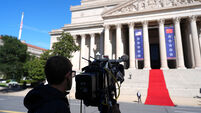
âI am confident that we can move this process forward,â Mr Obama said after meeting Palestinian president Mahmoud Abbas at the White House.
Mr Obama said that meant both sides must âmeet the obligations that theyâve already committed toâ â an element of the peace effort that has proved elusive for years.
After the session with Mr Obama, Mr Abbas said no meetings with Israeli prime minister Benjamin Netanyahu were on the horizon. He said there were no preconditions but âobligationsâ on Israel through the so-called road map for ending the Israeli-Palestinian conflict.
Mr Abbas said he was meeting his commitments under the road map and that Israel should do the same.
Earlier, Israel rejected blunt US requests to freeze Jewish settlement construction in the West Bank, a territory that would make up the Palestinian state, along with the Gaza Strip, as part of a broader peace deal.
In strong language, secretary of state Hillary Clinton had said Mr Obama wanted a halt to all settlement construction, including ânatural growthâ â a term used by Israel for new housing and other construction that it says will accommodate the growth of families living in existing settlements.
Israeli spokesman Mark Regev responded by saying some construction would go on.
âNormal life in those communities must be allowed to continue,â he said, noting Israel had already agreed not to build new settlements and to remove some tiny, unauthorised settler outposts. He said the fate of the settlements would be determined in peace negotiations with the Palestinians.
With that as a backdrop, Mr Obama said part of Israelâs obligations include âstopping settlements.â But he also struck a hopeful tone.
He said he had pressed Mr Netanyahu on the settlement matter last week at the White House and that the Israeli leader needed to work through the issue with his own government.
âI think itâs important not to assume the worst, but to assume the best,â Mr Obama said.
The president also told Palestinians to hold up their end, including increased security in the West Bank to give Israelis confidence in their safety.
Mr Obama said he told Mr Abbas the Palestinians must find a way to halt the incitement of anti-Israeli sentiments sometimes expressed in schools, mosques and public arenas. âAll those things are impediments to peace,â Mr Obama said.
The Palestinian leader said âwe are fully committed to all of our obligationsâ under the road map. Doing so, Mr Abbas said, was âthe only way to achieve the durable, comprehensive and just peace that we need and desire in the Middle Eastâ.
Mr Obama, like his predecessor George Bush, embraces a multi-faceted Middle East peace plan that calls for a Palestinian state alongside Israel.
The president refused to set a timetable for such a nation but also noted he had not been slow to get involved in meeting both sides and pushing the international community for help.
âWe canât continue with the drift, with the increased fear and resentment on both sides, the sense of hopelessness around the situation that weâve seen for many years now,â Mr Obama said. âWe need to get this thing back on track.â
Mr Abbas is working to repackage a 2002 Saudi Arabian plan that called for Israel to give up land it has occupied since 1967 in exchange for normal relations with Arab countries.
He gave Mr Obama a document that would keep intact that requirement and also offer a way to monitor a required Israeli freeze on all settlement activity, a timetable for Israeli withdrawal and a realisation of a two-state solution.