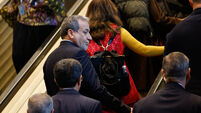
Unemployment rate in US rockets

The US has been rocked by the fastest weekly rise in unemployment in 16 years.

Unemployment rate in US rockets

The US has been rocked by the fastest weekly rise in unemployment in 16 years.

New claims filed for unemployment insurance zoomed last week to 542,000, the highest since the summer of 1992, when the nation was recovering from a recession, the Labour Department said today.

The latest news on the crucial jobs market was worse than analysts expected.

Meanwhile the numbers continuing to draw jobless benefits climbed to more than four million, the highest in just over a quarter-century.

Against this backdrop, the White House signalled that President George Bush would sign legislation pending in Congress to extend unemployment benefits.

The Senate is expected to take up a bill this week, already passed in the House of Representatives, that would extend unemployment insurance for those whose benefits have run out.

The grim news on jobs followed a gloomy outlook from the Federal Reserve and diminishing hope that Congress can secure a fresh $25bn (€20bn) rescue package for the tottering US car industry before next year.

Despite a flurry of bold government actions the financial and economic problems rage on.

National unemployment will rise to between 6.3% and 6.5% this year, up sharply from last year’s average rate of 4.6%, according to Federal Reserve forecasts.

Next year it expects the jobless rate to climb to between 7.1% and 7.6%.

General Motors chief executive Rick Wagoner meanwhile warned that the collapse of the auto industry could lead to a loss of three million jobs within the first year.

Top Senate Democrats suggested a bill to rescue Detroit’s Big Three was stalled, and they challenged the Bush administration to act to save the industry if congressional efforts falter. The White House rebuffed the suggestion.

Meanwhile, with economic slowdowns both in the US and overseas, inflation will moderate, the Federal Reserve predicted.

American consumers got a reprieve and saw prices actually fall by a record amount in October, just a few months after getting hammered by runaway costs.

The shift away from inflation worries to a possible bout of dropping prices, or “deflation,” however, underscored just how quickly dangers faced by the economy can change in what many fear will be a painful recession.

America’s last serious case of deflation occurred during the Great Depression of the 1930s. For now economists think the chances are slim that the country will tip into a deflationary spiral. But they are not ruling it out.

More in this section

Cookie Policy Privacy Policy Brand Safety FAQ Help Contact Us Terms and Conditions

© Examiner Echo Group Limited