Maliki: Basra operation 'was a victory'
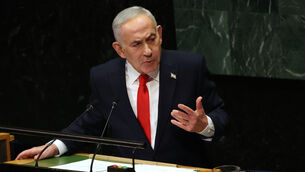
Iraq’s prime minister insisted today that the week-long attempted crackdown against militia in Basra had been a “success,” despite the violent backlash it produced.
But Nouri al-Maliki stopped short of declaring an end to the offensive as he faced criticism that the government had been unprepared for the ferocious resistance mounted by Muqtada al-Sadr’s Mahdi Army.
Meanwhile, sporadic fighting continued in Baghdad and Basra despite a tense calm that followed a peace agreement by al-Sadr.
The fighting in the capital and cities to the south has helped make March the deadliest month for Iraqis since last summer.
At least 1,247 Iraqis, including civilians and security personnel, had been killed up to yesterday, according to figures compiled from police and US military reports.
The figure was nearly double the tally for February and the biggest monthly toll since August, when 1,956 people died violently.
Iraqi government figures showed a similar trend, with at least 1,079 people were killed in March – 923 civilians, 156 security forces.
That was an increase from 718 the month before, including 633 civilians and 85 security forces, according to figures compiled from data provided by officials at the health, interior and defence ministries.
In ordering his militia to stop fighting on Sunday, al-Sadr also demanded concessions from the Iraqi government, including an end to the “illegal raids and arrests” of his followers and the release of all detainees who have not been convicted of any offences.
US and Iraqi officials insisted the operation was directed at criminals and rogue militia – some allegedly linked to Iran – but not against the Sadrist movement, which controls 30 of the 275 seats in the national parliament.
But the fighting mainly involved Mahdi Army fighters, provoking intense anger among al-Sadr’s followers.
The peace agreement stopped short of disarming the militia and left Iraq’s US-backed prime minister politically battered and humbled within his own Shiite power base.
However, Mr Maliki insisted that the operation launched a week ago had achieved “security, stability and success” in Basra.
Mr Maliki had promised to crush the militias that have effectively ruled Basra for nearly three years. The US military launched air strikes in the city to back the Iraqi effort.
But the response by the Mahdi Army, including rocket fire on the US-controlled Green Zone and attacks throughout the Shiite south, caught the government by surprise and sent officials scrambling for a way out of the crisis.
The confrontation enabled al-Sadr to show that he remains a powerful force capable of challenging the Iraqi government, the Americans and mainstream Shiite parties that have sought for years to marginalise him.
And the outcome cast doubt on President George Bush’s assessment that the Basra battle was “a defining moment” in the history “of a free Iraq.”