Bush blocks terror bill banning 'waterboarding'
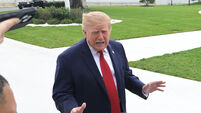
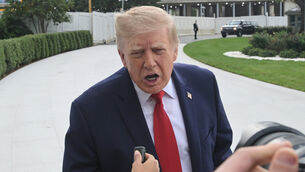
US president George Bush said today that he vetoed legislation that would have banned the CIA from using harsh interrogation methods such as waterboarding to break suspected terrorists because it would end practices that have prevented attacks.
“The bill Congress sent me would take away one of the most valuable tools in the war on terror,” Bush said in his weekly radio address. “So today I vetoed it.”
The bill he rejected provided guidelines for intelligence activities for the year and had the interrogation requirement as one provision. It cleared the House of Representatives in December and the Senate last month.
“This is no time for Congress to abandon practices that have a proven track record of keeping America safe,” the president said.
Supporters of the legislation say it would preserve the US’s ability to collect critical intelligence while also providing a much-needed boost to the country’s moral standing abroad.
“Torture is a black mark against the US,” said California Senator Dianne Feinstein, a Democrat. “We will not stop until (the ban) becomes law.”
The bill would have limited the CIA to the 19 techniques allowed for use by military interrogators. The Army field manual in 2006 banned using methods such as waterboarding or sensory deprivation on uncooperative prisoners.
Bush said the CIA must retain use of “specialised interrogation procedures” that the military does not need.
The Army methods are designed for questioning “lawful combatants captured on the battlefield”, while intelligence professionals are dealing with “hardened terrorists” who have been trained to resist the techniques in the Army manual, the president said.
“We created alternative procedures to question the most dangerous al-Qaida operatives, particularly those who might have knowledge of attacks planned on our homeland,” Bush said.
“If we were to shut down this programme and restrict the CIA to methods in the field manual, we could lose vital information from senior al-Qaida terrorists, and that could cost American lives.”
The bill’s supporters say the military’s approved methods are sufficient to any need.
Those 19 interrogation techniques to which the bill would have restricted CIA personnel include the “good cop/bad cop” routine, making prisoners think they are in another country’s custody and separating a prisoner from others for up to 30 days.
Among the techniques the field manual prohibits are hooding prisoners or putting duct tape across their eyes, stripping them naked, forcing them to perform or mimic sexual acts, or beating, electrocuting, burning or otherwise physically hurting them.
They may not be subjected to hypothermia or mock executions. It does not allow food, water and medical treatment to be withheld. Dogs may not be used in any aspect of interrogation.
But waterboarding is the most high-profile and controversial of the interrogation methods in question.
It involves strapping a person down and pouring water over his or her cloth-covered face to create the sensation of drowning. It has been traced back hundreds of years to the Spanish Inquisition and is condemned by nations around the world and human rights organisations as torture.
Some argue it must be banned because torture is illegal under international and US law.
The Detainee Treatment Act of 2005 includes a provision barring cruel, inhuman and degrading treatment for all detainees in US custody, including CIA prisoners, and many believe that covers waterboarding.
Others say that, even if legal, there are practical arguments against waterboarding: that its use would undermine the US when arguing overseas for human rights and on other moral issues and would place Americans at greater risk of being tortured when captured.
“President Bush’s veto will be one of the most shameful acts of his presidency,” Senator Edward Kennedy said. “Unless Congress overrides the veto, it will go down in history as a flagrant insult to the rule of law and a serious stain on the good name of America in the eyes of the world.”
He noted that the Army field manual said that harsh interrogation was a “poor technique that yields unreliable results, may damage subsequent collection efforts and can induce the source to say what he thinks the (interrogator) wants to hear”.
The US Army specifically banned waterboarding in 2006. The CIA also prohibited the practice in 2006, and says it has not been used since three prisoners encountered it in 2003.
But while some Bush administration officials have questioned the current legality of waterboarding, the administration has refused to rule definitively on whether it is torture. Bush has said many times that his administration does not torture.
The White House says waterboarding remains among the interrogation methods potentially available to the CIA. Its use would have to be approved, on a case-by-case basis, by the president after consultation with the attorney general and the intelligence community.
Among the acceptable situations for approving it could be belief of imminent attack, according to the White House.
“Because the danger remains, we need to ensure our intelligence officials have all the tools they need to stop the terrorists,” Bush said.