Police question three over Bhutto bombing
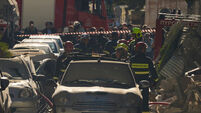
Police in Pakistan are questioning three people over the bombing of Benazir Bhutto’s convoy, which killed at least 136 people and shattered what was intended to be a triumphant return from exile.
The men were linked to a vehicle that police believe was used by one of the attackers who threw a grenade at the convoy on Thursday, causing Bhutto’s campaign bus to come to a halt, said a senior investigator.
Seconds later, a suicide bomber blew himself up with a shrapnel-filled explosive.
Police detained the three men in southern Punjab province – a centre for militancy – and took them to Karachi for questioning.
The senior investigator said police believed the men, who have yet to be charged, hold crucial clues on the bombing.
The attack was the deadliest in Pakistan’s history, turning Bhutto’s jubilant homecoming parade into a scene of carnage. More than 200 were injured.
Pakistan’s government yesterday denied involvement in the attack while sporadic violence flared in Karachi, a city of 15 million people.
Angry over the suicide bombing, supporters of Bhutto’s Pakistan People’s Party threw stones and burned tires in parts of the city. Fourteen people were shot in a neighbourhood that is one of her strongholds after outsiders mixed with Bhutto supporters. Police said the outsiders began firing shots.
“They (Bhutto supporters) are expressing their anguish over the attack on their leader and the deaths of so many people,” said Fayaz Khan, a senior Karachi police officer.
Authorities say the bombing bore the hallmarks of a warlord and the al Qaida terror network.
Bhutto blamed al Qaida and Taliban militants for the assassination attempt against her, but also hinted that government or military officials could have been involved.
“I think we should stop playing blame games. The government provided the best possible security to her,” Deputy information minister Tariq Azim said yesterday.
The list of people who could have targeted the pro-Western leader is long.
Bhutto blamed remnants of the regime of former military leader General Zia ul-Haq allegedly complicit in her father’s execution. Islamic extremists could also be bent on stopping a female political leader from modernising Pakistan.
Pakistan’s prime minister Shaukat Aziz said the attack was unlikely to delay elections in January, but the government would be alert for future attacks.
“I don’t see the electoral process being hindered ... but of course we will have to be wise. We’ll perhaps have to change our tactics a little,” he said.