US-Iraqi troops clash with gunmen

US and Iraqi troops clashed with gunmen firing heavy weapons from concrete high-rises in a Sunni insurgent stronghold north of the heavily fortified Green Zone today. Iraqi’s defense ministry said as many as 30 militants were killed and 27 captured.

US-Iraqi troops clash with gunmen

US and Iraqi troops clashed with gunmen firing heavy weapons from concrete high-rises in a Sunni insurgent stronghold north of the heavily fortified Green Zone today. Iraqi’s defense ministry said as many as 30 militants were killed and 27 captured.

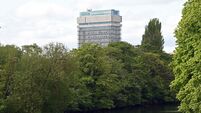
Apache attack helicopters buzzed past the tall buildings and radio towers, with several Humvees on the tree-lined street below. Gunfire rang in the background as shells fell, according to AP Television News footage.

Black smoke rose from the area, on the west bank of the Tigris River about a mile north of the Green Zone, site of the US and British embassies as well as the Iraqi government headquarters. The clashes were the second major fighting to break out in the area in less than a month.

There were conflicting numbers of insurgents reported killed and captured in the fighting, which began before dawn.

Iraq’s defence ministry spokesman Mohammed al-Askari told The Associated Press 30 insurgents were killed and 27 were arrested, including four Egyptians and a Sudanese man.

The US military said seven suspected insurgents were detained and rocket-propelled grenades, anti-tank rounds and 155 mm artillery rounds were seized. The American statement did not mention deaths.

The military reported separately that an American soldier was killed Wednesday in clashes near the city’s centre, but officials declined to give more specifics or say whether it was connected to the Haifa Street fighting.

US and Iraqi troops are gearing up for a broader security crackdown to quell the sectarian violence in the capital. Al-Askari said the fighting on Wednesday was not part of that plan.

A spokesman at the Cultural Ministry, Jabbar al-Mashhadani, told the AP that US and Iraqi forces rushed into the building on the edge of Haifa Street and told all the employees to go home as they fanned out and sent snipers to the roof.

At least one civilian was killed and seven were wounded in the clashes, according to hospital and police officials.

Haifa Street, a major avenue in central Baghdad, was built in the late 1970s and former leader Saddam Hussein had several concrete high-rises built for loyalists as well as Arab dissidents, mainly Syrians who defected from the rival Baath Party branch in Damascus and moved to Iraq. Some university professors, presidential advisers and actors, also had homes there.

It has been the site of numerous clashes, including a major battle on Jan. 9, just three days after prime minister Nouri Maliki announced his new security plan for pacifying Baghdad.

At the beginning of Haifa street stands a bronze statue of Iraq’s late King Faisal riding a horse.

The street cuts through the neighbourhood where Saddam attended school as a teenager. He lived with his maternal uncle and future father-in-law.

During a visit to the neighbourhood after the 1991 Gulf war, residents complained to Saddam about their poverty, prompting him to order homes demolished and new apartment complexes built.

Just off Haifa Street is a square where a large statue for Saddam’s cousin and brother-in-law, Adnan Khairallah, stand to this day. It was widely believed that Saddam was behind a helicopter crash in 1989 in which Khairallah was killed because the late defence minister was becoming popular among Iraqis.

More in this section

Cookie Policy Privacy Policy Brand Safety FAQ Help Contact Us Terms and Conditions

© Examiner Echo Group Limited