Sudan agrees to UN peacekeeping force
Sudan has agreed in principle to allow a joint United Nations and African Union peacekeeping force into Darfur.
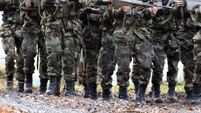
The force could be as large as 27,000 troops, including the existing 7,000-strong African Union peacekeeping force in Darfur.
A timetable for the force to begin work was not announced partly because Sudan still has some reservations.
Some of the outstanding issues could be resolved by the end of the year, UN secretary general Kofi Annan said last night.
“The next step is for the UN and AU to call a meeting of the non-signatories (of the Darfur Peace Agreement) ... and the government of Sudan. It should take place in the next couple of weeks to resolve outstanding issues by the end of the year,” Annan said.
Enlarging the existing African Union peacekeeping force in Darfur will take place in three phases over an unspecified period of time, Annan told journalists.
Sudan has not given its unreserved approval to the plan because officials at yesterday’s meeting needed to consult their superiors in the Sudanese capital, said Abdul Mahmoud Abdelhaleem, Sudan’s ambassador to the UN
Some of the issues the officials could not decide on immediately included who Sudan would accept to be in command of such an expanded peacekeeping force.
An African Union Peace and UN Security Council meeting will be held in the Republic of Congo on November 24 during which Sudan is expected to present its final views on what was agreed on in Ethiopia today, Annan says.
Annan had wanted UN peacekeepers to replace a beleaguered AU force in Darfur. Sudan has so far blocked a UN contingent. Annan wanted to try to stop the bloodshed in Darfur before he left office on January 1.
The meeting brought together senior officials from the AU, the Arab League, the European Union, Sudan, the United States, China, Russia, Egypt, France and a half-dozen African countries.
Britain’s International Development Secretary Hilary Benn called on the Sudanese government to “accept the clear view of all the others present”.
He said the joint UN-AU focus on Sudan was “the best opportunity we have to bring this crisis to an end”.
“In the meantime, we need an effective ceasefire, with all the parties committing to stop the fighting,” he added.
In recent days, pro-government militia known as janjaweed have stepped up attacks on villages in Darfur, killing dozens of people, international observers said yesterday. In one raid, janjaweed militiamen – backed by government troops - forced children into a thatched hut, then set it ablaze, killing parents who tried to rescue the children, rebels said.
The UN humanitarian chief, who was visiting Darfur, said he had been told by people made homeless by the conflict that the withdrawal of non-governmental organisations from some areas had left them with fewer services and more exposure to violence, according to a statement released by the United Nations in New York today.
“This is my fourth visit to Darfur, and I have never before seen such a bad security situation,” Jan Egeland said from El Geneina, capital of West Darfur, according to the statement.
“There are too many armed elements in and around the camps threatening the inhabitants and preventing us from going in.
“Aid workers in West Darfur cannot move on the roads because they are being attacked and their vehicles are being stolen.”
After years of low-level clashes over water and land in the vast, arid Darfur region, rebels from ethnic African tribes took up arms against Sudan’s Arab-dominated central government in 2003. Khartoum is accused of unleashing the janjaweed, who are blamed for many of the atrocities in a conflict that has killed some 200,000 people and chased 2.5 million from their homes.
The conflict has destabilised a wide region that includes parts of neighbouring Chad and the Central African Republic. The chaos has been exploited by rebels from Sudan, Chad and the Central African Republic, an ethnic violence mirroring attacks in Darfur has been seen in Chad in recent weeks.
The Sudanese army has denied any connection to janjaweed attacks, saying the claims are politically motivated.
CONNECT WITH US TODAY



Be the first to know the latest news and updates