'Wrong runway' probe over plane crash

Investigators in Kentucky, probing a weekend plane crash in which 49 people were killed, were today trying to determine why the commuter aircraft used a runway that was too short for take-off.

Investigators in Kentucky, probing a weekend plane crash in which 49 people were killed, were today trying to determine why the commuter aircraft used a runway that was too short for take-off.

In the worst American plane crash in nearly five years, Atlanta-bound Comair Flight 5191 with 50 people on board ploughed through a Lexington airport perimeter fence before dawn on Sunday, crashed in a nearby field and burst into flames.

The only survivor, crewman James M Polehinke, was pulled from the broken cockpit by a police officer who reached into the flames and pulled him out. Mr Polehinke was said to be in a critical condition at the University of Kentucky Hospital. The police officer suffered burns.

Preliminary flight data from the plane’s black box recorders and the damage at the scene indicated that the plane, a CRJ-100 regional jet, took off from the shortest runway at Blue Grass Airport, National Transportation Safety Board member Debbie Hersman said.

Although the main runway is 7,000ft, for some reason the plane departed from the 3,500ft general aviation runway, Runway 26. The twin-engine CRJ-100 would have needed 5,000ft to fully get off the ground, aviation experts said.

“We have ground scars at the end of Runway 26 as well as some preliminary information from the flight data recorder that shows the aircraft was lined up on a heading of 26 on take-off,” said Ms Hersman.

There also were clues for the pilot: signs marking the right way, less lighting, and severely cracked concrete – not the type of surface typically found on runways for commercial routes.

Comair president Don Bornhorst said maintenance for the plane was up to date and its three-member flight crew was experienced and had been flying the plane for some time. Both of the plane's flight recorders were being reviewed.

A light rain was falling on Sunday when the plane taxied away from the main runway, which had been repaved last week.

It is rare for a plane to get on the wrong runway, but ”sometimes with the intersecting runways, pilots go down the wrong one,” said Saint Louis University aerospace professor emeritus Paul Czysz.

The crash marks the end of what has been called the ”safest period in aviation history” in the US.

There has not been a major crash since November 12, 2001, when American Airlines Flight 587 plunged into a residential neighbourhood in New York City, killing 265 people, including five on the ground.

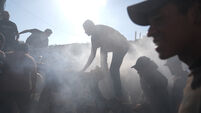
Aerial images of the latest crash site in the rolling hills of Kentucky’s horse country showed trees damaged at the end of the short runway and the nose of the plane almost parallel to the small strip.

When rescuers reached it, the plane was largely intact but in flames.

“They were taking off, so I’m sure they had a lot of fuel on board,” Fayette County Coroner Gary Ginn said. “Most of the injuries are going to be due to fire-related deaths.”

The plane had undergone routine maintenance on Saturday and had 14,500 flight hours, “consistent with aircraft of that age”, Mr Bornhorst said.

Investigators from the FAA and NTSB were at the scene.

More in this section

Cookie Policy Privacy Policy Brand Safety FAQ Help Contact Us Terms and Conditions

© Examiner Echo Group Limited