East Timor camp children face high risk of disease
Children in families that have flocked to tent camps to escape violence in East Timor’s capital face a high risk of malnutrition and disease, health officials warned today, as they kicked off a mass measles vaccination campaign.
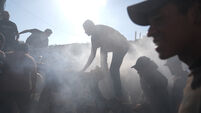
An estimated 30,000 children and 70,000 adults are staying in dozens of makeshift camps in and outside Dili, many of them living under tarpaulins and plastic sheeting in cramped and dirty conditions.
“Those who have been displaced by the deplorable violence of the past weeks need our help,” Jan Egeland, UN under-secretary-general for humanitarian affairs, said in New York as he made an emergency appeal for £10.3m (€15m).
East Timor’s worst unrest since its bloody break for independence from Indonesian rule in 1999 began in March when 600 striking soldiers were dismissed, triggering clashes with loyalist forces.
The fighting gave way to gang warfare, with machete-wielding youths fighting in the streets, setting fires to homes and looting government warehouses despite the presence of more than 2,000 foreign peacekeeping troops.
At least 30 people have been killed and more than 100 wounded, though foreign minister Jose Ramos-Horta says the figure may be higher.
Violence has eased in recent days, but many people are afraid to return to their homes, and the UN children’s agency warned that health in makeshift camps will continue to deteriorate.
Unicef is helping East Timor’s health ministry vaccinate against measles, which can be fatal in children with immune systems weakened by malnutrition, and handing out vitamins to supplement meagre diets of noodles and rice.
Thousands of enthusiastic boys and girls joined long lines with their parents at camps across Dili, some crying after getting pricks in the arms. Mothers with small infants queued separately.
“I think the health risks are very high,” said Unicef regional representative Shui-Meng Ng at one of the largest camps at the church-run Don Bosco technical college.
In an impoverished country where 40% of children under don’t get enough to eat, malnutrition in the camps is a real threat, Ng said, blaming a lack of hygiene as well as inadequate diets.
Don Bosco’s headmaster, Adriano de Jesus, who now cares for 13,600 refugees including 6,000 children, said a humanitarian crisis was looming before him.
About 5,700 refugees have been in the camp since the worst of the violence in late April. Many have spent the last of their money on vegetables to add to the 300 sacks of rice provided by the World Food Programme and fuel to cook it.
“One of our worries is that if these people stay here one more month or two, there will be a real humanitarian crisis,” de Jesus said.
“There’s not enough food and it makes it difficult for the children; sometimes they only eat one or two meals a day,” he added.