More foreign troops arrive in East Timor
Scores more foreign soldiers today landed in East Timor to bolster a force struggling to stop mob violence in the capital.
Australia said a long-term international security force may be needed to get the country back on its feet.
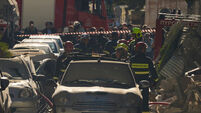
Much of the city was peaceful, but sporadic gunfire could be heard in some parts of Dili, and smoke from burning buildings rose over the city. In one neighbourhood, a group of young men broke into several houses by kicking in the doors.
Some 2,000 Australian military personnel â 1,300 front-line troops and hundreds of support staff â began arriving late last week and are guarding key facilities and conducting limited street patrols.
New Zealand troops began arriving in force today, deploying from military cargo planes carrying packs and rifles. Some 160 were expected to arrive today. More than 330 Malaysian troops are in place and 120 Portuguese paramilitaries are due by the end of the week.
President Xanana Gusmao has invoked emergency powers, and the troops are mandated to open fire in severe circumstances to bring under control rampant lawlessness that has plagued the city for almost a week.
The force has had only a limited effect since it started arriving over the weekend. Leaders insist new powers to detain, not just disarm, suspects will help but concede they donât have full control.
In one place, an Australian patrol arrested a gang of nine young men, seizing machetes and other primitive weapons and marching them in line into custody. Nearby, another mob trashed houses.
âOur job is to make sure we donât have armed gangs terrorising the people of East Timor,â said Lt. Col. Michael Mumford, an Australian commander.
But gangs stopped fighting when his patrols arrived in trouble spots and simply resumed after they left, he said.
Brig. Mick Slater, the Australian commander in Dili, said his troops had not fired a shot since arriving, though they released tear gas from a helicopter yesterday to disperse a gang.
In Canberra, Australiaâs military chief, Air Chief Marshal Angus Houston, said he expected the peacekeeping mission to last at least six months. Defence Minister Brendan Nelson hinted at a semi-permanent international security force.
âIn the political, financial, legal and social reconstruction of East Timor over the near and longer term we are of the view (that) ⊠the security arrangements essentially be with the East Timorese government involving a coalition of countries, led perhaps by Australia,â Nelson said.
The violence is the worst in East Timor since its bloody break from Indonesia in 1999, which paved the way for full independence in 2002 after years of UN administration. It remains one of the worldâs poorest countries, and is dependent on foreign aid.
Fifteen major aid donors today urged groups responsible for the crisis to stop their feuding.
âAs the worldâs newest nation, (East) Timor had made great strides in recovering from the devastation of the 1999 crisis,â the donors said in a statement. âThese gains ⊠must not be lost to violence and conflict.â
The statement was released on behalf of Australia, the United States, Britain, the EU, the Asian Development Bank, International Monetary Fund, World Bank and eight other countries.
Gusmao took over the governmentâs security powers late yesterday in a bid to break a deadlock that has paralysed the government and fuelled the unrest.
What started with sporadic clashes last week between dismissed former soldiers and government troops has spiralled into open street violence in Dili that has fluctuated in intensity from day to day, heightening the sense of instability. At least 27 people have died.
Gusmao appealed to people to surrender illegal weapons and explosives to foreign peacekeepers, and to cooperate with identification checks and surveillance operations.
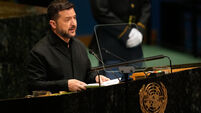
A the United Nations, Secretary-General Kofi Annan said he hoped residents would heed Gusmaoâs appeal. âItâs really sad and tragic that we have to relive this situation again in East Timor,â Annan said.
The violence that has engulfed the city was triggered by the dismissal in March of 600 soldiers from the 1,400-member army who were striking over alleged discrimination in the military.
Much of the antagonism on the streets also involves accusations, often unfounded, that one person or another harbours sympathies for Indonesia.
The conflict pits East Timorese from the âeastâ â perceived to be pro-independence â against those from the âwest,â believed to be sympathetic to Indonesia, the former occupier.
Many pro-Indonesian militiamen slaughtered an estimated 1,500 civilians and burned down much of Dili in the last days of Indonesian rule before an Australian-led force restored order.