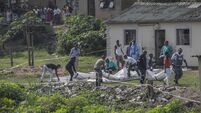
Corpses collected as crew clean up debris
Forensic workers and body-sniffing dogs searched New Orleans in earnest for corpses as crews cleared away mounds of rubbish and debris left behind by residents fleeing Hurricane Katrina.
Officials working to identify remains processed bodies around the clock at a field morgue set up in St Gabriel, a small community between Baton Rouge and New Orleans. A chain-link fence covered in black plastic hid the operation from onlookers.
“The ability to capture useful information from that body diminishes from week to week, month to month,” said Terry Edwards, the morgue’s director.
The confirmed death toll in Louisiana stood at 154 people, including some patients on life support who died when power went out, but the toll was expected to climb as crews collected bodies trapped in houses and floating in murky water.
Police and military officials have been marking the location of bodies with global positioning devices and paint on the outside of houses.
At the convention centre, the chaotic site where thousands initially took refuge before being evacuated a week ago, bulldozers pushed heaps of chairs, sleeping bags and other discarded items into giant piles before refuse trucks hauled it away.
Tow truck drivers started picking up scores of abandoned cars littering the streets while other workers unloaded food and supplies for employees working in telephone company Bell South’s downtown office.
At the Parc St Charles hotel, workers went floor to floor cleaning up: “There’s a lot of spoiled meat, a lot of bacteria that needs to be cleaned up,” said Bob Allen, who was supervising the job.
At the Superdome, where thousands first sought shelter only to be trapped inside by the floodwaters, water levels had dropped markedly. Water that once submerged cars parked around the dome had dropped to about a foot high.
A group of police, doctors and National Guardsmen inspected Charity Hospital, where doctors and patients had been stranded in rising flood waters.
Doctors hoped to be able to reopen it to help treat skin infections, dehydration and other illnesses, said Dr Jeffrey Kochan, who is overseeing medical services in New Orleans.
But they found the basement full of water, meaning electricity couldn’t be restored. Kochan said they would inspect the city’s other hospitals.
Thousands of residents continue to defy orders to leave the city, but security forces were not forcing anyone to go. Mayor Ray Nagin warned earlier that residents could be forcibly removed, but authorities have not taken that step.
Police Chief Eddie Compass said that 200 arrests had been made since the hurricane despite the 300 officers missing from his 1,750-strong force. “We’ve been almost crime-free for the last four days,” he said.
The US Army Corps of Engineers said most of the city could be drained within a month. Power and other utilities remain out in most of the affected region.