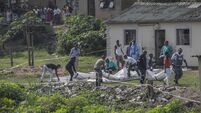
Bali hopes to survive until tourists shake off terror fears
Surveying his fire-gutted nightclub, Kadek Wiranatha said one thing kept going through his mind – the fate of his employees.
None was among more than 180 people killed in the terror attack on October 12 when two bombs blew up at the Sari Club and Wiranatha’s Paddy’s Club.
But like dozens of other businesses which depend on tourists, he knows the future looks bleak for them.
“The impact of this terrorist attack will be quite massive,” said Wiranatha, a tourism mogul who employs 2,500 people at several bars and restaurants.
“If no tourist come to Bali, you can imagine how many people will lose their jobs. It’s really frightening.”
Bali tourist officials estimate that since the attack up to 5,000 tourists a day – most of them Australian and Japanese – have been cutting their holidays short and leaving.
Travel warnings from Australia and other countries advising citizens to leave Bali and or delay visits have not helped.
Tourism is the backbone of Bali’s economy.
More than 90% of the island’s 3.2m people depend on it, directly or indirectly. As many as 300,000 are employed in restaurants, hotels and other travel-related business.
Officials say the attack could end up costing half of them their jobs.
Panudiana Kuhm, chairman of the Indonesian Business Association on Bali, told a news conference today that occupancy rates for the island’s 40,000 hotel rooms had halved, to about 40%.
“The authorities have to find and arrest the suspects,” Kuhm said. “Then the tourists will come back.”
For decades, Bali has been the crown jewel of Indonesia’s tourism industry, attracting up to 2.5 million visitors a year.
A predominantly Hindu island in the world’s most populous Muslim country, Bali was a place untouched by the political and economic turmoil elsewhere.
Not now. Within a day of the attack, hotels occupancy rates dived by a third, beaches were empty and taxis sat idle. Conventions were cancelled and wedding planners said ceremonies were being moved elsewhere. Indonesia’s national airline has cut flights.
“Before the attack, young people – mostly honeymooners – from Australia and Europe came here,” said Budhiman, room manager for the 396-room Ramada Resort Bintang Bali, where occupancy fell to 15%.
“But now, even if we gave discounts, no one would come,” said Budhiman, who, like many Indonesians, uses only one name.
Closer to the site of the bomb blast at Kuta Beach, a once-thronging nightclub area, as many as 73 shops are too damaged to reopen. Workers sit outside, anyway, waiting for signs about their future.
In the small bars and restaurants which are still open, there are no tourists.
Wayan Swan, 24, a waiter at the empty Budi’s Warung restaurant, said: “If I lose my job, I’ll have to go home and become a farmer. I can’t face my parents. I’m supposed to be working. I’d be embarrassed to come home empty handed.”
Some optimistic tourism officials predict that Bali will need 12 to 18 months to recover to its pre-attack arrival levels. A successful recovery will depend on luring Indonesians back to Bali, then Southeast Asians, then other foreigners.
Backpackers and budget travellers may return quickly, lured by expected bargain prices at hotels.
Peter Semone, vice president of the Pacific Asia Travel Association in Bangkok, said he expected that the industry would bounce back, adding that his association has decided to keep its conference in Bali next year.
He said: “We believe that if we allow terrorists to scare us as industry leaders, then how are we going to expect consumers to come to places like Bali?
“We have to stand up against things like this and carry on.”
Billy Billerhag and his wife, Lotta, agreed. The Swedish couple are spending their honeymoon in Bali.
“Tourist should come,” Lotta said, sunning herself on the beach. “Kuta will be the safest place. They already bombed Bali and now they’ll bomb somewhere else.”
But Wiranatha wonders how long it will take for the tourists to return. He said he had no plans to lay off any employees yet, but he can offer no guarantees.
“All my staff are like family,” Wiranatha said. “My message to the world is that they should see this as an accident. This can happen anywhere. We really need a hand to rebuild.”

CONNECT WITH US TODAY



Be the first to know the latest news and updates