Country in shock following assassination
Two gunmen firing assault rifles assassinated Afghan vice president Abdul Qadir as he was being driven from a government ministry in the capital, Kabul, today.
His driver was also killed but the gunmen escaped.
The attack took place about 12.40pm as Qadir was leaving by car from the Ministry of Public Works, which he also headed, according to Interior Minister Taj Mohammed Wardak.
The gunmen, who had been hiding in the bushes, escaped in a car which sped up moments after the shooting, police official Abdul Raouf Dad said.
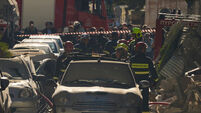
After the bursts of gunfire, Qadir’s vehicle went out of control and smashed into a brick wall. All 10 uniformed security guards who were on duty at the ministry were arrested because they failed to react properly, according to Kabul police chief Din Mohammed Jurat.
Qadir was appointed one of three vice presidents during last month’s Afghan grand council, or loya jirga. He also served as governor of eastern Nangarhar province and played a leading role in last year’s ousting of the Taliban.
Qadir was one of the few prominent ethnic Pashtuns in the former northern alliance, the Tajik and Uzbek-dominated coalition that fought the Taliban.
‘‘Our family is in shock,’’ said Qadir’s younger brother, Nasarullah Baryalai. ‘‘Our family has given so many sacrifices for Afghanistan. We can’t even think now who is behind this.’’
Baryalai said Afghan President Hamid Karzai has already called to express his sympathy and to promise a full investigation
‘‘He has assured us of a thorough investigation,’’ he said. ‘‘We expect that the killers will be found and punished.’’
Karzai, who went to the 400-bed Military Hospital where Qadir’s body was taken, also called an emergency meeting of his Cabinet. The interior ministry moved quickly to set up checkpoints throughout the capital searching vehicles for the killers who fled in a white car.
Armed guards wearing bulletproof vests took up positions around government ministries. Some were armed with rocket-propelled grenade launchers. Cars are not allowed to park in front of the ministries, and security guards checked underneath vehicles with mirrors to check for explosives.
No group claimed responsibility. Qadir was governor of one of the richest provinces in Afghanistan and a centre of smuggling and opium production. Residents of the provincial capital Jalalabad said the killing could have stemmed from political, personal and economic rivalries in the area rather than Taliban or al Qaida activity.
In Kennebunkport, Maine, President George W Bush said the killers could have been drug lords or ‘‘longtime rivals.’’
‘‘We are more resolved than ever to bring stability to the country so that the Afghan people can have peace and hope,’’ Bush said.
Foreign Ministry spokesman Omar Samad called the killing a ‘‘terrorist acton’’ carried out by ‘‘enemies of the state who are against peace in the country.’’
Security of ministers and government facilities was among the primary missions of the international peacekeeping force, sent to Kabul last December when the first interim administration took office.
The peacekeeping command refused to comment before it receives an official statement from the government.
‘‘This is a terrorist attack,’’ Foreign Ministry spokesman Omar Samad said. ‘‘But it won’t stop us from making this country a safer place. The killers have to be found.’’
Qadir was the brother of legendary rebel commander Abdul Haq, who was captured and hanged by the Taliban last year after slipping into the country to organise resistance to the Islamic militia.
‘‘We have lost two brothers,’’ said Qadir’s younger brother. ‘‘Afghanistan has lost two very important figures in just one year.’’
Qadir was one of the Pashtuns appointed to the Karzai Cabinet in an attempt to provide ethnic balance after complaints from Pashtuns that they were being sidelined in favour of Tajiks from the former Northern Alliance which fought the Taliban.
During the 1980s Soviet invasion, Qadir was a key commander with Hezb-e-Islami, an anti-Soviet faction led by conservative Islamic cleric Yunus Khalis.
He was the second Cabinet minister to be assassinated since the Taliban collapsed last year.
On February 14, Civil Aviation and Tourism Minister Abdul Rahman was killed at Kabul airport under mysterious circumstances. Rahman was initially reported killed by a mob of Muslim pilgrims angered that they had been unable to travel to Mecca.
Later, Karzai blamed Rahman’s killing on a conspiracy involving members of his own police and intelligence services and said it sprang from a personal vendetta. However, no one has ever been charged with the death and some of those publicly named remain in power.
CONNECT WITH US TODAY



Be the first to know the latest news and updates