Hawaii volcano attracts thousands
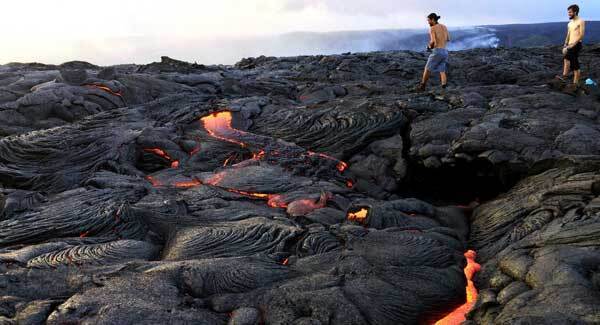
Thousands of people from around the world have flocked to Volcanoes National Park by land, sea and air to view the lava, which crackles and hisses, and reeks of sulphur and scorched earth, as it oozes across the rugged landscape and eventually off steep seaside cliffs.
When the hot rocks hit the water, they expel plumes of steam and gas and sometimes explode, sending chunks of searing debris flying through the air.
The 2,000-degree molten rock is from Kilauea, one of the worldâs most active volcanoes.
Its Puu Oo vent began erupting in the 1980s and periodically pushes enough lava seaward so that people can access it.
Reaching the flow requires a boat, a helicopter or strong legs. The climb to the entry point, where the lava meets the sea, is a 16km round trip on a gravel road surrounded by kilometres of treacherous, hard lava rock.
Pablo Aguayo, of Santiago, Chile, took a sunrise boat tour of the flow earlier this month.
âItâs pretty amazing. You start in the middle of the ocean in the darkness, and you end up in this beautiful lava falls,â he said.
Mr Aguayo said he could feel the lavaâs heat, and it smelled âsuper funnyâ.
âItâs like welding something. We have many volcanoes back home in Chile. We have plenty. But nothing like this,â he said.
His tour boat was a 12m aluminium catamaran operated by Lava Ocean Tours owner Shane Turpin, who said he navigates to within a few metres of the entry point for the best view.
Volcanoes National Park has seen an increase of about 1,000 to 1,500 visitors per day since the current lava flow reached the sea, boosting attendance to about 6,000 people daily, officials said.