Uber ready for self-driving
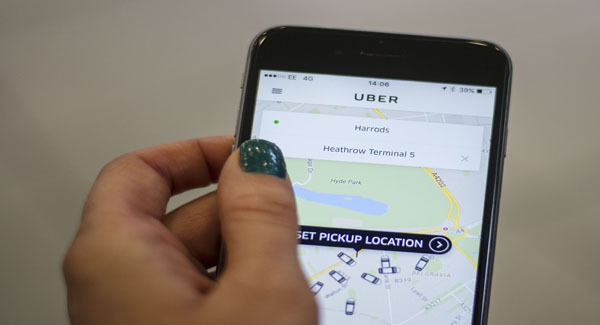
Its autonomous Ford Fusions will have human back-up drivers but will transport passengers just like normal Uber vehicles, the company said.
Uber has a self-driving research lab in Pittsburgh and is working on autonomous technology. Uber and Volvo also announced a $300m (€265m) deal for Volvo to provide SUVs to Uber for autonomous vehicle research.
Eventually the Volvo SUVs will be part of the self-driving fleet in Pittsburgh. Volvo will develop base vehicles for research and both companies will develop autonomous vehicles on their own.
The ride-hailing company also announced it is acquiring a self-driving start-up called Otto that has developed technology allowing big rigs to drive themselves.
The moves are intended to significantly accelerate Uber into the race to deploy self-driving vehicles to the public.
It is also the latest tie-up between Silicon Valley, ride-hailing firms and major carmakers.
Uber’s chief executive Travis Kalanick, has said the ride-sharing company’s future, and the future of all transportation, is driverless.
With the acquisition of Otto, Uber gets a fast infusion of self-driving expertise, including Otto co-founder Anthony Levandowski.
Self-driving technology is not ready for the masses. Hurdles include software that is not yet good enough for the public, safety concerns raised by state and federal regulators, and uncertainty over society’s readiness to trust robot drivers.
However, the race is on. Large tech and car companies suggest they could start selling self-driving cars within three to five years.
If history is any guide, that push will begin with expensive models that few people can afford.
Uber’s vast on-demand car fleet could presumably bring the technology to ordinary people more quickly.
Uber, however, is not alone in the race for autonomous vehicles, and is not even a leader.
The company’s primary US competitor, Lyft, received a $500m investment from GM earlier this year.

CONNECT WITH US TODAY



Be the first to know the latest news and updates