Sat nav age ‘has robbed us of natural sense of direction’
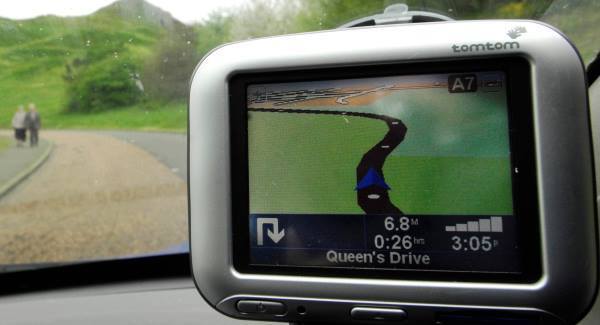
Satellite communication consultant Roger McKinlay, former president of the Royal Institute of Navigation, believes the world is losing its way due to over-reliance on navigation aids.
Writing in the journal Nature, he argues map reading should be on the school curriculum. Describing navigation as a “use-it-or-lose-it” skill, he warned: “If we do not cherish them, our natural navigation skills will deteriorate as we rely ever more on smart devices.”
Mr McKinlay, who is based in Leatherhead, Surrey, said navigation had “invaded our dreams of the future” with predictions of fleets of driverless cars and swarms of drones delivering goods to people’s homes.
He doubted such visions would ever become a reality given the inherent fallibility of navigation technology.
“Satellite navigation is unreliable because it does not work well indoors or in built-up areas,” he pointed out. In a crowded or closed environment, signals could “bounce around” and give false information.
The way innate navigation skills were eroded by technology had been demonstrated by simulator studies, said Mr McKinlay.
He wrote: “Drivers in a simulator who follow satellite navigation instructions find it more difficult to work out where they have been than those who use maps.
“Instructed drivers also fail to notice they have been led past the same point twice. Mountain rescue teams are tired of searching for people with drained smart phone batteries, no sense of direction and no paper map.”
With 80% of the world’s adult population likely to own a smartphone by 2020, access to satellite navigation was “ubiquitous”.
More satellites were being launched to improve coverage. By 2020, 20 orbiters from the European satellite navigation system Galileo would complement the US Global Positioning System (GPS) and Russian GLONASS network. China had just launched the 21st satellite in its BeiDou system.
However, navigation is about “more than knowing your position”, Mr McKinlay stressed.
“Newspapers regularly pick up ‘satnav’ disaster stories — such as a lorry bound for the Mediterranean that arrived at Gibraltar Point near Skegness in the United Kingdom,” he said. “A sense of direction, a sense of scale and a map are essential. Mobility will not become intelligent unless we break two bad habits. First, we must recognise that digital navigation tools do not come for free. They rely on expensive infrastructure — satellites or ground stations — that governments have to pay for.
“The United States invested $10bn to put the GPS satellites in place and spends around $1bn each year to maintain the service.
“Second, we should make better use of our innate capabilities. Machines know where they are, not the best way to get to a destination. It might be more reliable to employ a human driver than to program an autonomous car to avert crashes.”
Mr McKinlay concluded: “Schools should teach navigation and map reading as life skills. The introduction of computers and calculators has not removed the need to understand numbers. The US Navy has started to teach celestial navigation again as a back-up skill.
“Navigation is where complex systems meet capable users.”


CONNECT WITH US TODAY



Be the first to know the latest news and updates