Pistorius could face 15 more years in prison
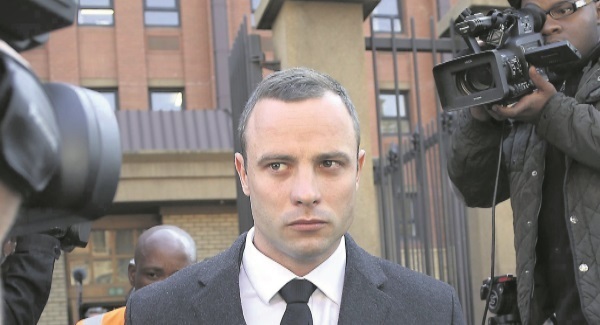
Paralympian’s sentence upgraded from culpable homicide to murder

Pistorius could face 15 more years in prison

Model shot dead through bathroom door in Valentine’s Day Row

Reeva Steenkamp’s family have said their ordeal was “over now” after one of the longest and most closely watched trials in recent history had its ruling overturned.

South Africa’s ‘Blade Runner’, Oscar Pistorius, was found guilty of murdering his girlfriend in an appeal court ruling that could see him sent back to prison for at least 15 years.

The Supreme Court upgraded the 29-year-old Paralympian’s sentence on appeal to murder from culpable homicide, South Africa’s equivalent of manslaughter, for which he had received a five-year sentence.

June Steenkamp, centre, mother of Reeva Steenkamp, is comforted as appeals court judge Eric Leach delivers his verdict.

Pistorius was released from prison and placed under house arrest on October 19, having spent one day less than a year behind bars for shooting dead model Steenkamp on Valentine’s Day in 2013, in a case that attracted worldwide interest and continues to fascinate and divide South Africa.

Members of the ruling African National Congress party’s Women’s League welcomed the new ruling, dancing and singing outside the court. They have attended the court sessions since the trial began in solidarity with Steenkamp’s family and in support of women’s rights.

Pistorius had been meant to serve the rest of his sentence under house arrest on his uncle’s property in a wealthy suburb of the capital Pretoria.

A new sentence for the Paralympic champion will be handed down at a later date. Pistorius is expected to remain on parole until then, unless a court rules otherwise, officials said.

In their appeal, prosecutors argued that Pistorius should have been convicted of murder for firing four shots through a locked toilet door. They said he intended to kill Steenkamp and that she had fled to the toilet during a row.

“This case involves a human tragedy of Shakespearean proportions,” Judge Eric Leach said as he read out the ruling.

“A young man overcomes huge physical disabilities to reach Olympian heights as an athlete. In doing so he becomes an international celebrity, he meets a young woman of great natural beauty and a successful model, romance blossoms, and then, ironically on Valentine’s Day, all is destroyed when he takes her life.”

Leach added that “as a matter of common sense, at the time the fatal shots were fired the possibility of the death of a person behind the door was clearly an obvious result”.

South African model Reeva Steenkamp, who was shot dead by her boyfriend, Oscar Pistorius, on February 14, 2013.

Pistorius denies deliberately killing Steenkamp, saying he mistook her for an intruder at his home.

Anneliese Burgess, the Pistorius family’s spokeswoman, said the family would wait for lawyers advice on what to do next.

Some legal experts said Pistorius could appeal the court’s ruling at the constitutional court, where lawyers could argue that the heavy media coverage of his trial had infringed upon his right to a free trial. Others disagreed, saying Pistorius had received a fair trial and had been allowed to testify.

“It will be a long shot if they approach the constitutional court, but I wouldn’t be surprised if they do,” Johannesburg-based lawyer and legal analyst Ulrich Roux said.

At the original trial last year, Judge Thokozile Masipa ruled that the state had failed to prove intent or ‘dolus eventualis’, a legal concept that centres on a person being held responsible for the foreseeable consequences of their actions.

Judge Leach said Judge Masipa had erred in applying the concept, however.

Dolus eventualis refers to whether a person foresees the possibility that his or her action will cause death but carries on regardless. Some legal experts were worried that the verdict by Judge Masipa could have set a bad legal precedent in a country with one of the highest crime rates in the world.

Steenkamp’s mother June, who has said she does not want retribution, attended the court session. She shed tears as she left the court after the new judgement was handed down.

Barry Steenkamp, Reeva’s father, welcomed the new verdict.

“It’s a big relief. I feel it’s a fair decision that the judge gave,” said Mr Steenkamp.

x

More in this section

Cookie Policy Privacy Policy Brand Safety FAQ Help Contact Us Terms and Conditions

© Examiner Echo Group Limited