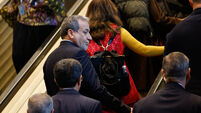
Shock acquittal for elderly mobster in America

Vincent Asaro walked free after a jury reached the verdict at a Brooklyn racketeering trial.
He told reporters: “I was shocked, I was really shocked. I’ve got two years in, and I’m dying to get home.”
As he hopped into a waiting car, Asaro quipped to one of his lawyers: “Sam, don’t let them see the body in the trunk.”
It was a stunning defeat for the federal government in a courthouse where prosecutors have won convictions of major mob figures like Gambino family head John Gotti and Genovese crime boss Vincent ‘Chin’ Gigante over the years. The US attorney’s office declined to comment after the verdict.
Witnesses had portrayed Asaro as a throwback to an era when New York’s five organised crime families comprised a secret society that committed brazen crimes and settled scores with bloodshed. He managed to stay in the shadows for decades by adhering to the Mafia’s strict code of silence.
Asaro’s father and grandfather were members of the secretive Bonanno crime family, and he “was born into that life and he fully embraced it”, Assistant US Attorney Alicyn Cooley said in closing arguments.
His devotion to the Bonannos “was as permanent as the ’death before dishonour’ tattoo on his arm,” she added. At trial, prosecutors described how Asaro rose through the ranks and developed an “unbreakable bond” with the notorious James ‘Jimmy the Gent’ Burke, the late Lucchese crime family associate who organised the hold-up at the Lufthansa cargo terminal at Kennedy Airport in 1978.
Asaro’s cousin Gaspare Valenti testified that Asaro and Burke killed a suspected informant with a dog chain in 1969 before ordering Valenti to help bury the body.
Valenti also testified that Asaro drafted him for the Lufthansa heist, telling him: “Jimmy Burke has a big score at the airport coming up, and you’re invited to go.”
When he learned about the mountain of $100 bills and jewels taken from a Lufthansa vault, Asaro was “very happy, really euphoric”, Valenti said.
Asked what he thought of Valenti after the trial, Asaro said: “You don’t even want to know.”
Prosecutors claimed he collected $500,000 from the score but had a gambling problem and squandered it at the racetrack.
CONNECT WITH US TODAY



Be the first to know the latest news and updates